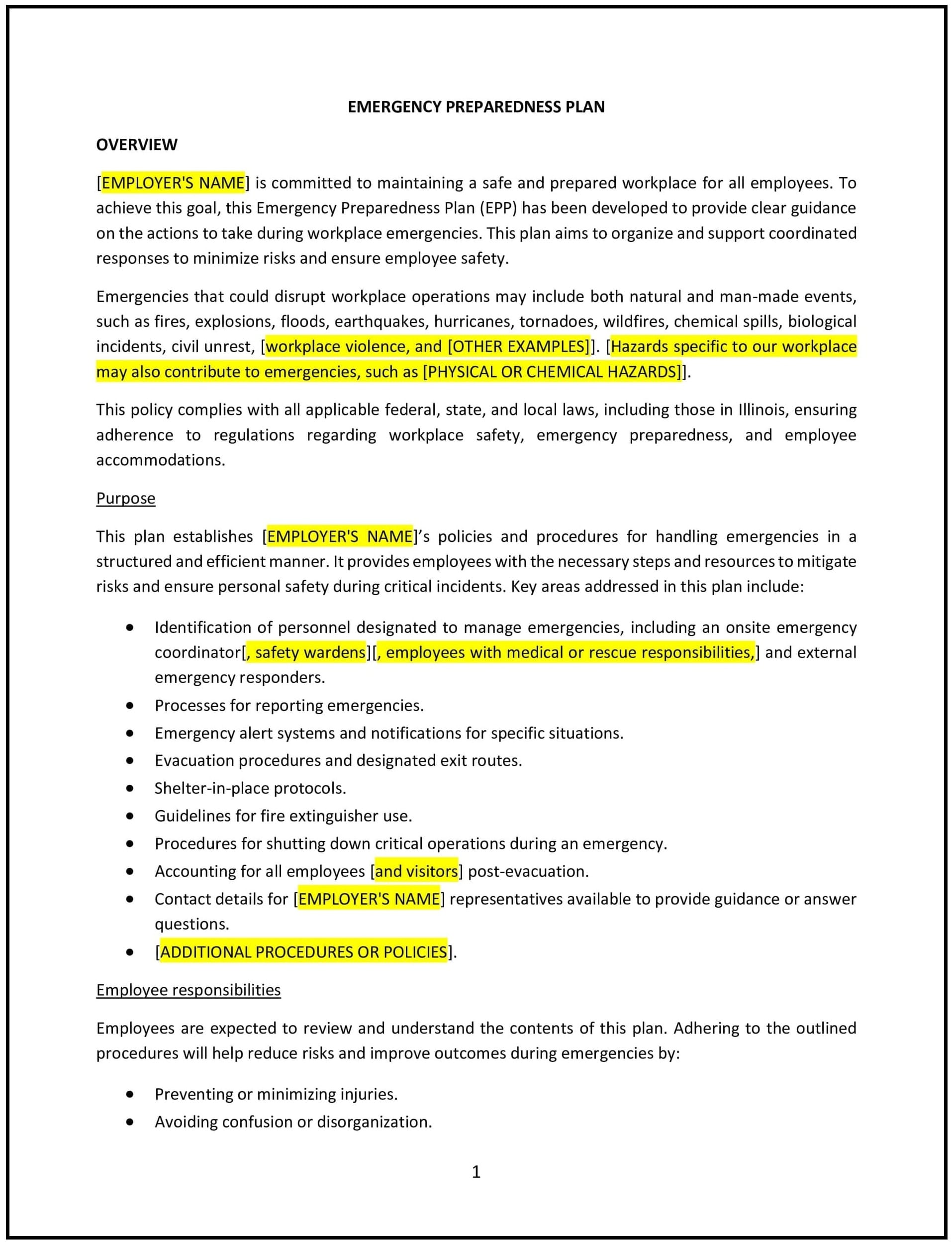
Emergency preparedness plan (Illinois): Free template
Details response procedures for Illinois-based emergencies—natural disasters, workplace violence, or power outages—to keep employees safe and operations running.
- Policies
- Illinois
Emergency preparedness plan (Illinois)
This emergency preparedness plan is designed to help Illinois businesses create effective strategies for responding to emergencies, such as natural disasters, fires, workplace accidents, or other crises. It outlines procedures for safeguarding employees, minimizing risks, and ensuring business continuity in compliance with Illinois safety regulations.
By adopting this plan, businesses can protect their workforce, reduce disruptions, and maintain operational stability.
How to use this emergency preparedness plan (Illinois)
- Identify potential emergencies: List possible scenarios, such as severe weather, fires, medical emergencies, or power outages, relevant to the business location and industry.
- Develop response procedures: Outline step-by-step actions for each type of emergency, including evacuation routes, shelter-in-place protocols, and communication plans.
- Assign responsibilities: Designate roles for emergency coordinators, team leaders, and employees to ensure clear accountability during crises.
- Provide emergency contact information: Include a list of essential contacts, such as local emergency services, utility providers, and internal response teams.
- Address employee safety: Specify procedures for assisting individuals with disabilities or special needs during emergencies.
- Conduct regular training: Offer drills and training sessions to ensure employees understand emergency procedures and their roles.
- Include communication plans: Establish methods for notifying employees, customers, and stakeholders during and after an emergency.
- Monitor compliance: Ensure the plan aligns with Illinois Occupational Safety and Health Administration (OSHA) regulations and other applicable laws.
Benefits of using this emergency preparedness plan (Illinois)
This plan provides several benefits for Illinois businesses:
- Protects employees: Safeguards the health and safety of employees during emergencies.
- Minimizes disruptions: Helps maintain business continuity by preparing for various scenarios.
- Enhances compliance: Supports alignment with Illinois safety regulations and OSHA requirements.
- Promotes confidence: Reassures employees, customers, and stakeholders that the business is prepared for emergencies.
- Reduces risks: Mitigates potential damage to property, equipment, and operations.
Tips for using this emergency preparedness plan (Illinois)
- Communicate the plan: Share the plan with employees during onboarding and ensure it is easily accessible in the workplace.
- Conduct regular drills: Schedule fire drills, evacuation practices, and other exercises to reinforce employee preparedness.
- Review and update: Revise the plan periodically to reflect changes in Illinois regulations, workplace conditions, or identified risks.
- Collaborate with local authorities: Work with fire departments, police, and emergency services to develop effective response procedures.
- Address special needs: Include tailored protocols for assisting individuals with disabilities or language barriers during emergencies.
Frequently asked questions (FAQs)
Similar templates
Where deals go from offer to paid
