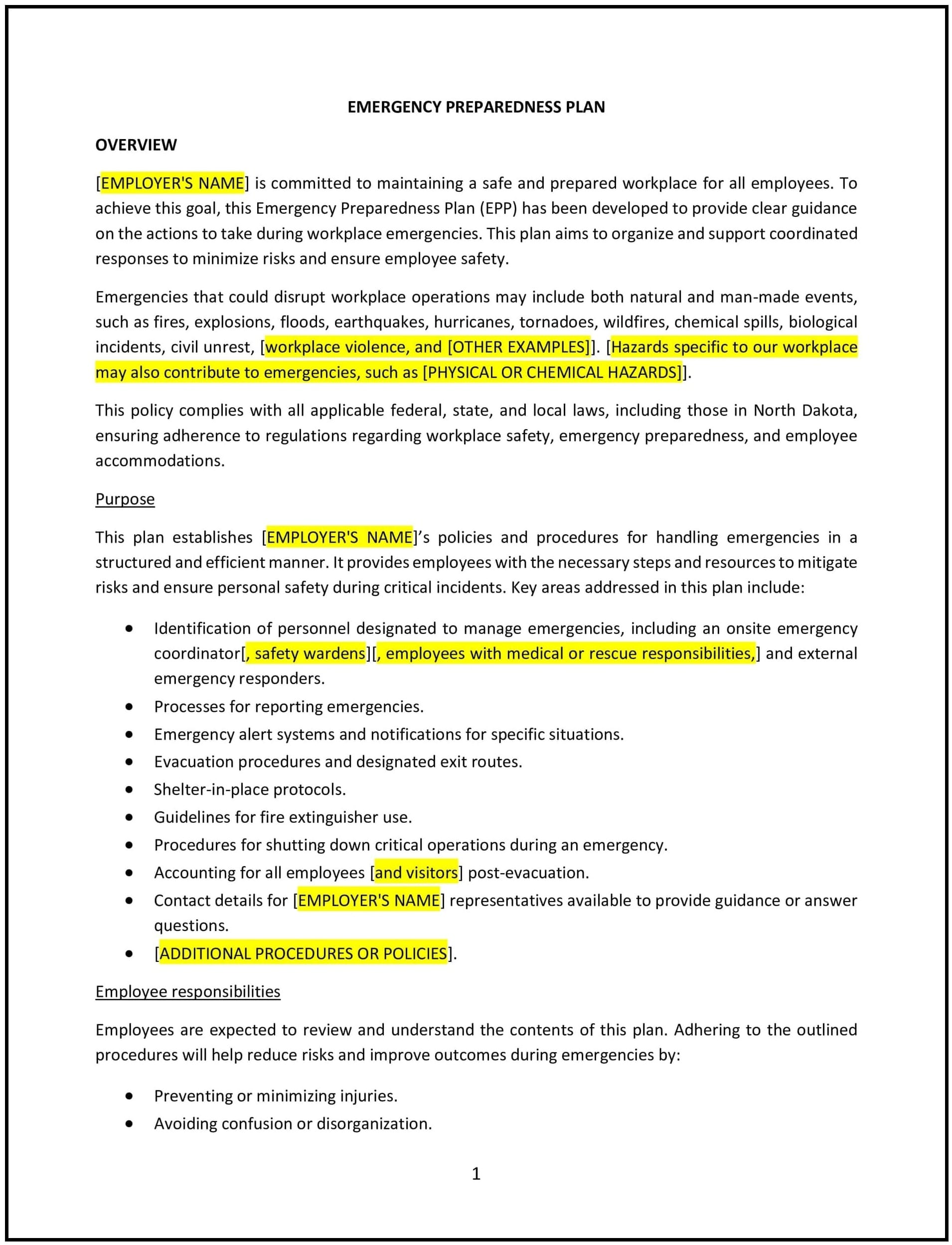
Emergency preparedness plan (North Dakota): Free template
Outlines readiness procedures for responding to fires, natural disasters, and other emergencies.
- Policies
- North Dakota
Emergency preparedness plan (North Dakota)
This emergency preparedness plan is designed to help North Dakota businesses develop procedures for responding to workplace emergencies, including natural disasters, medical incidents, and security threats. The policy outlines evacuation plans, communication protocols, and employee responsibilities.
By implementing this policy, businesses can enhance workplace safety, minimize disruptions, and ensure swift emergency response.
How to use this emergency preparedness plan (North Dakota)
- Identify potential emergencies: Assess risks such as severe weather, fires, medical emergencies, and security threats.
- Establish evacuation procedures: Outline primary and secondary escape routes for employees.
- Define communication protocols: Specify how emergency alerts will be issued (e.g., phone, email, PA system).
- Assign emergency roles: Designate personnel responsible for first aid, evacuation coordination, and incident reporting.
- Provide employee training: Conduct regular drills to familiarize staff with emergency procedures.
- Maintain emergency kits: Ensure workplaces are equipped with first aid supplies, flashlights, and other essentials.
- Review regularly: Update the policy based on workplace hazards and regulatory changes.
Benefits of using this emergency preparedness plan (North Dakota)
Implementing this policy provides several advantages for North Dakota businesses:
- Enhances workplace safety: Ensures employees know how to respond in emergencies.
- Reduces operational disruptions: Minimizes downtime caused by unexpected incidents.
- Promotes regulatory alignment: Helps businesses meet safety and health requirements.
- Improves employee confidence: Reassures staff that emergency plans are in place.
- Reflects North Dakota-specific considerations: Addresses weather-related risks, such as blizzards and tornadoes.
Tips for using this emergency preparedness plan (North Dakota)
- Conduct regular drills: Test evacuation and emergency response procedures periodically.
- Keep emergency contacts updated: Ensure all employees have access to essential numbers.
- Implement clear signage: Mark emergency exits and first aid stations prominently.
- Train designated responders: Provide CPR and first aid training to key personnel.
- Adjust as needed: Update procedures based on lessons learned from drills and incidents.
Frequently asked questions (FAQs)
Similar templates
Where deals go from offer to paid
