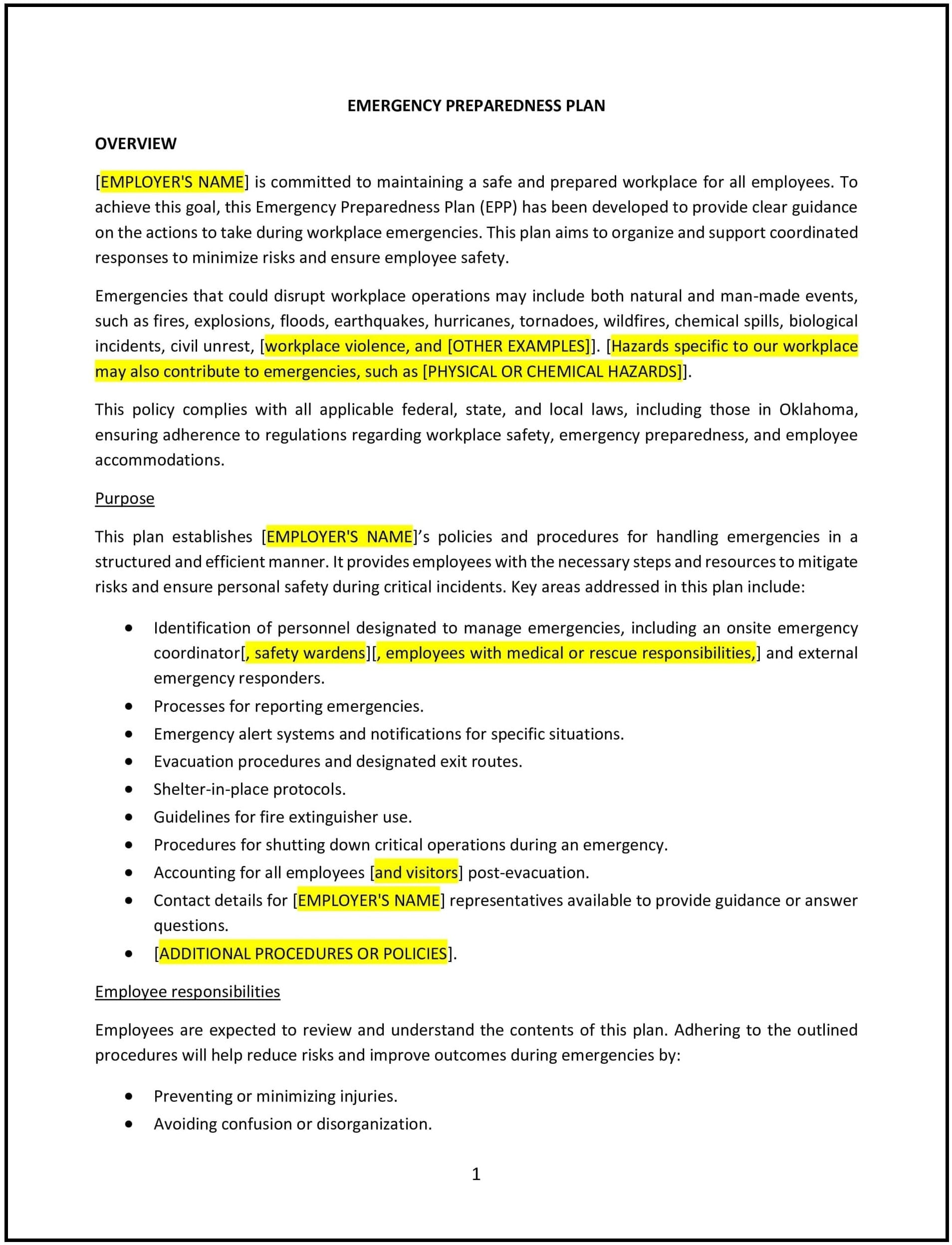
Emergency preparedness plan (Oklahoma): Free template
Provides procedures for responding to emergencies like natural disasters, fires, or security threats.
- Policies
- Oklahoma
Emergency preparedness plan (Oklahoma)
This emergency preparedness plan is designed to help Oklahoma businesses establish clear procedures for responding to emergencies, including natural disasters, workplace accidents, and security threats. The policy outlines roles, communication protocols, and safety measures to minimize risks and ensure business continuity.
By implementing this plan, businesses can protect employees, secure company assets, and improve response coordination during emergencies.
How to use this emergency preparedness plan (Oklahoma)
- Identify potential emergencies: Outline the types of emergencies covered, such as tornadoes, fires, floods, power outages, hazardous material spills, and workplace violence.
- Establish emergency roles and responsibilities: Assign specific duties to employees, including emergency coordinators and first aid responders.
- Develop evacuation procedures: Provide step-by-step instructions for safely exiting the workplace, including designated exits and assembly points.
- Implement communication protocols: Outline methods for notifying employees, emergency services, and stakeholders during an incident.
- Maintain emergency supplies: Ensure first aid kits, fire extinguishers, and emergency food/water supplies are accessible.
- Conduct regular training and drills: Schedule periodic emergency response drills to ensure employees understand their roles and responsibilities.
- Review regularly: Update the plan periodically to reflect changes in workplace operations and Oklahoma-specific emergency guidelines.
Benefits of using this emergency preparedness plan (Oklahoma)
Implementing this plan provides several advantages for Oklahoma businesses:
- Enhances workplace safety: Reduces risks to employees and customers during emergencies.
- Improves response coordination: Establishes clear roles and procedures to minimize confusion.
- Supports business continuity: Helps businesses recover quickly and resume operations after an emergency.
- Meets regulatory requirements: Aligns with Oklahoma workplace safety and emergency management laws.
- Reflects Oklahoma-specific hazards: Addresses regional risks such as tornadoes, severe storms, and flooding.
Tips for using this emergency preparedness plan (Oklahoma)
- Conduct regular risk assessments: Identify vulnerabilities and update the plan accordingly.
- Train employees on emergency procedures: Ensure all staff members understand their roles in different scenarios.
- Test communication systems: Verify that emergency alerts and notifications function correctly.
- Secure important documents: Store critical business records in cloud-based storage or fireproof safes.
- Establish alternative work locations: Prepare contingency plans for remote operations if the primary location becomes unusable.
Frequently asked questions (FAQs)
Similar templates
Where deals go from offer to paid
