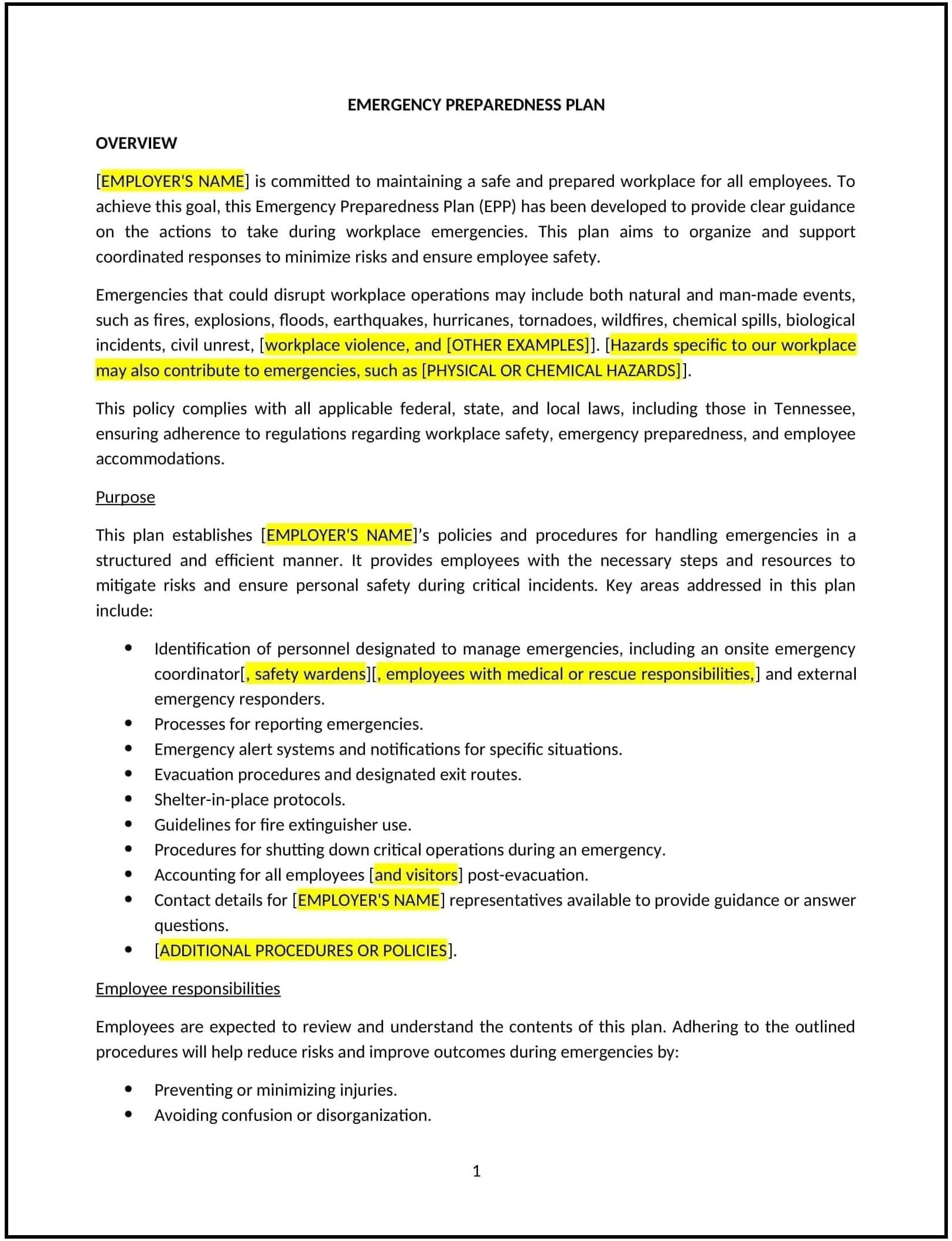
Emergency preparedness plan (Tennessee): Free template
Outlines actions and responsibilities during emergencies to protect people, property, and operations.
- Policies
- Tennessee
Emergency preparedness plan (Tennessee)
This emergency preparedness plan is designed to help Tennessee businesses establish guidelines for responding to emergencies, such as natural disasters, fires, or medical incidents. It outlines procedures for ensuring employee safety, minimizing disruptions, and recovering operations.
By adopting this plan, businesses can protect employees, reduce risks, and maintain business continuity during emergencies.
How to use this emergency preparedness plan (Tennessee)
- Define emergency types: Specify the types of emergencies covered, such as tornadoes, floods, or workplace accidents.
- Set response procedures: Outline steps for evacuating, sheltering, or securing the workplace during an emergency.
- Assign roles: Identify employees responsible for emergency response, such as evacuation coordinators or first aid responders.
- Train employees: Educate staff on emergency procedures and their roles during an incident.
- Review and update: Assess the plan annually to ensure it aligns with evolving business needs and emergency risks.
Benefits of using this emergency preparedness plan (Tennessee)
This plan offers several advantages for Tennessee businesses:
- Protects employees: Ensures employees know how to respond safely during emergencies.
- Minimizes disruptions: Reduces downtime and helps businesses recover operations quickly.
- Enhances safety: Provides clear guidelines for handling emergencies effectively.
- Reduces risks: Prepares businesses to respond to unexpected incidents.
- Aligns with best practices: Supports a structured approach to emergency preparedness.
Tips for using this emergency preparedness plan (Tennessee)
- Communicate the plan: Share the plan with employees and include it in the employee handbook.
- Provide training: Educate staff on emergency procedures and their roles during an incident.
- Conduct drills: Regularly practice emergency scenarios to ensure readiness.
- Address issues promptly: Update the plan if gaps or weaknesses are identified during drills or actual emergencies.
- Update regularly: Assess the plan annually to ensure it aligns with evolving business needs and emergency risks.
Frequently asked questions (FAQs)
Similar templates
Where deals go from offer to paid
