Emergency preparedness plan (Vermont): Free template
Prepares employees for emergencies by outlining roles, response steps, and safety procedures under Vermont guidelines.
- Policies
- Vermont
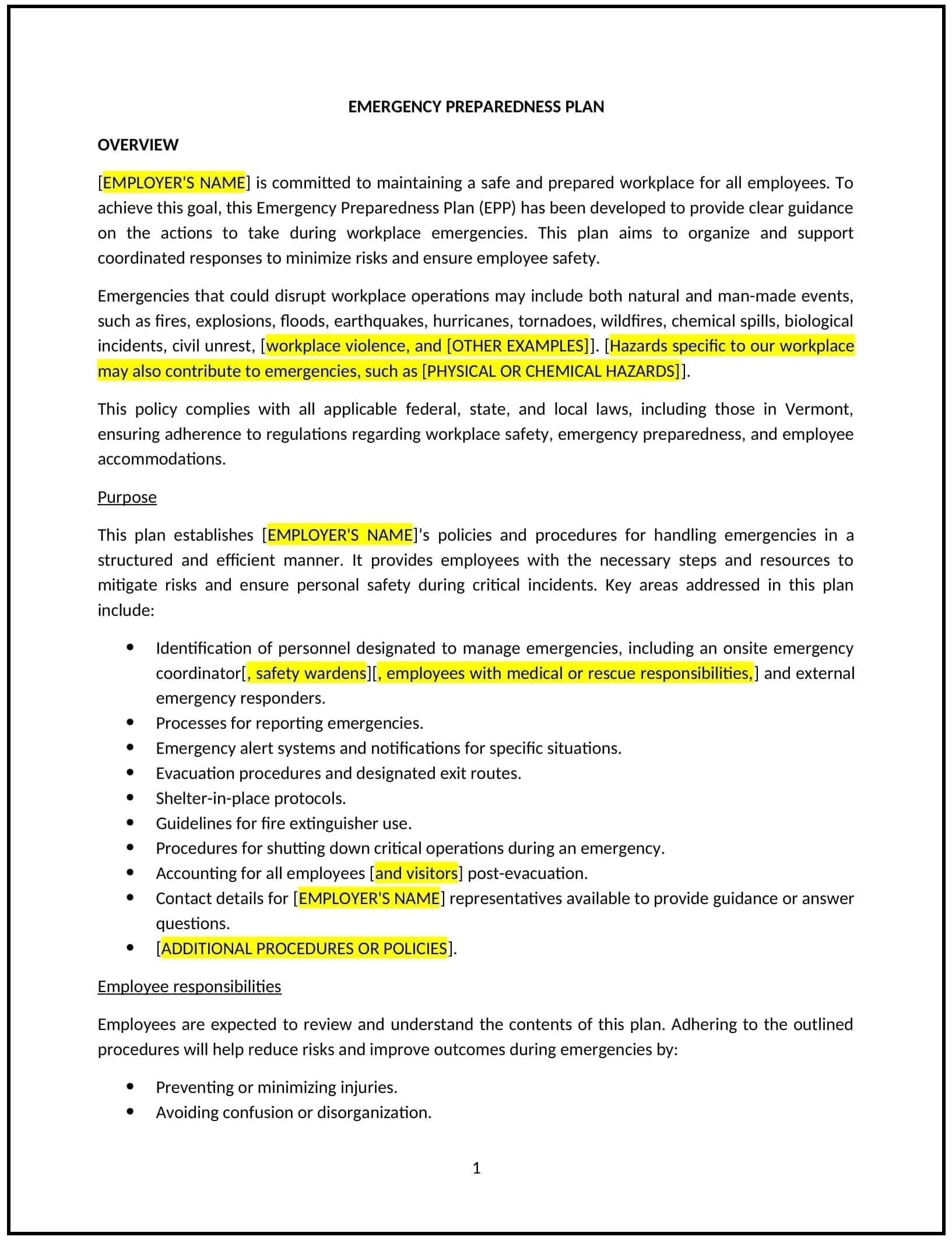
Emergency preparedness plan (Vermont)
This emergency preparedness plan is designed to help Vermont businesses respond effectively to emergencies, such as natural disasters, fires, medical incidents, or workplace threats. It provides a framework for safeguarding employees, minimizing risks, and maintaining operations during and after emergencies.
By adopting this plan, businesses can enhance safety, improve compliance with Vermont regulations, and build resilience.
How to use this emergency preparedness plan (Vermont)
- Identify potential emergencies: List possible scenarios that could affect the workplace, such as fires, floods, severe weather, or hazardous material spills.
- Establish response protocols: Outline step-by-step procedures for each type of emergency, including evacuation, shelter-in-place, and communication processes.
- Designate roles and responsibilities: Assign employees to specific roles, such as fire wardens, first aid responders, or communication leads.
- Provide communication guidelines: Include protocols for notifying employees, emergency services, and other stakeholders during an emergency.
- Include training requirements: Detail the frequency and content of employee training on emergency procedures, such as evacuation drills and first aid.
- Emphasize equipment readiness: Ensure emergency supplies, such as first aid kits, fire extinguishers, and communication tools, are readily available and maintained.
- Monitor and update: Regularly review and revise the plan to address changes in Vermont laws, workplace conditions, or identified risks.
Benefits of using this emergency preparedness plan (Vermont)
This plan provides several benefits for Vermont businesses:
- Enhances employee safety: Protects employees by providing clear procedures for responding to emergencies.
- Reduces risks: Minimizes potential damage to property and disruption to operations during emergencies.
- Promotes compliance: Aligns with Vermont occupational safety and health requirements for workplace preparedness.
- Builds resilience: Helps businesses recover quickly and efficiently after emergencies.
- Fosters confidence: Provides employees and stakeholders with assurance that the business is prepared for emergencies.
Tips for using this emergency preparedness plan (Vermont)
- Communicate the plan: Share the plan with all employees and make it easily accessible in the workplace.
- Conduct regular drills: Schedule evacuation and emergency response drills to ensure employees are familiar with procedures.
- Partner with local authorities: Coordinate with Vermont emergency services, such as fire departments or disaster response teams, for additional support and guidance.
- Maintain equipment: Regularly inspect and replenish emergency supplies to ensure readiness.
- Update regularly: Revise the plan to address changes in workplace operations, Vermont laws, or identified vulnerabilities.
Frequently asked questions (FAQs)
Similar templates
Where deals go from offer to paid
