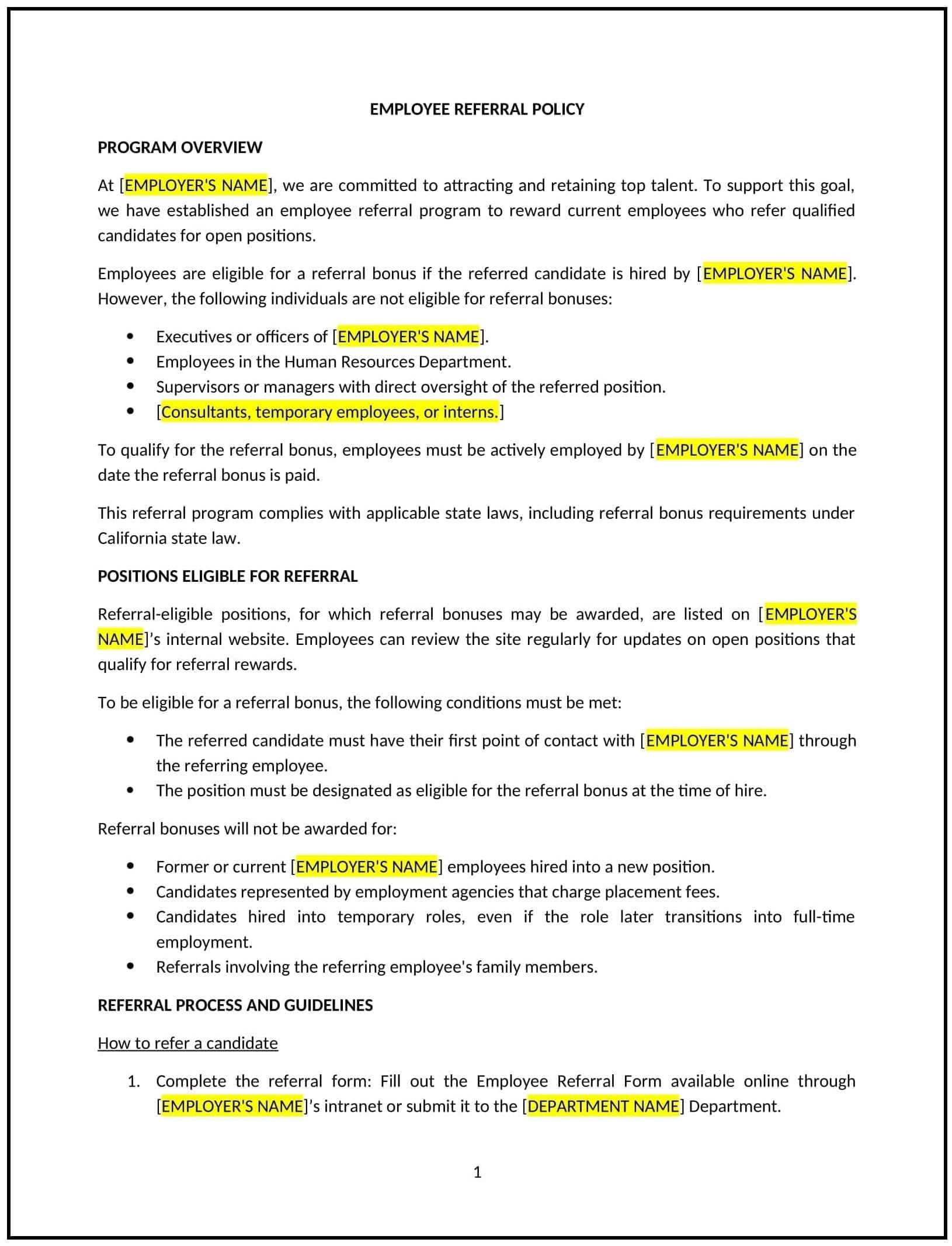
Employee referral policy (California): Free template
Encourages staff referrals by defining eligibility, process, and rewards supporting California recruitment goals.
- Policies
- California
Employee referral policy (California)
In California, an employee referral policy provides businesses with guidelines for incentivizing employees to refer qualified candidates for open positions. This policy helps businesses expand their talent pool while promoting fairness and compliance with California labor laws, including anti-discrimination regulations under the Fair Employment and Housing Act (FEHA).
This policy outlines the referral process, eligibility for rewards, and the business’s expectations for professionalism in referring candidates. By implementing this policy, California businesses can enhance recruitment efforts and foster employee engagement.
How to use this employee referral policy (California)
- Define referral eligibility: Specify which employees can participate in the referral program and the types of positions eligible for referrals.
- Outline the referral process: Provide clear steps for employees to submit referrals, including required documentation or forms.
- Set reward criteria: Detail the conditions under which referral rewards are granted, such as successful hiring and completion of a probationary period.
- Promote fairness: Ensure that the policy aligns with California anti-discrimination laws, encouraging referrals based on qualifications and merit.
- Communicate expectations: Encourage employees to act professionally and avoid pressuring candidates to participate.
Benefits of using this employee referral policy (California)
This policy offers several advantages for California businesses:
- Supports compliance: Reflects California labor laws, including anti-discrimination and wage payment regulations for referral rewards.
- Enhances recruitment: Expands the talent pool by leveraging employee networks for qualified candidates.
- Promotes engagement: Encourages employees to participate in the hiring process, fostering a sense of involvement.
- Saves costs: Reduces recruitment expenses compared to traditional hiring methods.
- Encourages accountability: Provides clear guidelines for referrals and ensures consistent handling of rewards.
Tips for using this employee referral policy (California)
- Address California-specific laws: Reflect compliance with FEHA and ensure referral rewards align with wage and hour laws.
- Train employees: Provide guidance on submitting referrals and understanding the criteria for rewards.
- Monitor participation: Track referral program performance and address any concerns, such as favoritism or conflicts of interest.
- Promote transparency: Communicate the program’s rules and rewards clearly to avoid misunderstandings.
- Review regularly: Update the policy to reflect changes in California labor laws or recruitment practices.
Frequently asked questions (FAQs)
Similar templates

Where deals go from offer to paid
