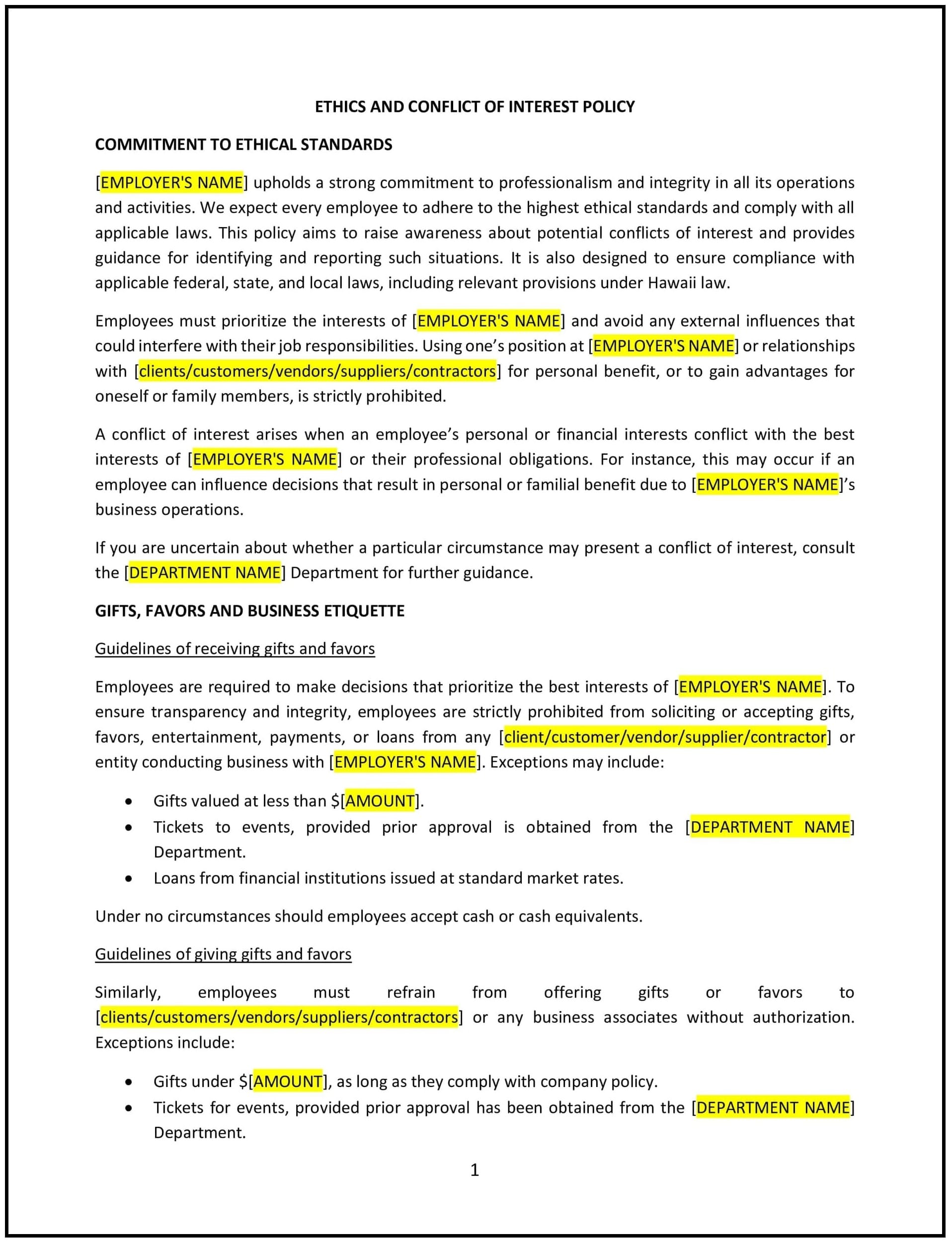
Ethics and conflict of interest policy (Hawaiʻi): Free template
Promotes ethical behavior and requires disclosure of personal interests to prevent conflicts under Hawaiʻi regulations.
- Policies
Ethics and conflict of interest policy (Hawaiʻi)
An ethics and conflict of interest policy helps Hawaiʻi businesses establish guidelines for maintaining integrity, transparency, and accountability in all business operations. This policy outlines expectations for ethical behavior, identifies potential conflicts of interest, and provides procedures for disclosing and managing such conflicts. Tailored to Hawaiʻi’s unique business environment and cultural values, this policy is designed to promote trust, fairness, and responsible decision-making.
By implementing this policy, businesses in Hawaiʻi can foster a culture of integrity, reduce risks associated with unethical behavior, and demonstrate a commitment to ethical practices.
How to use this ethics and conflict of interest policy (Hawaiʻi)
- Define ethical standards: Clearly outline the ethical principles employees and stakeholders are expected to follow, such as honesty, fairness, and respect.
- Identify conflicts of interest: Provide examples of situations that may constitute a conflict of interest, such as personal relationships, financial interests, or outside employment.
- Establish disclosure procedures: Specify how employees should report potential conflicts of interest, including the use of disclosure forms and designated reporting channels.
- Address management of conflicts: Outline steps for evaluating and managing disclosed conflicts, such as recusal, restructuring responsibilities, or implementing oversight measures.
- Communicate the policy: Share the policy with employees during onboarding and through internal communications to ensure awareness and understanding.
- Train employees and managers: Educate staff on the policy’s guidelines, including how to identify and report conflicts of interest.
- Monitor compliance: Regularly review disclosures and business practices to ensure adherence to the policy and address any issues promptly.
- Review and update the policy: Regularly assess the policy’s effectiveness and make adjustments as needed to reflect changes in laws, business needs, or workplace dynamics.
Benefits of using this ethics and conflict of interest policy (Hawaiʻi)
This policy offers several advantages for Hawaiʻi businesses:
- Promotes integrity: Clear ethical standards help employees make decisions that align with the business’s values and principles.
- Reduces risks: Identifying and managing conflicts of interest minimizes the potential for unethical behavior or legal disputes.
- Builds trust: A transparent approach to ethics and conflicts of interest fosters trust among employees, customers, and stakeholders.
- Enhances decision-making: Addressing conflicts of interest ensures decisions are made in the best interest of the business, free from personal bias.
- Supports accountability: Employees understand their responsibilities for maintaining ethical behavior and disclosing potential conflicts.
- Aligns with legal standards: The policy helps businesses comply with Hawaiʻi state laws and federal regulations related to ethics and conflicts of interest.
- Strengthens reputation: Demonstrating a commitment to ethical practices enhances the business’s reputation in the community.
Tips for using this ethics and conflict of interest policy (Hawaiʻi)
- Communicate the policy effectively: Share the policy with employees during onboarding and through regular reminders, such as emails or training sessions.
- Provide training: Educate employees and managers on the policy’s guidelines, including how to identify and report conflicts of interest.
- Be transparent: Clearly explain the policy’s purpose, benefits, and expectations to employees to build trust and cooperation.
- Monitor compliance: Regularly review disclosures and business practices to ensure adherence to the policy and address any issues promptly.
- Encourage reporting: Create a culture where employees feel comfortable disclosing potential conflicts without fear of retaliation.
- Review the policy periodically: Update the policy as needed to reflect changes in laws, business needs, or workplace dynamics.
Frequently asked questions (FAQs)
Similar templates
Where deals go from offer to paid
