External communications policy (New Jersey): Free template
Governs all public statements, press releases, and media interactions on behalf of the company.
- Policies
- New Jersey
External communications policy (New Jersey)
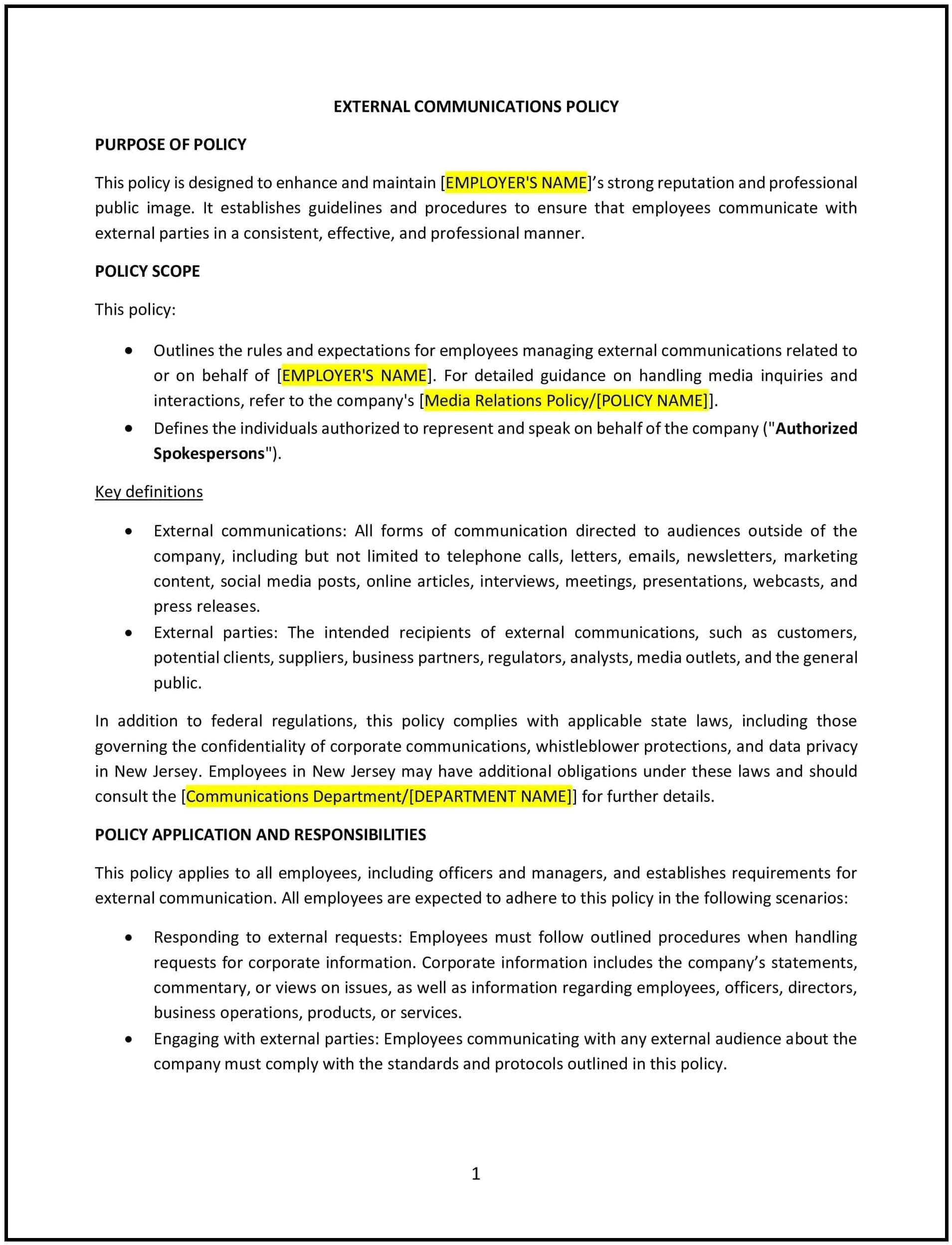
An external communications policy helps New Jersey businesses manage how employees interact with the public, media, and external stakeholders. This policy outlines guidelines for public statements, press inquiries, social media use, and interactions with clients, vendors, and regulatory agencies. It also sets expectations for who is authorized to speak on behalf of the business and how confidential or sensitive information should be handled.
By adopting this policy, businesses in New Jersey can maintain a consistent brand message, protect sensitive information, and prevent unauthorized disclosures.
How to use this external communications policy (New Jersey)
- Define authorized spokespersons: Specify which employees or departments are allowed to speak on behalf of the company to the media, regulators, or the public.
- Establish media inquiry procedures: Require employees to direct media requests to designated spokespersons or the communications team.
- Set guidelines for public statements: Require that all external statements, including press releases, interviews, and public presentations, align with company messaging.
- Outline rules for social media engagement: Provide instructions on responsible use of social media when discussing company-related matters.
- Manage confidential information: Prohibit employees from sharing sensitive business, financial, or client data with external parties without authorization.
- Address crisis communication protocols: Define how the business will respond to public relations challenges or emergencies to maintain a controlled message.
- Provide client and vendor communication standards: Set expectations for professional and consistent communication with external partners.
- Review and update: Regularly assess the policy to align with evolving business needs and external communication practices.
Benefits of using this external communications policy (New Jersey)
This policy provides several benefits for New Jersey businesses:
- Maintains brand consistency: Ensures external messaging aligns with company values and objectives.
- Protects business reputation: Prevents unauthorized statements that could misrepresent the business.
- Reduces legal and confidentiality risks: Provides clear guidelines for handling sensitive business information.
- Improves crisis response: Establishes a structured approach for managing public relations during emergencies.
- Strengthens stakeholder trust: Promotes clear, accurate, and professional communication with clients, media, and the public.
Tips for using this external communications policy (New Jersey)
- Communicate the policy clearly: Ensure employees understand who is authorized to make public statements and how to handle media inquiries.
- Train spokespersons and employees: Provide guidance on external communication best practices and crisis response strategies.
- Monitor social media engagement: Encourage responsible use of social media and set boundaries for discussing work-related topics online.
- Establish an approval process: Require review and approval for public statements, press releases, or interviews.
- Review the policy regularly: Update the policy based on changes in media trends, business needs, and New Jersey-specific communication considerations.
Frequently asked questions (FAQs)
Similar templates
Where deals go from offer to paid
