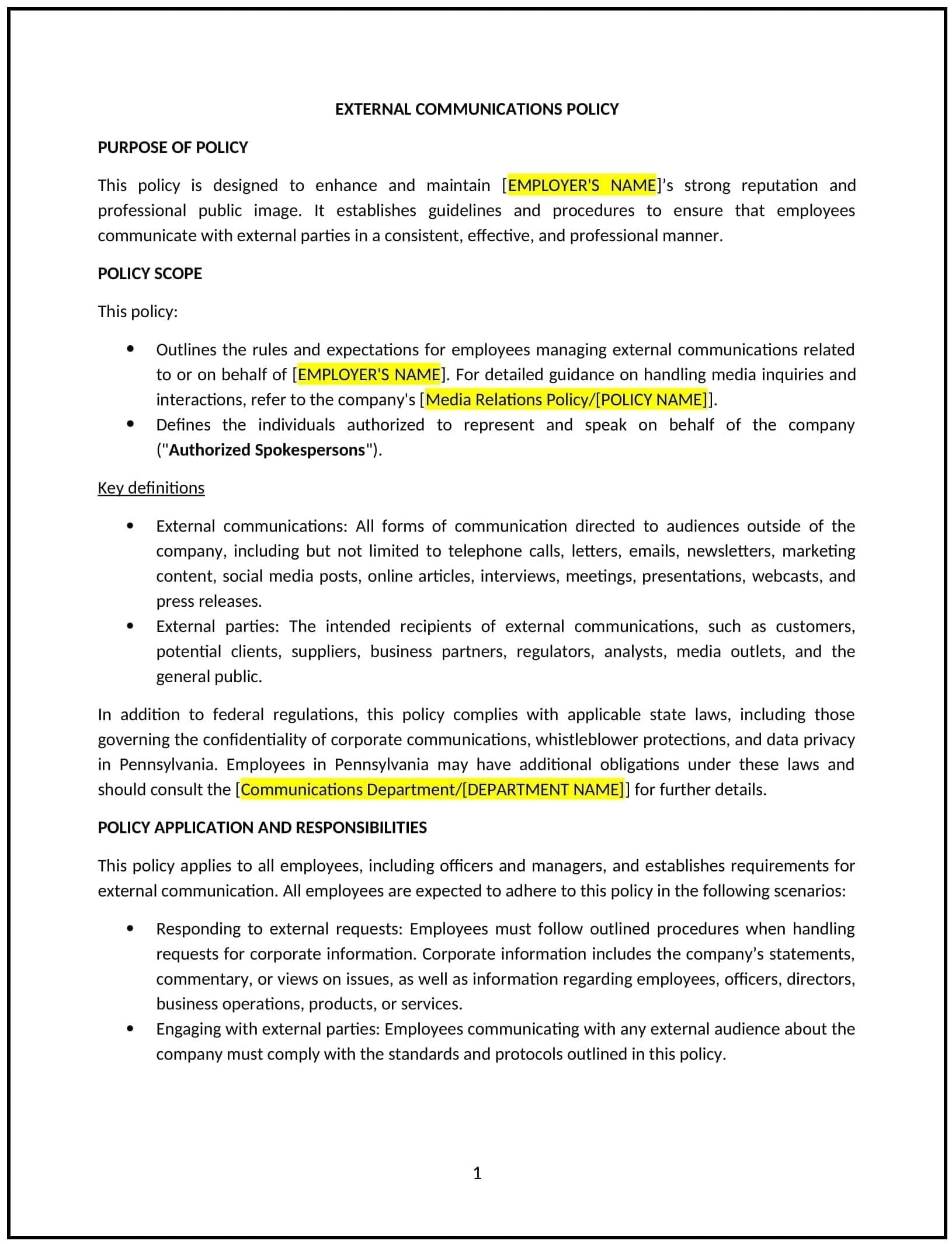
External communications policy (Pennsylvania): Free template
Regulates how company messages are shared externally to maintain accuracy and protect the organization’s reputation.
- Policies
- Pennsylvania
External communications policy (Pennsylvania)
This external communications policy is designed to help businesses in Pennsylvania manage how information is shared with external stakeholders, including customers, the media, and the public. Whether addressing press inquiries, social media posts, or customer communications, this template provides clear guidelines for maintaining consistency, professionalism, and brand integrity.
By using this template, businesses can protect their reputation, ensure accurate messaging, and align with Pennsylvania-specific industry practices and regulations.
How to use this external communications policy (Pennsylvania)
- Define communication channels: Clearly specify the approved channels for external communication, such as email, social media, press releases, and public statements.
- Assign responsibilities: Identify who is authorized to communicate on behalf of the company, such as designated spokespeople or department leads.
- Establish approval processes: Provide steps for reviewing and approving communications before they are shared externally.
- Address crisis communication: Include guidelines for managing communication during crises, ensuring timely and accurate information is provided to the public.
- Reflect Pennsylvania-specific considerations: Tailor the policy to align with local industry practices and any state-specific regulatory requirements for public communications.
Benefits of using an external communications policy (Pennsylvania)
A well-structured external communications policy supports consistency and professionalism. Here's how it helps:
- Protects brand reputation: Ensures external messaging aligns with the company’s values and standards.
- Reduces risks: Minimizes the chance of misinformation or unauthorized statements being shared publicly.
- Encourages accountability: Assigns clear roles and responsibilities for external communications.
- Streamlines communication: Establishes consistent processes for sharing information with external audiences.
- Reflects local needs: Aligns with Pennsylvania-specific industry practices and communication expectations.
Tips for using an external communications policy (Pennsylvania)
- Communicate the policy: Share the policy with employees to ensure everyone understands the guidelines for external communication.
- Train spokespeople: Provide training for individuals authorized to represent the company in external communications.
- Monitor messaging: Regularly review external communication channels to ensure they reflect the company’s standards and values.
- Be proactive: Develop templates and FAQs for common inquiries to ensure timely and accurate responses.
- Review periodically: Update the policy to reflect changes in Pennsylvania laws, industry practices, or company priorities.
Frequently asked questions (FAQs)
Similar templates
Where deals go from offer to paid
