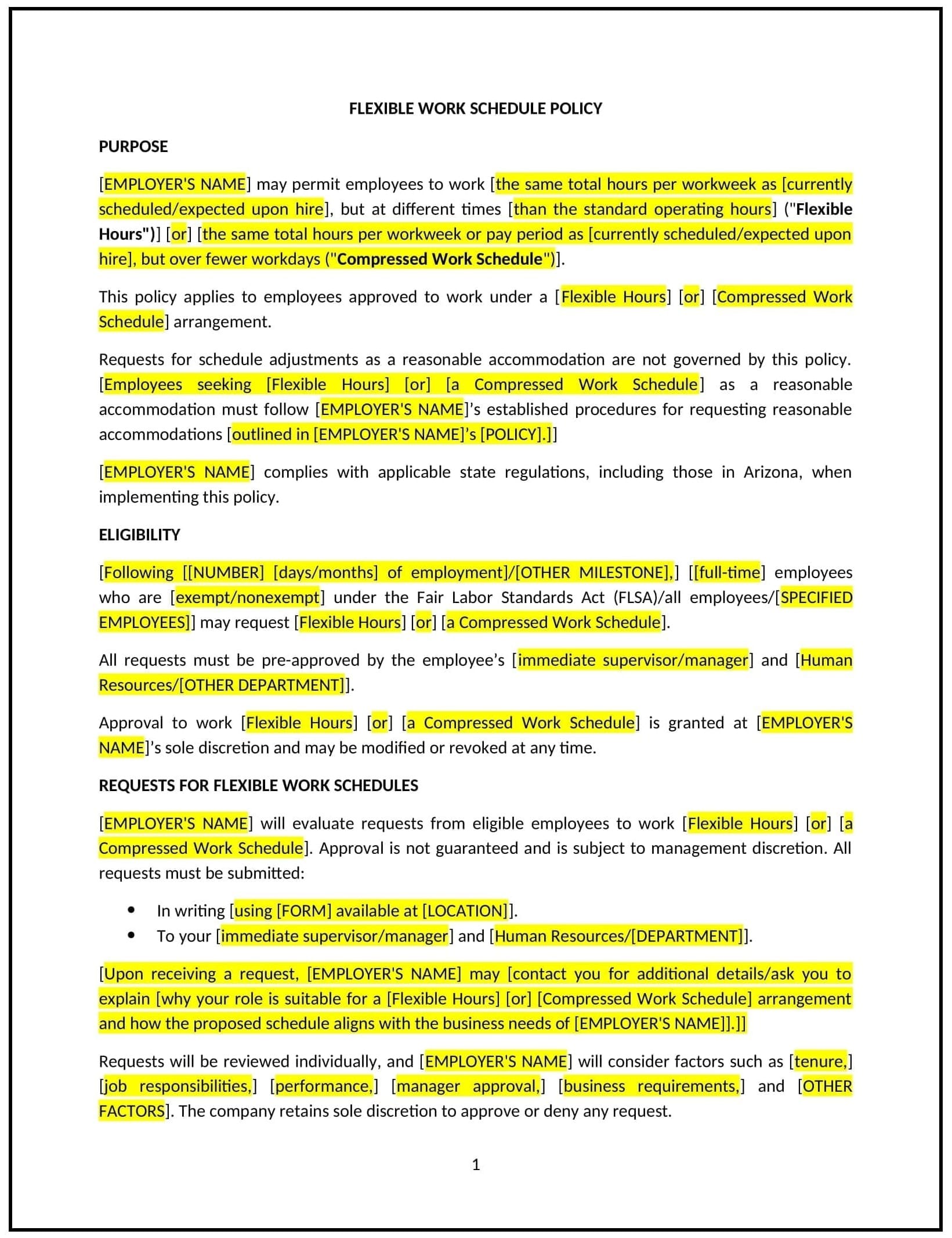
Flexible work schedule policy (Arizona): Free template
Offers alternative work hours to balance employee needs with business requirements under Arizona labor standards.
- Policies
- Arizona
Flexible work schedule policy (Arizona)
In Arizona, a flexible work schedule policy provides employees with alternative work arrangements, such as adjusted start and end times, compressed workweeks, or remote work options. This policy enables businesses to meet operational goals while accommodating employee preferences and supporting work-life balance.
This policy outlines eligibility criteria, types of flexible work options available, and procedures for requesting and implementing a flexible schedule. By adopting this policy, Arizona businesses can enhance productivity, boost morale, and attract top talent.
How to use this flexible work schedule policy (Arizona)
- Define eligibility: Specify which employees or roles are eligible for flexible work arrangements based on job requirements and business needs.
- Outline work options: Detail the types of flexibility available, such as remote work, compressed workweeks, or variable hours.
- Include request procedures: Provide instructions for submitting a formal request, including required documentation and notice periods.
- Set performance expectations: Clarify how work outcomes will be evaluated to ensure productivity and accountability under flexible arrangements.
- Monitor and adjust: Regularly assess the effectiveness of flexible work arrangements and make adjustments as needed.
Benefits of using a flexible work schedule policy (Arizona)
This policy offers several advantages for Arizona businesses:
- Boosts employee morale: Improves job satisfaction and work-life balance, leading to increased retention.
- Enhances productivity: Enables employees to work during their most productive hours or from locations that reduce distractions.
- Attracts top talent: Positions the company as a forward-thinking employer, appealing to candidates seeking flexibility.
- Supports compliance: Aligns with Arizona and federal labor laws regarding wages, hours, and workplace accommodations.
- Reduces overhead: Allows businesses to optimize office space and resources by accommodating remote or flexible work arrangements.
Tips for using a flexible work schedule policy (Arizona)
- Address Arizona-specific needs: Consider industries or roles where flexible schedules are especially beneficial, such as tech, healthcare, or remote customer service.
- Provide training: Educate managers and employees on best practices for implementing and maintaining flexible schedules.
- Use technology: Leverage tools for collaboration, time tracking, and performance management to support flexible work.
- Communicate clearly: Set expectations for availability, communication, and work quality to ensure seamless operations.
- Review periodically: Update the policy as workplace dynamics, technology, or business needs evolve.
Frequently asked questions (FAQs)
Similar templates
Where deals go from offer to paid
