Flexible work schedule policy (Nebraska): Free template
Allows adjusted work hours to accommodate employee needs while maintaining productivity and business goals.
- Policies
- Nebraska
Flexible work schedule policy (Nebraska)
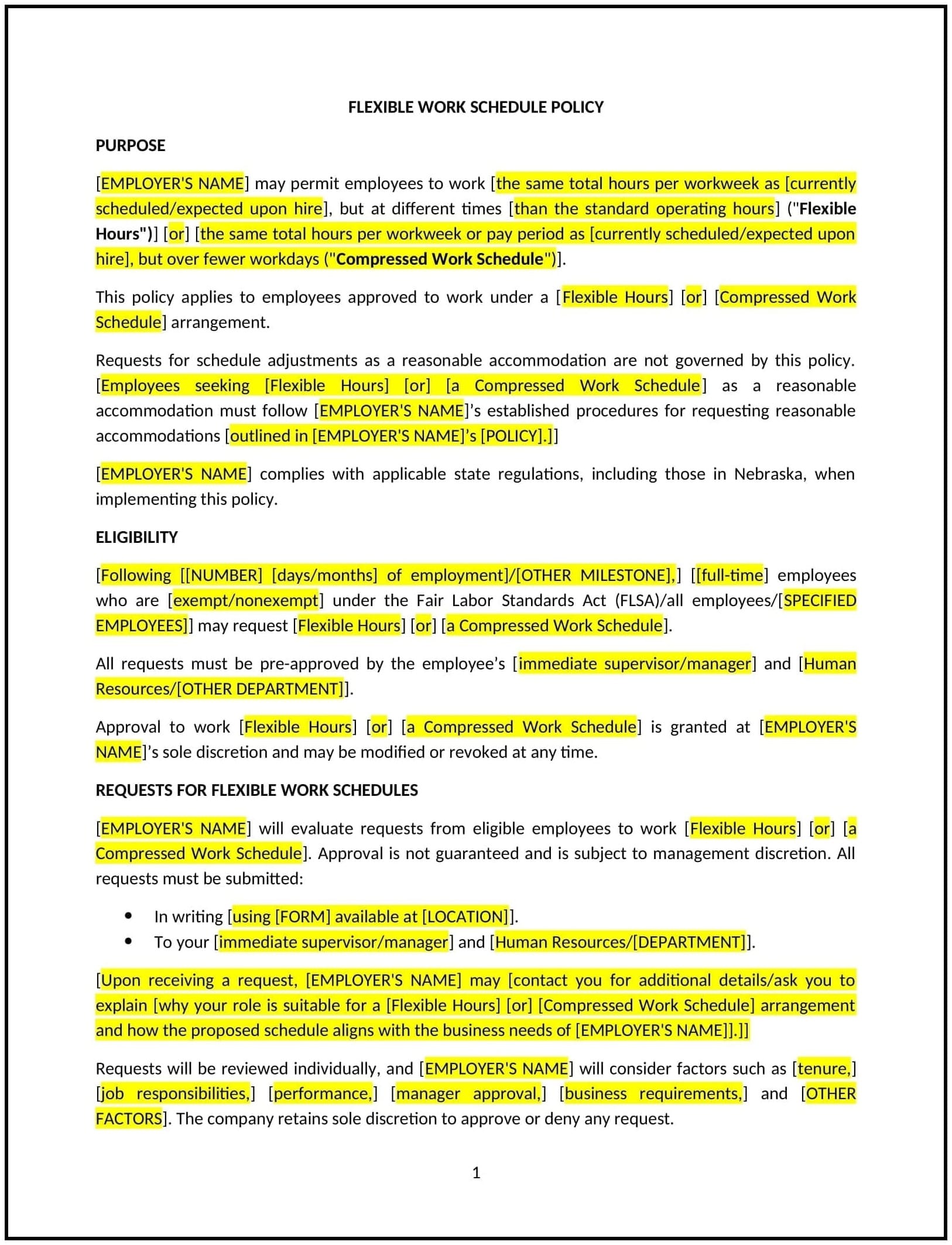
A flexible work schedule policy helps Nebraska businesses provide employees with the option to adjust their work hours to better fit their personal needs, while still meeting the operational needs of the company. This policy outlines the types of flexible work arrangements available, such as staggered hours, compressed workweeks, or telecommuting, and the process for requesting and approving flexible work schedules. It is designed to improve employee work-life balance, increase job satisfaction, and enhance productivity by offering flexibility in how and when employees complete their work.
By adopting this policy, businesses in Nebraska can create a more inclusive, supportive, and efficient work environment that benefits both employees and the organization.
How to use this flexible work schedule policy (Nebraska)
- Define flexible work options: Clearly explain the types of flexible work schedules available, such as staggered hours (where employees can choose their start and end times), compressed workweeks (working longer hours for fewer days), or remote work options.
- Establish eligibility criteria: Specify which employees are eligible for flexible work schedules. For example, the policy may apply to full-time employees who have been with the company for a certain period or employees in specific roles that can be performed remotely or with flexible hours.
- Set guidelines for requesting flexible schedules: Outline the process employees should follow to request a flexible work schedule, including providing sufficient notice, submitting a formal request, and discussing it with their manager. Include timelines for submitting requests and when decisions will be made.
- Specify approval and modification processes: Define how requests for flexible work schedules will be evaluated, including the role of managers in approving or denying requests based on business needs. Clarify that the company has the right to modify or withdraw a flexible work arrangement if it negatively impacts business operations.
- Address performance expectations: Ensure that employees understand that, regardless of their work schedule, they are expected to meet performance standards, attend required meetings, and complete tasks on time. Set clear expectations for availability, communication, and work output.
- Consider remote work options: For businesses offering remote work, define the terms of remote work arrangements, including expectations for communication, use of company equipment, and how performance will be managed. Specify if remote work is temporary or permanent, depending on business needs.
- Provide for accommodation of personal circumstances: Allow employees to request flexible schedules for personal reasons, such as childcare, eldercare, or health needs, and ensure the process is inclusive and supportive.
- Review and update: Periodically review and update the policy to ensure it meets the needs of both the business and the workforce, as well as reflects any changes in Nebraska state law or federal regulations.
Benefits of using this flexible work schedule policy (Nebraska)
This policy provides several benefits for Nebraska businesses:
- Improves employee morale: Offering flexibility helps employees better manage their personal and professional responsibilities, leading to increased job satisfaction and a positive work culture.
- Increases productivity: Employees with flexible work schedules may experience less stress and greater focus, leading to improved work performance and productivity.
- Attracts and retains talent: Offering flexible work options makes the business more attractive to potential employees, particularly those who need flexibility due to caregiving, health issues, or other personal needs. It can also reduce turnover by supporting employees' work-life balance.
- Supports diversity and inclusion: Flexible schedules can help accommodate employees with varying needs, such as those with disabilities, caregivers, or parents, creating a more inclusive work environment.
- Enhances business continuity: By offering remote work or flexible hours, businesses can continue operations more effectively during emergencies, extreme weather, or other disruptions, without sacrificing productivity.
Tips for using this flexible work schedule policy (Nebraska)
- Communicate the policy clearly: Ensure that all employees are aware of the flexible work schedule policy and understand how to request flexible hours. Provide training or information sessions to explain the available options and the process for making requests.
- Be consistent in application: Apply the policy consistently to avoid perceptions of favoritism or unfairness. Ensure that flexible work arrangements are evaluated based on business needs and employee performance, not personal preferences.
- Monitor effectiveness: Regularly assess the impact of flexible work schedules on employee performance, productivity, and satisfaction, and adjust the policy as needed to meet both employee and business needs.
- Set clear expectations: Make sure employees understand that flexible work schedules do not exempt them from performance standards, deadlines, or meetings. Encourage communication about availability and expectations for work output.
- Provide support for remote work: If offering remote work options, provide employees with the tools and resources they need to succeed, such as access to technology, training, and ongoing support.
Frequently asked questions (FAQs)
Similar templates
Where deals go from offer to paid
