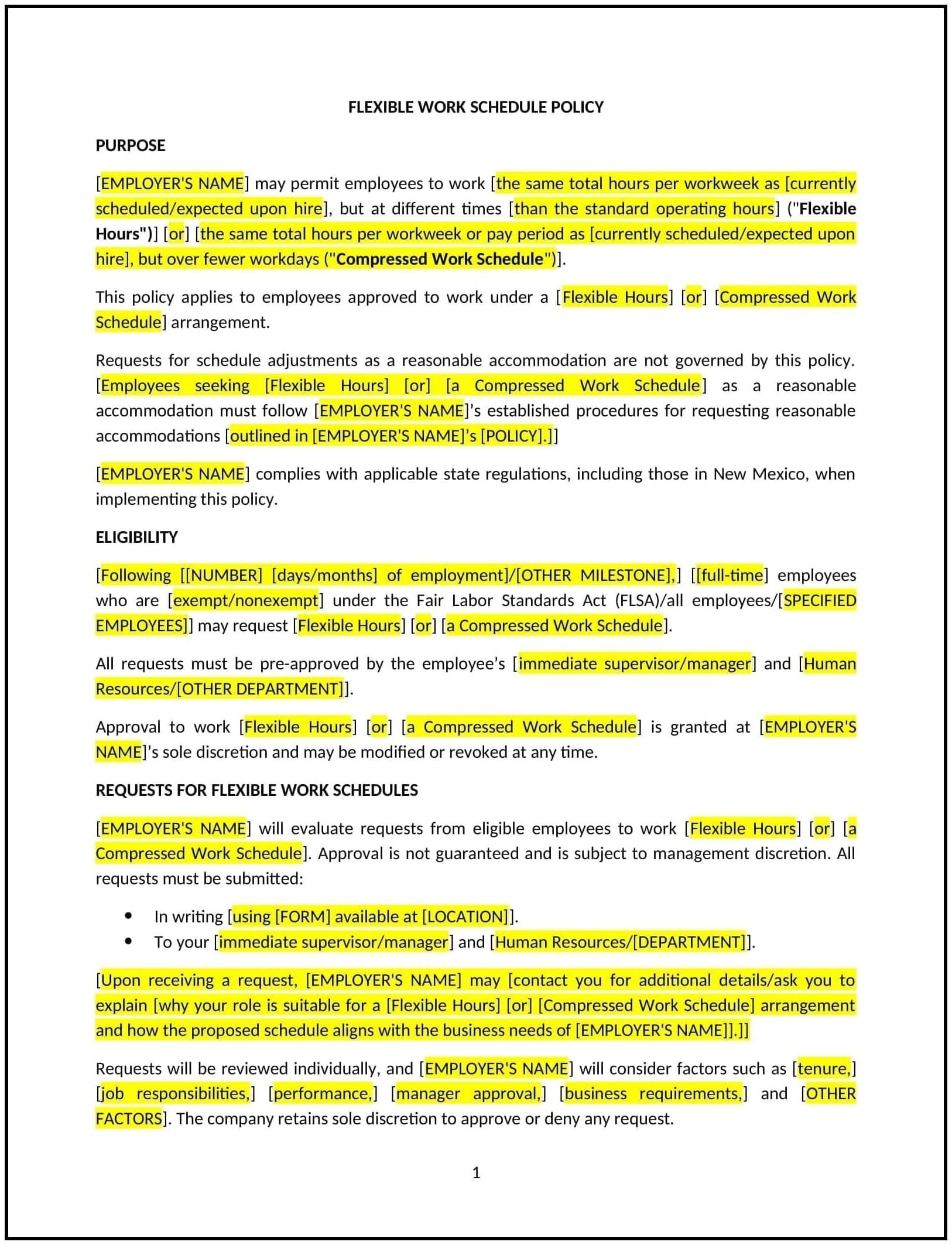
Flexible work schedule policy (New Mexico): Free template
Allows eligible employees to adjust work hours for better work-life balance while meeting business needs.
- Policies
- New Mexico
Flexible work schedule policy (New Mexico)
This flexible work schedule policy is designed to help New Mexico businesses offer greater work-life balance to employees by providing the option to adjust their work hours or work remotely, as needed, without compromising job performance or productivity. The policy outlines how employees can request flexible work arrangements, the types of flexible work options available, and the guidelines for managing these arrangements.
By adopting this policy, New Mexico businesses can improve employee satisfaction, enhance retention, and adapt to evolving work trends while maintaining productivity and meeting business needs.
How to use this flexible work schedule policy (New Mexico)
- Define eligibility: Clearly outline who is eligible for flexible work arrangements, such as full-time employees who have been with the company for a certain period. Specify any exceptions or limitations for certain roles or departments.
- Specify available flexible work options: Outline the different types of flexible work arrangements available, such as flextime (adjusting start and end times), compressed work weeks (e.g., four 10-hour days), and remote work.
- Establish the request process: Specify how employees should request flexible work arrangements, including who to contact, what information to provide, and the timeline for submitting requests.
- Set expectations for performance and productivity: Make it clear that flexible work schedules are subject to the same performance standards as traditional work hours, and that employees must remain accountable for meeting their job responsibilities.
- Reflect New Mexico-specific considerations: Consider any local laws or regulations in New Mexico that may impact flexible work schedules, such as state-specific labor laws or ordinances that address remote work.
Benefits of using this flexible work schedule policy (New Mexico)
Implementing this policy provides New Mexico businesses with several advantages:
- Enhances employee satisfaction: Offering flexible work arrangements can significantly increase job satisfaction, as employees are able to balance work with personal responsibilities, reducing stress and increasing engagement.
- Improves employee retention: Flexible work options are often a key factor in retaining top talent, as they demonstrate a business’s commitment to employee well-being and work-life balance.
- Increases productivity: Many employees experience higher productivity when they have the ability to structure their workday to suit their needs, whether by avoiding long commutes or working during their most productive hours.
- Reduces absenteeism: Flexible schedules can help reduce absenteeism by allowing employees to manage personal appointments or family obligations without taking a full day off.
- Attracts a diverse talent pool: Offering flexible work options makes the company more attractive to a wider range of candidates, including those with caregiving responsibilities or other personal commitments.
Tips for using this flexible work schedule policy (New Mexico)
- Communicate the policy clearly: Ensure all employees understand the flexible work schedule policy, including the types of arrangements available, how to request flexible hours, and the criteria for approval.
- Set clear expectations for productivity: While employees may have flexible schedules, businesses should still maintain clear expectations regarding productivity, availability, and deadlines. Establish regular check-ins to ensure employees are on track.
- Offer remote work guidelines: If remote work is an option, provide guidelines on how employees should set up their home office, communicate with colleagues, and stay connected to the team.
- Ensure consistency in decision-making: Managers should follow consistent criteria when approving flexible work arrangements to avoid potential biases and ensure fairness across the organization.
- Review the policy regularly: Periodically review the policy to ensure it remains aligned with business needs, employee feedback, and any changes in New Mexico state law or best practices for flexible work.
Frequently asked questions (FAQs)
Similar templates
Where deals go from offer to paid
