Flexible work schedule policy (Oregon): Free template
Offers adaptable working hours to support work-life balance and productivity.
- Policies
- Oregon
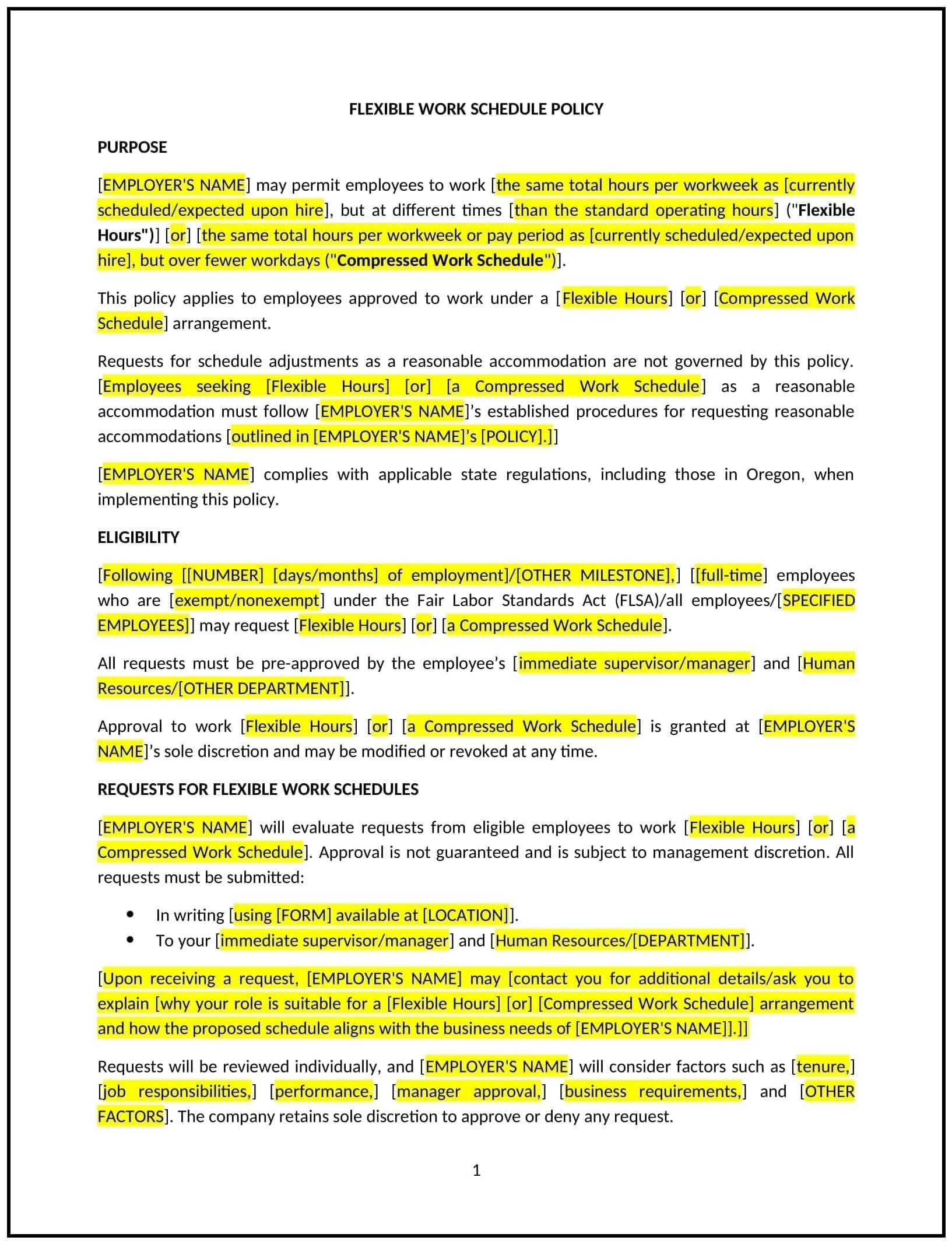
Flexible work schedule policy (Oregon)
This flexible work schedule policy is designed to help Oregon businesses establish guidelines for offering flexible work arrangements, such as remote work, compressed workweeks, or flexible hours. It outlines procedures for requesting and approving flexible schedules, ensuring productivity, and maintaining team collaboration.
By adopting this policy, businesses can attract top talent, improve employee satisfaction, and adapt to modern work trends.
How to use this flexible work schedule policy (Oregon)
- Define flexible arrangements: Specify the types of flexible schedules available, such as remote work, flextime, or compressed workweeks.
- Establish eligibility criteria: Outline requirements for employees to qualify for flexible schedules, such as job role or performance.
- Set request procedures: Provide steps for employees to request flexible schedules, including required notice and approvals.
- Ensure productivity: Outline expectations for maintaining productivity and meeting deadlines under flexible arrangements.
- Promote collaboration: Provide guidelines for staying connected with teams and participating in meetings or projects.
- Train managers: Educate supervisors on managing flexible work arrangements and maintaining team cohesion.
- Update regularly: Review the policy annually to align with evolving business needs and workforce trends.
Benefits of using this flexible work schedule policy (Oregon)
This policy offers several advantages for Oregon businesses:
- Attracts top talent: Appeals to candidates seeking work-life balance and flexible arrangements.
- Improves employee satisfaction: Provides employees with greater control over their schedules, boosting morale and retention.
- Enhances productivity: Allows employees to work during their most productive hours, improving efficiency.
- Supports modern work trends: Adapts to the growing demand for remote and flexible work options.
- Reduces overhead costs: Lowers expenses related to office space and utilities for remote work arrangements.
Tips for using this flexible work schedule policy (Oregon)
- Communicate the policy: Share the policy with employees and include it in the employee handbook.
- Provide training: Educate managers on managing flexible work arrangements and maintaining team cohesion.
- Use clear guidelines: Ensure employees understand expectations for productivity and collaboration under flexible schedules.
- Monitor effectiveness: Regularly review flexible work arrangements to ensure they meet business and employee needs.
- Update regularly: Assess the policy annually to align with evolving business needs and workforce trends.
Frequently asked questions (FAQs)
Similar templates
Where deals go from offer to paid
