Flexible work schedule policy (Pennsylvania): Free template
Introduces flexible scheduling options to help employees balance personal needs with business priorities.
- Policies
- Pennsylvania
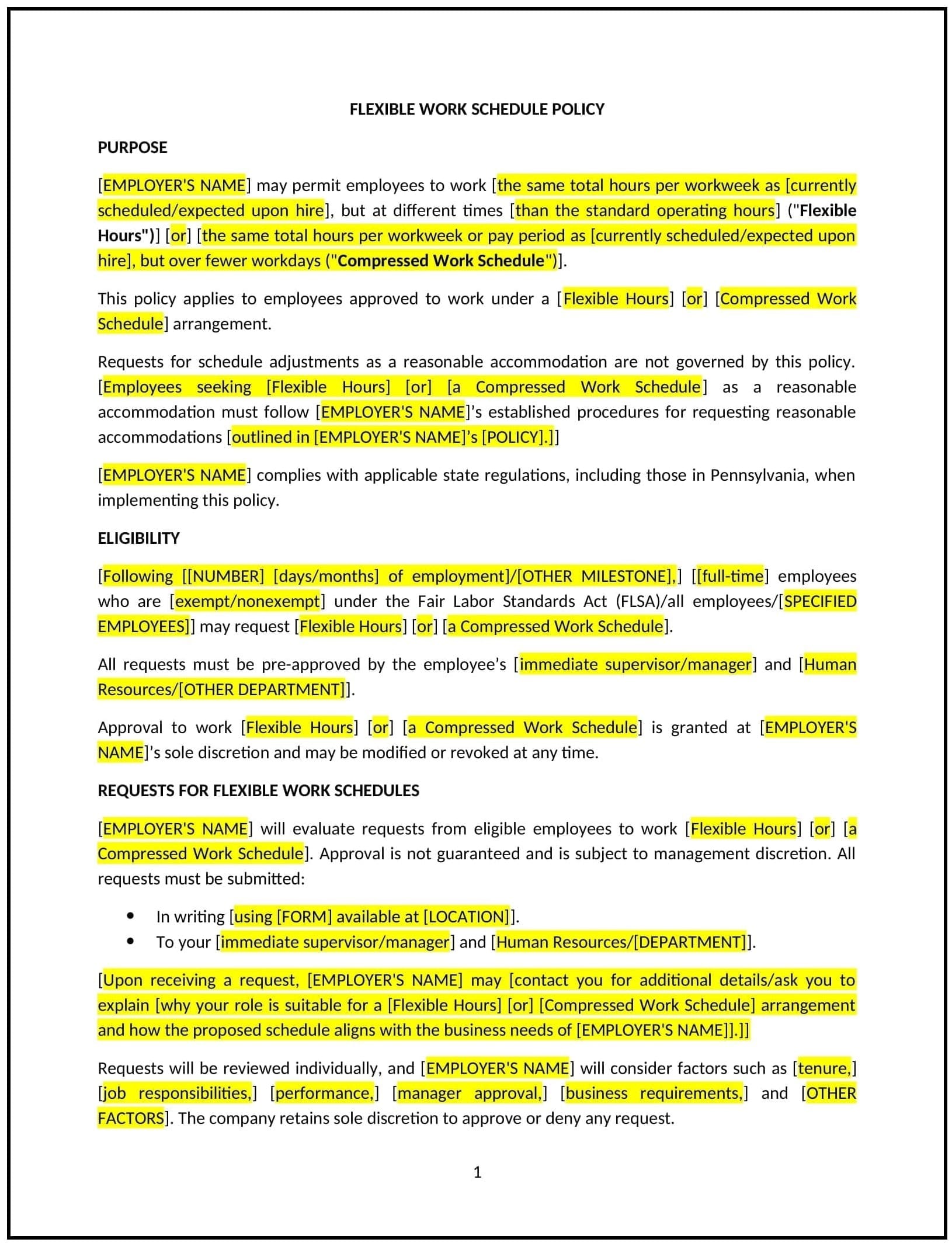
Flexible work schedule policy (Pennsylvania)
This flexible work schedule policy is designed to help businesses in Pennsylvania provide employees with the option to adjust their work hours or locations to balance personal and professional responsibilities. Whether accommodating remote work, compressed workweeks, or staggered shifts, this template outlines clear guidelines for implementing flexible schedules while aligning with Pennsylvania labor laws.
By using this template, businesses can enhance employee satisfaction, improve productivity, and attract top talent.
How to use this flexible work schedule policy (Pennsylvania)
- Define flexibility options: Clearly specify the types of flexible schedules available, such as remote work, flextime, compressed workweeks, or part-time arrangements.
- Establish eligibility criteria: Outline which roles or employees qualify for flexible schedules based on job responsibilities and organizational needs.
- Include approval procedures: Provide steps for employees to request a flexible schedule, including submitting a proposal and obtaining manager approval.
- Address accountability: Detail how performance and productivity will be monitored for employees on flexible schedules to ensure alignment with business goals.
- Reflect Pennsylvania-specific considerations: Tailor the policy to address state labor laws, such as wage and hour regulations, or industry-specific flexibility needs.
Benefits of using a flexible work schedule policy (Pennsylvania)
A well-structured flexible work schedule policy supports employee engagement and operational efficiency. Here's how it helps:
- Enhances productivity: Allows employees to work during their most productive hours, improving overall output.
- Supports work-life balance: Provides employees with the flexibility to manage personal commitments alongside work responsibilities.
- Increases retention: Demonstrates the business’s commitment to accommodating employee needs, fostering loyalty.
- Attracts talent: Makes the organization more appealing to prospective employees seeking flexible work options.
- Aligns with local needs: Reflects Pennsylvania’s labor laws and workplace trends, such as the growing demand for remote work options.
Tips for using a flexible work schedule policy (Pennsylvania)
- Communicate the policy: Share the policy with employees to ensure they understand the available options and how to request them.
- Train managers: Provide training to supervisors on evaluating and managing flexible schedules effectively.
- Use technology: Leverage tools such as scheduling software or communication platforms to support flexible work arrangements.
- Monitor performance: Regularly review the impact of flexible schedules on productivity and team dynamics to ensure effectiveness.
- Review periodically: Update the policy to reflect changes in Pennsylvania labor laws, workforce trends, or organizational goals.
Frequently asked questions (FAQs)
Similar templates
Where deals go from offer to paid
