Flexible work schedule policy (South Carolina): Free template
Offers options for non-traditional work hours to accommodate employee needs and improve work-life balance.
- Policies
- South Carolina
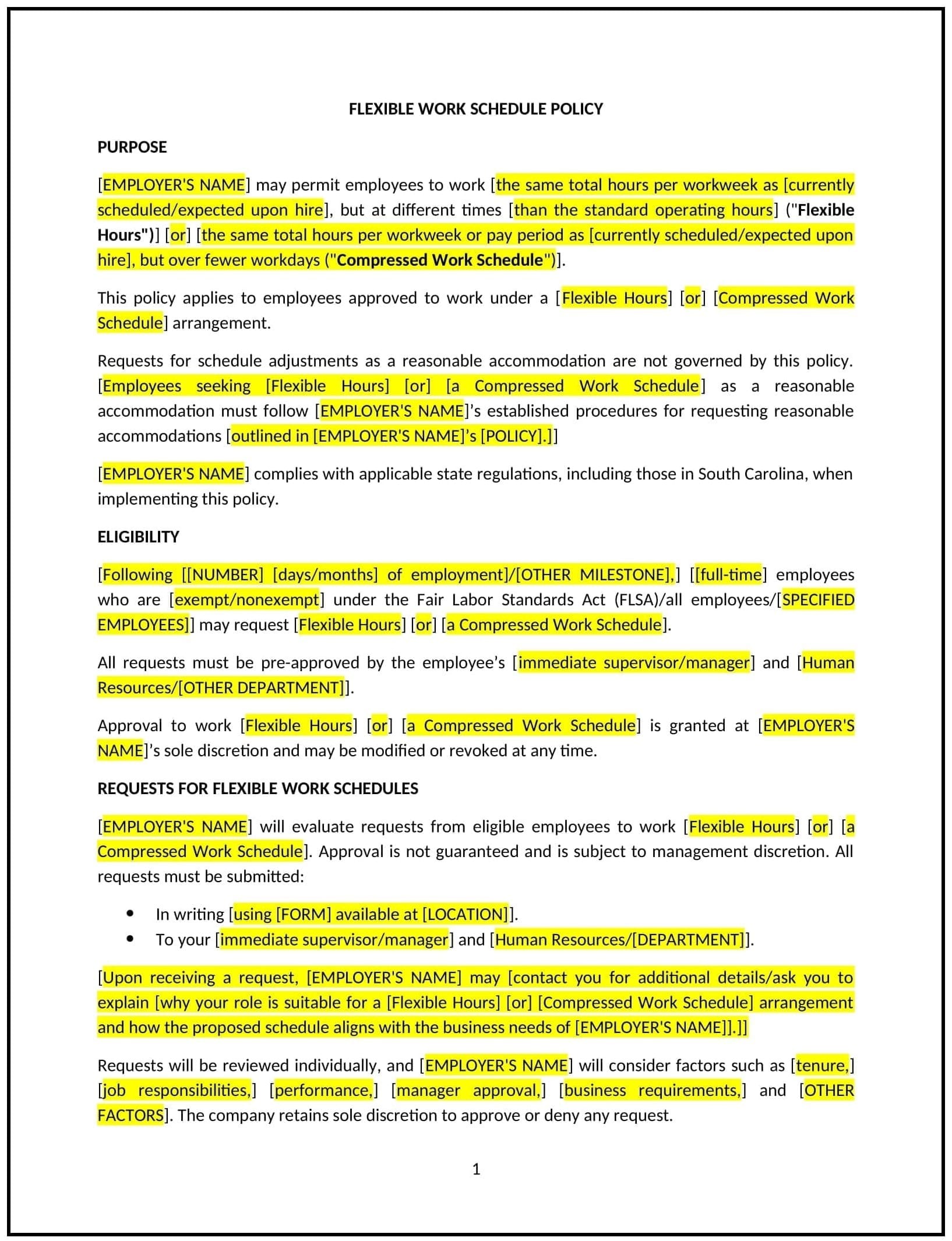
Flexible work schedule policy (South Carolina)
This flexible work schedule policy is designed to help South Carolina businesses establish guidelines for employees to adjust their work hours or locations to better balance work and personal responsibilities. It outlines procedures for requesting flexible schedules, eligibility criteria, and expectations for maintaining productivity.
By adopting this policy, businesses can support employee well-being, enhance job satisfaction, and align with general best practices for workplace flexibility.
How to use this flexible work schedule policy (South Carolina)
- Define flexible schedules: Explain what constitutes a flexible schedule, such as remote work, compressed workweeks, or adjusted start and end times.
- Establish eligibility criteria: Specify which employees are eligible for flexible schedules, such as those in roles that allow for remote work or adjusted hours.
- Set request procedures: Provide steps for employees to request flexible schedules, including required notice and approval processes.
- Address productivity expectations: Outline expectations for maintaining productivity and meeting job responsibilities while on a flexible schedule.
- Train managers: Educate supervisors on handling flexible schedule requests and managing remote or hybrid teams.
- Review and update: Assess the policy annually to ensure it aligns with evolving business needs and employee expectations.
Benefits of using this flexible work schedule policy (South Carolina)
This policy offers several advantages for South Carolina businesses:
- Supports work-life balance: Helps employees manage personal responsibilities while meeting work obligations.
- Enhances job satisfaction: Demonstrates a commitment to employee well-being, boosting morale and retention.
- Aligns with best practices: Provides a structured approach to managing workplace flexibility.
- Attracts top talent: Appeals to candidates seeking flexible work arrangements.
- Increases productivity: Allows employees to work during their most productive hours or in environments that suit their needs.
Tips for using this flexible work schedule policy (South Carolina)
- Communicate the policy: Share the policy with employees and include it in the employee handbook.
- Provide training: Educate managers on handling flexible schedule requests and managing remote or hybrid teams.
- Monitor adherence: Regularly review flexible work arrangements to ensure they meet productivity and business needs.
- Address issues promptly: Take corrective action if flexible schedules are misused or negatively impact team performance.
- Update regularly: Assess the policy annually to ensure it aligns with evolving business needs and employee expectations.
Frequently asked questions (FAQs)
Similar templates
Where deals go from offer to paid
