Flexible work schedule policy (Wyoming): Free template
Outlines options and expectations for alternative work hours to support flexibility in Wyoming workplaces.
- Policies
- Wyoming
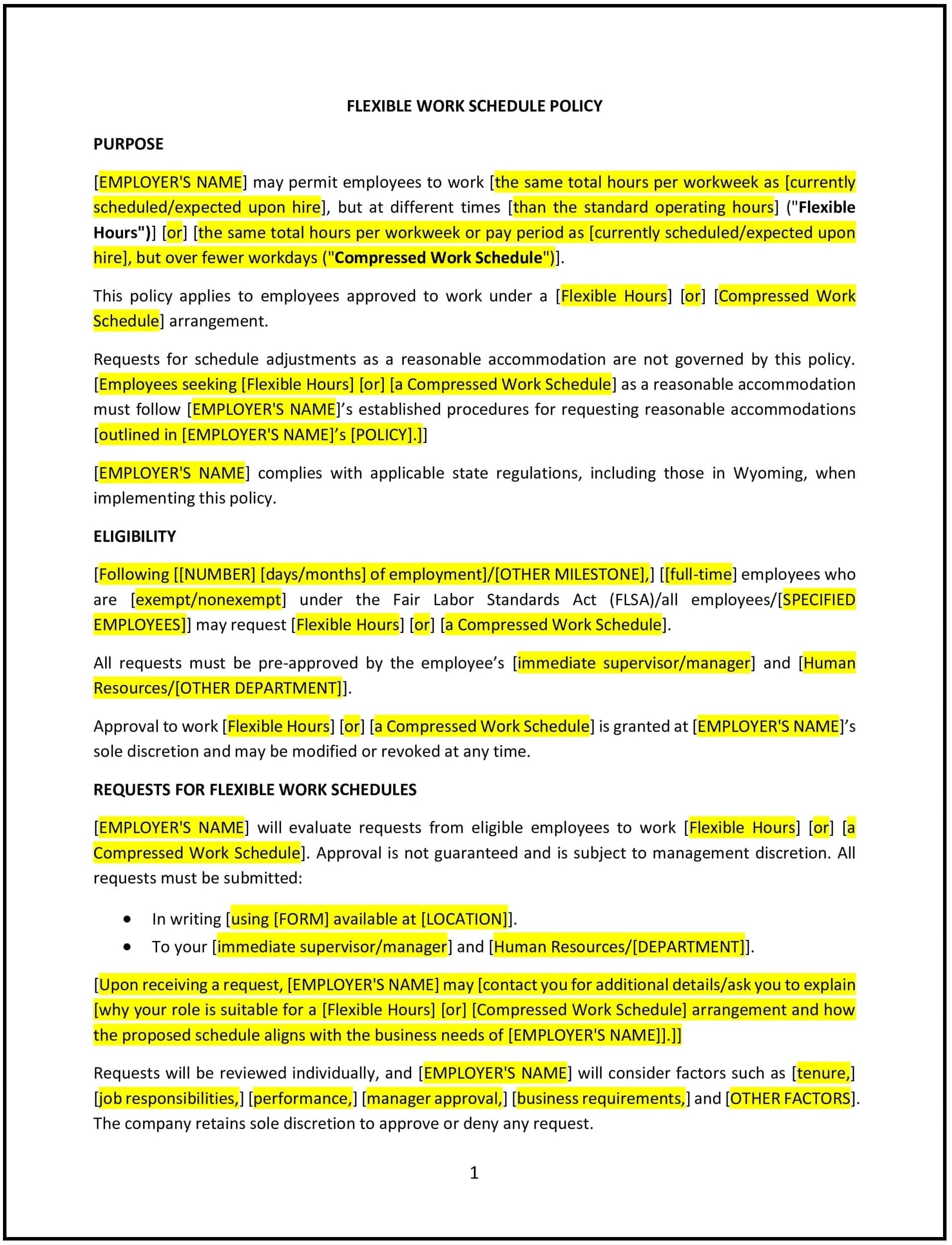
Flexible work schedule policy (Wyoming)
In Wyoming, a flexible work schedule policy allows businesses to offer employees greater control over their working hours, improving work-life balance and accommodating personal and professional needs. This policy is especially beneficial for organizations operating in industries like healthcare, agriculture, and energy, where flexibility can enhance productivity and employee satisfaction.
This policy outlines the eligibility criteria, application process, and guidelines for implementing flexible work schedules while ensuring alignment with Wyoming labor laws and business objectives.
How to use this flexible work schedule policy (Wyoming)
- Define flexible schedules: Clearly specify the types of flexible work arrangements available, such as compressed workweeks, remote work, or adjustable daily hours.
- Establish eligibility criteria: Outline which roles and employees are eligible for flexible schedules based on job responsibilities, performance, and business needs.
- Provide an application process: Include steps for employees to request flexible schedules, such as submitting a formal proposal to their supervisor or HR.
- Set guidelines for implementation: Define how flexible schedules will be monitored, including expectations for availability, communication, and performance.
- Support compliance: Align the policy with Wyoming labor laws, including wage and hour regulations, to support legal and operational standards.
Benefits of using a flexible work schedule policy (Wyoming)
A flexible work schedule policy offers numerous benefits for Wyoming businesses:
- Improves employee retention: Enhances work-life balance, making employees more likely to stay with the organization.
- Boosts productivity: Allows employees to work during their most productive hours, leading to better performance.
- Supports compliance: Aligns with state labor laws, reducing the risk of disputes related to work hours or wages.
- Enhances recruitment: Attracts top talent by offering flexibility, which is increasingly valued in the job market.
- Adapts to local needs: Accommodates Wyoming’s unique workforce challenges, such as long commutes, rural work environments, or seasonal industries.
Tips for using a flexible work schedule policy (Wyoming)
- Communicate expectations: Clearly define expectations for communication, productivity, and availability to ensure consistency.
- Provide training: Offer guidance for managers and employees on how to implement and maintain flexible schedules effectively.
- Monitor performance: Regularly review the outcomes of flexible work arrangements to ensure they align with business objectives.
- Encourage feedback: Solicit input from employees and managers to identify areas for improvement and refine the policy.
- Review periodically: Update the policy as needed to reflect changes in laws, technology, or workforce dynamics.
Frequently asked questions (FAQs)
Similar templates
Where deals go from offer to paid
