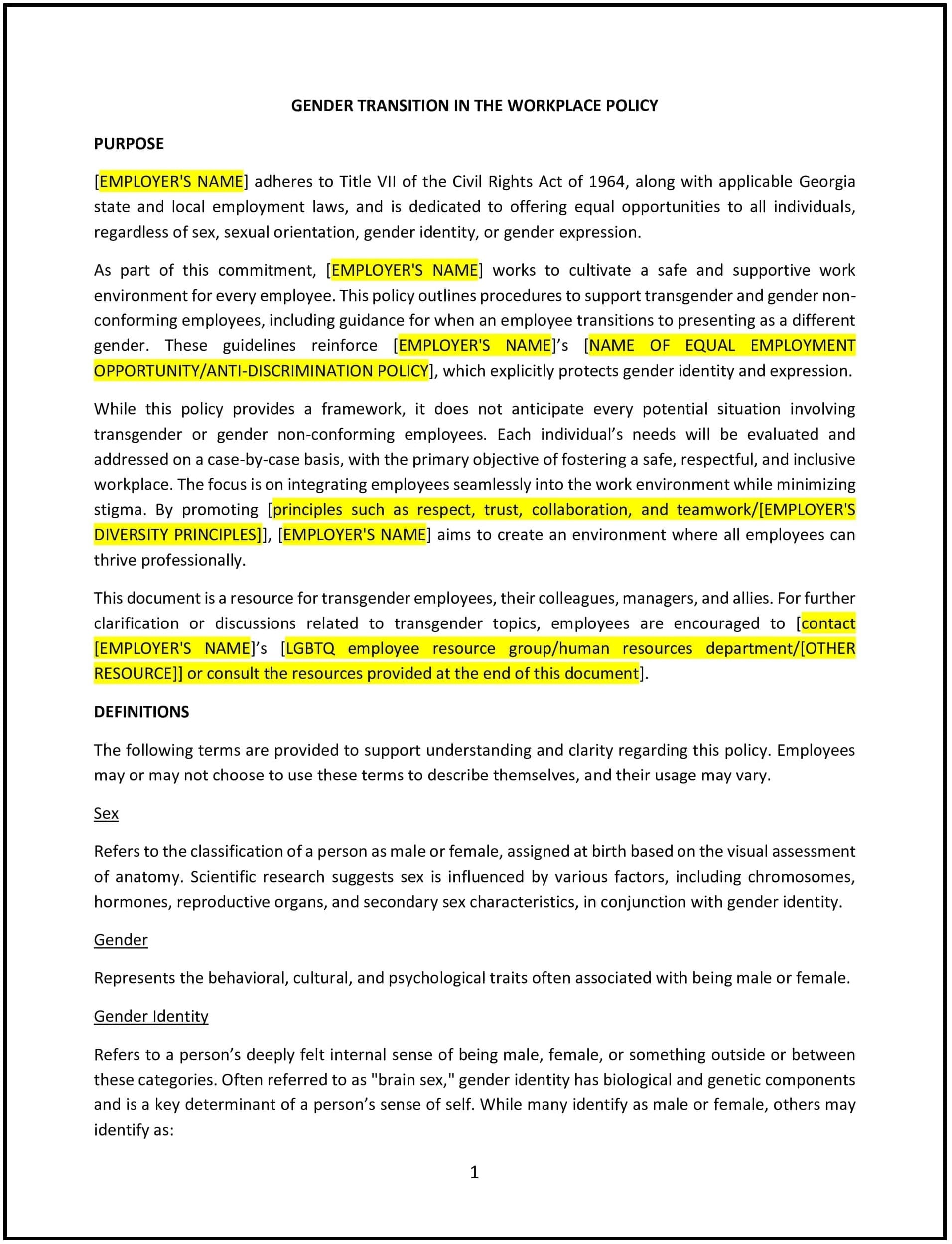
Gender transition in the workplace policy (Georgia): Free template
Offers guidance and accommodations for transitioning employees, ensuring respect, inclusion, and compliance with Georgia regulations.
- Policies
- Georgia
Gender transition in the workplace policy (Georgia)
This gender transition in the workplace policy is designed to help Georgia businesses support employees undergoing gender transitions. The policy provides guidance on fostering an inclusive environment, addressing workplace adjustments, and promoting respect and understanding among employees.
By implementing this policy, businesses can create a supportive culture, improve employee morale, and demonstrate a commitment to diversity and inclusion.
How to use this gender transition in the workplace policy (Georgia)
- Define gender transition: Provide an explanation of gender transition, including social, legal, and medical aspects, to ensure clarity and understanding.
- Outline support measures: Specify resources available to transitioning employees, such as access to HR, employee assistance programs (EAPs), and external support organizations.
- Establish privacy guidelines: Emphasize the importance of maintaining confidentiality and handling personal information sensitively.
- Create a transition plan: Offer a framework for collaborating with the transitioning employee to address workplace adjustments, including name changes, pronouns, and uniforms.
- Address training needs: Provide training for managers and employees on gender diversity, respectful communication, and inclusive workplace practices.
- Set anti-discrimination standards: Clearly state that discrimination, harassment, or retaliation against transitioning employees will not be tolerated.
- Encourage open communication: Promote dialogue between the transitioning employee, their manager, and HR to ensure a smooth adjustment process.
- Review and update regularly: Periodically assess the policy to reflect changes in Georgia workplace dynamics, legal requirements, or best practices.
Benefits of using this gender transition in the workplace policy (Georgia)
Implementing this policy provides several advantages for Georgia businesses:
- Fosters inclusivity: Supporting gender transitions demonstrates a commitment to diversity and equity.
- Enhances morale: Employees feel valued and respected, leading to improved engagement and productivity.
- Reduces conflict: Clear guidelines help prevent misunderstandings or discrimination in the workplace.
- Attracts diverse talent: A supportive culture appeals to a broader range of skilled professionals.
- Reflects Georgia-specific values: Tailoring the policy to local workplace and cultural norms ensures its effectiveness.
Tips for using this gender transition in the workplace policy (Georgia)
- Communicate openly: Encourage respectful and transparent communication while respecting the transitioning employee’s privacy.
- Provide training: Offer education sessions to managers and employees on gender diversity and how to create an inclusive environment.
- Monitor implementation: Regularly review how the policy is being applied and address any gaps in support or adherence.
- Partner with local resources: Collaborate with Georgia-based LGBTQ+ organizations to enhance workplace support and provide additional resources.
- Be adaptable: Tailor transition plans to meet the unique needs of each employee and adjust based on feedback or evolving workplace dynamics.
Frequently asked questions (FAQs)
Similar templates
Where deals go from offer to paid
