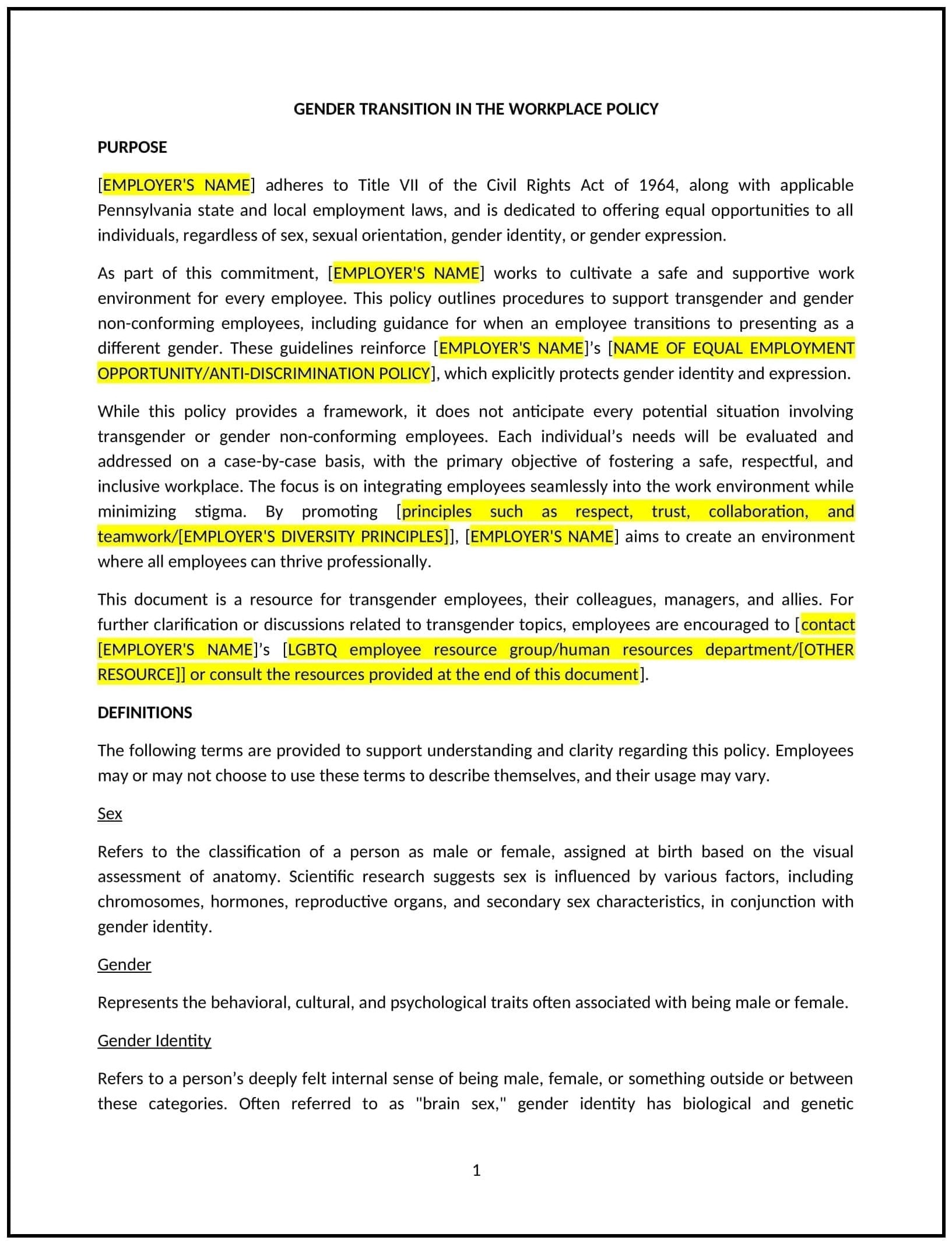
Gender transition in the workplace policy (Pennsylvania): Free template
Affirms support for transitioning employees by outlining respectful practices, privacy considerations, and inclusive communication.
- Policies
- Pennsylvania
Gender transition in the workplace policy (Pennsylvania)
This gender transition in the workplace policy is designed to help businesses in Pennsylvania create a supportive and inclusive environment for employees undergoing or planning a gender transition. By addressing the unique needs of transitioning employees and their colleagues, this template outlines guidelines for fostering respect, maintaining confidentiality, and ensuring compliance with Pennsylvania anti-discrimination laws and federal regulations.
By using this template, businesses can promote inclusivity, protect employee rights, and enhance workplace culture.
How to use this gender transition in the workplace policy (Pennsylvania)
- Define key terms: Clearly explain terms such as "gender transition," "preferred pronouns," and "gender identity" to establish a shared understanding across the workplace.
- Outline rights and responsibilities: Provide guidance on the rights of transitioning employees and the responsibilities of managers and coworkers in creating a supportive environment.
- Include transition plans: Offer a framework for employees and managers to develop a transition plan, addressing timelines, communication, and workplace adjustments.
- Address privacy and confidentiality: Emphasize the importance of safeguarding sensitive information about an employee’s transition and limiting disclosure to those with a legitimate need to know.
- Reflect Pennsylvania-specific considerations: Tailor the policy to align with Pennsylvania laws, such as the Pennsylvania Human Relations Act, which prohibits discrimination based on gender identity.
Benefits of using a gender transition in the workplace policy (Pennsylvania)
A well-structured gender transition policy supports inclusivity and employee well-being. Here's how it helps:
- Promotes inclusivity: Fosters a supportive and respectful workplace culture for all employees, regardless of gender identity.
- Protects employee rights: Ensures compliance with Pennsylvania anti-discrimination laws and federal protections for transitioning employees.
- Enhances communication: Provides a structured approach for discussing workplace adjustments and addressing concerns.
- Reduces conflict: Offers clear guidelines to prevent misunderstandings or discriminatory behavior in the workplace.
- Aligns with local needs: Reflects Pennsylvania’s legal and cultural landscape, supporting inclusivity in diverse workplaces.
Tips for using a gender transition in the workplace policy (Pennsylvania)
- Communicate the policy: Share the policy with employees to foster awareness and understanding of the company’s commitment to inclusivity.
- Provide training: Offer diversity and inclusion training to managers and staff, focusing on gender identity and supporting transitioning employees.
- Encourage open communication: Create a safe space where transitioning employees feel comfortable discussing their needs and concerns.
- Monitor implementation: Regularly review workplace practices to ensure the policy is being followed and that employees feel supported.
- Review periodically: Update the policy to reflect changes in Pennsylvania laws, societal expectations, or workplace dynamics.
Frequently asked questions (FAQs)
Similar templates
Where deals go from offer to paid
