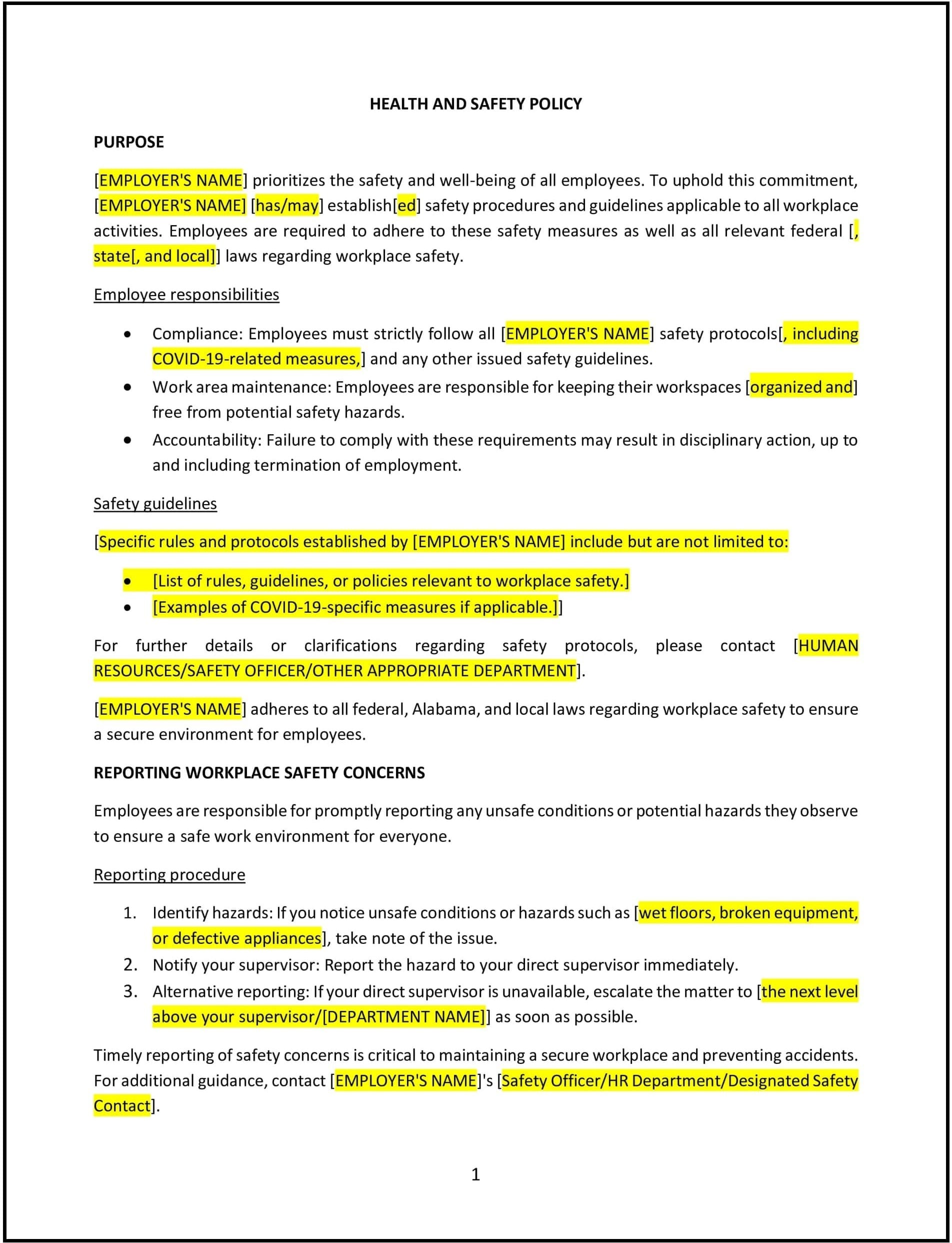
Health and safety policy (Alabama): Free template
Promotes a safe workplace by identifying hazards, assigning responsibilities, and aligning with Alabama safety regulations.
- Policies
- Alabama
Health and safety policy (Alabama)
A health and safety policy outlines the commitment of your business to providing a safe and secure workplace for employees, customers, and visitors. For SMBs in Alabama, this policy establishes guidelines to prevent workplace accidents, promote well-being, and ensure compliance with safety standards. Tailoring this policy to address specific workplace hazards and industry needs supports a proactive safety culture.
This policy provides a framework for identifying risks, implementing safety measures, and addressing incidents effectively, helping to protect both employees and the business.
How to use this health and safety policy (Alabama)
- Identify workplace hazards: Conduct a thorough assessment of potential risks specific to your industry and operations in Alabama, such as machinery-related risks, ergonomic concerns, or environmental hazards.
- Develop safety protocols: Outline specific procedures for maintaining safety, such as proper equipment use, regular inspections, and emergency response plans.
- Assign responsibilities: Clearly define the roles of employees, supervisors, and management in maintaining workplace safety and implementing the policy.
- Provide training: Offer regular training on workplace safety, including hazard awareness, emergency procedures, and proper use of safety equipment.
- Establish reporting mechanisms: Include procedures for employees to report hazards, near misses, or incidents confidentially and without fear of retaliation.
Benefits of using a health and safety policy (Alabama)
A health and safety policy helps create a safer, more productive work environment while protecting your business and employees. Here’s how it helps:
- Reduces workplace accidents: Proactively addresses risks to minimize injuries and accidents, improving employee well-being and reducing downtime.
- Enhances compliance: Aligns with OSHA standards and Alabama-specific regulations to support legal and safety requirements.
- Builds employee confidence: Demonstrates a commitment to safety, fostering trust and morale among employees.
- Lowers costs: Reduces expenses related to workplace injuries, such as medical bills, workers’ compensation claims, and lost productivity.
- Improves business reputation: Establishes your company as a responsible and safe employer, attracting top talent and loyal customers.
Tips for implementing a health and safety policy (Alabama)
- Conduct regular inspections: Schedule routine workplace inspections to identify and address potential hazards before they become incidents.
- Encourage employee involvement: Involve employees in safety planning and decision-making to ensure their insights and concerns are addressed.
- Maintain up-to-date records: Keep detailed records of safety training, inspections, and incidents to track progress and support compliance efforts.
- Review and update the policy: Periodically assess the effectiveness of the policy and make updates as needed to reflect changes in regulations, operations, or workplace risks.
- Provide accessible resources: Ensure employees have easy access to safety equipment, emergency contact information, and the full health and safety policy.
Frequently asked questions (FAQs)
Similar templates
Where deals go from offer to paid
