Health and safety policy (Minnesota): Free template
Outlines workplace safety expectations and responsibilities for Minnesota employers and employees to prevent injuries and maintain compliance.
- Policies
- Minnesota
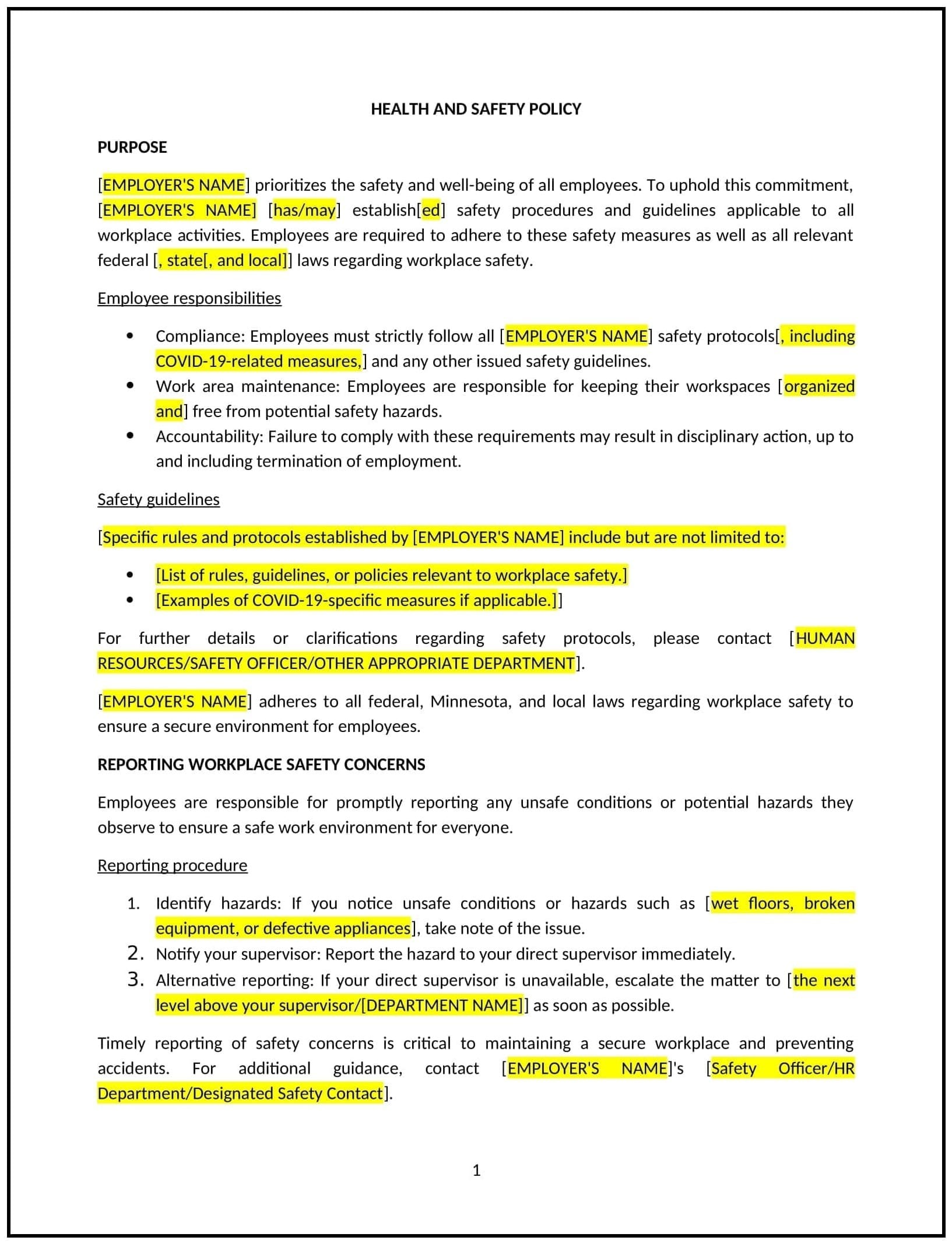
Health and safety policy (Minnesota)
This health and safety policy is designed to help Minnesota businesses create and maintain a safe and healthy work environment for all employees. It outlines the responsibilities of both employers and employees in promoting workplace safety, preventing accidents, and addressing potential hazards. The policy covers procedures for reporting and addressing unsafe conditions, the roles of safety officers, and the steps businesses should take to reduce risks and protect their workforce.
By implementing this policy, businesses can reduce workplace injuries, foster employee well-being, and maintain a positive and productive workplace environment.
How to use this health and safety policy (Minnesota)
- Define workplace hazards: Identify the types of hazards that could exist in the workplace, including physical hazards (e.g., machinery, chemicals), ergonomic risks, psychological risks (e.g., workplace stress), and environmental factors (e.g., extreme weather).
- Establish safety protocols: Outline the safety procedures employees must follow to minimize the risk of accidents, including the use of personal protective equipment (PPE), safe operation of machinery, and emergency evacuation procedures.
- Assign responsibility for health and safety: Designate specific personnel, such as a safety officer or team, to oversee workplace health and safety practices, monitor compliance, and handle safety concerns.
- Provide training: Ensure all employees are trained in workplace safety practices, including recognizing hazards, using safety equipment, and responding to emergencies.
- Set up reporting procedures: Implement a system for employees to report unsafe conditions, accidents, or health concerns, ensuring prompt action and accountability.
- Implement emergency preparedness: Develop clear emergency response plans for potential situations, such as fires, medical emergencies, or natural disasters, and ensure employees know what to do in these cases.
Benefits of using a health and safety policy (Minnesota)
Implementing this policy provides several advantages for Minnesota businesses:
- Reduces accidents and injuries: A clear and enforced health and safety policy helps prevent accidents and injuries, minimizing downtime and improving overall productivity.
- Enhances employee well-being: By prioritizing health and safety, businesses show they care about employee welfare, which can boost morale and reduce absenteeism.
- Improves regulatory compliance: A well-structured policy helps ensure businesses comply with local and federal safety regulations, reducing the risk of penalties or legal issues.
- Boosts employee satisfaction and retention: A safe work environment is a key factor in employee satisfaction, leading to improved retention rates and a more positive company culture.
- Reflects Minnesota-specific considerations: Tailors the policy to meet Minnesota’s specific workplace safety regulations, weather conditions (such as winter weather preparedness), and industry-specific risks.
Tips for using this health and safety policy (Minnesota)
- Communicate clearly: Make sure all employees understand the safety protocols, know how to report hazards, and are aware of their responsibilities regarding health and safety.
- Regularly assess workplace risks: Conduct regular workplace inspections to identify new or emerging hazards, and take prompt corrective action to address them.
- Offer ongoing training: Provide continuous safety training, including refresher courses, to ensure employees remain informed and up-to-date on safety protocols.
- Encourage a safety culture: Promote a safety-first mentality in the workplace by rewarding safe behavior, encouraging open communication about safety issues, and actively involving employees in safety discussions.
- Review regularly: Reassess the policy annually or whenever there are significant changes in operations, regulations, or workplace conditions to ensure it remains effective and relevant.
Frequently asked questions (FAQs)
Similar templates
Where deals go from offer to paid
