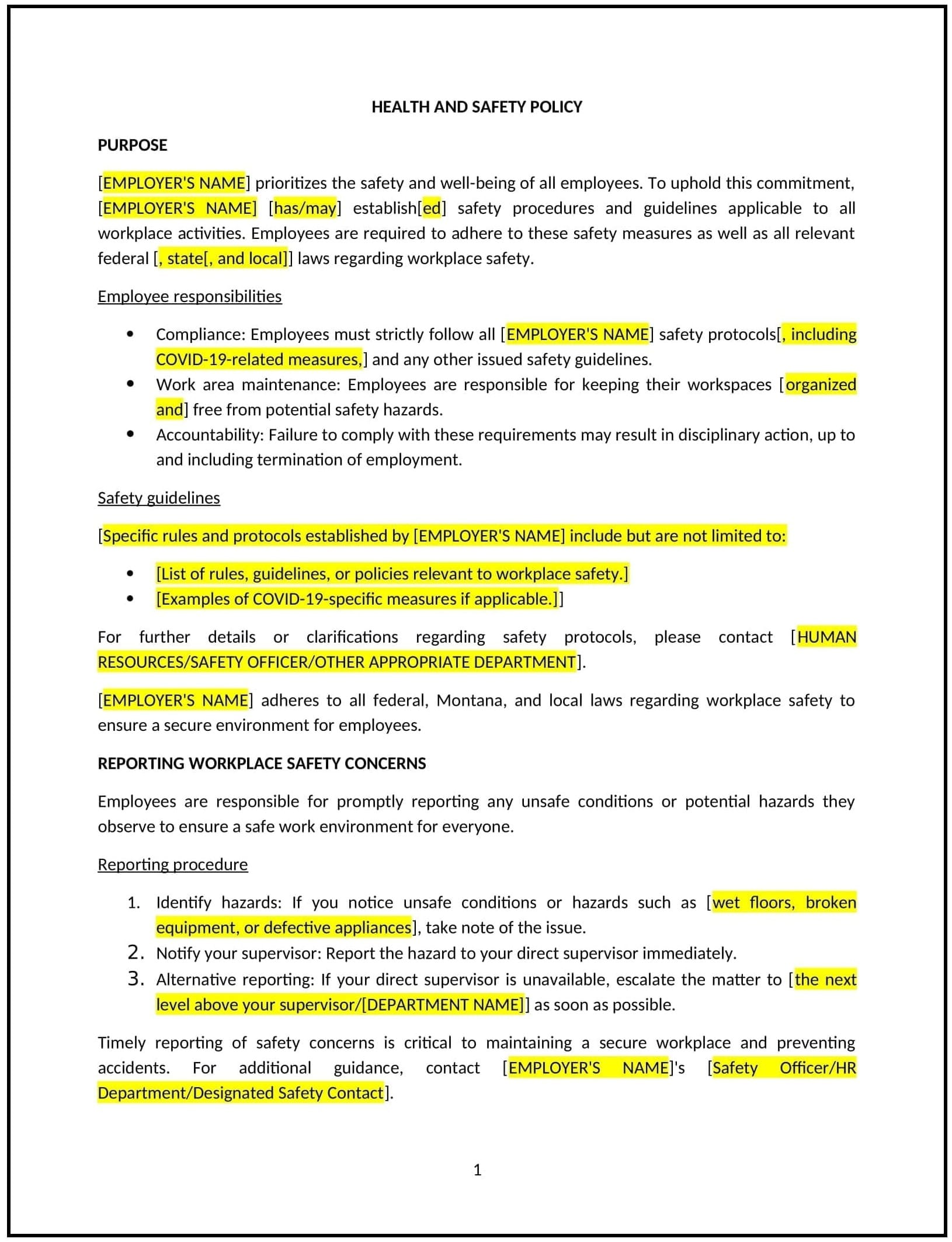
Health and safety policy (Montana): Free template
Establishes a safe work environment by identifying hazards, assigning responsibilities, and promoting safety practices.
- Policies
- Montana
Health and safety policy (Montana)
A health and safety policy helps Montana businesses provide a safe and healthy working environment for their employees, contractors, and visitors. This policy outlines the business’s commitment to preventing accidents, ensuring the well-being of workers, and maintaining compliance with state and federal health and safety regulations.
By implementing this policy, businesses can reduce workplace accidents, improve employee morale, and enhance productivity while creating a culture of safety within the workplace.
How to use this health and safety policy (Montana)
- Define the scope of the policy: The policy should clearly outline the business’s commitment to maintaining a safe and healthy workplace, including compliance with OSHA (Occupational Safety and Health Administration) guidelines and Montana state-specific safety regulations.
- Set safety responsibilities: The policy should define the roles and responsibilities of both employers and employees in maintaining a safe workplace. This includes responsibilities for risk assessment, reporting hazards, and adhering to safety protocols.
- Identify potential workplace hazards: Businesses should outline the specific hazards present in their workplace, such as physical, chemical, biological, or ergonomic risks, and explain how these will be managed and mitigated.
- Provide training and education: Businesses should offer regular safety training to employees to ensure they are aware of potential risks, understand safety procedures, and are equipped to handle emergency situations.
- Implement safety procedures: The policy should specify the procedures for handling emergencies, reporting accidents or hazards, using personal protective equipment (PPE), and conducting regular safety inspections.
- Establish reporting protocols: Businesses should outline how employees should report safety concerns or incidents, including who to contact, the documentation required, and how the company will respond to reports.
- Review and update regularly: The health and safety policy should be reviewed periodically to ensure it remains up-to-date with changes in regulations, business operations, or identified hazards.
Benefits of using this health and safety policy (Montana)
This policy provides several key benefits for Montana businesses:
- Reduces workplace accidents: A clear health and safety policy helps prevent accidents and injuries by addressing hazards, providing safety training, and setting expectations for safe behavior.
- Promotes employee well-being: By maintaining a safe working environment, businesses contribute to the overall health and well-being of their employees, which leads to higher morale and productivity.
- Improves legal compliance: A comprehensive health and safety policy ensures that businesses comply with local, state, and federal regulations, reducing the risk of legal penalties or lawsuits.
- Increases employee engagement: Employees who feel safe and supported are more likely to be engaged, committed, and loyal to the company, contributing to a positive workplace culture.
- Enhances company reputation: Businesses that prioritize health and safety are viewed favorably by employees, customers, and the public, strengthening the company’s reputation and brand image.
- Supports long-term success: A safe and healthy workplace leads to lower absenteeism, reduced workers' compensation claims, and improved operational efficiency, all of which contribute to long-term business success.
Tips for using this health and safety policy (Montana)
- Communicate the policy clearly: Ensure that all employees understand the health and safety policy, including the procedures for reporting hazards, using safety equipment, and responding to emergencies.
- Provide ongoing training: Offer regular safety training sessions to employees and supervisors, ensuring that safety knowledge is up-to-date and employees know how to handle new risks or technologies.
- Conduct regular safety audits: Regularly inspect the workplace to identify and address potential hazards. This can include routine safety checks, equipment maintenance, and employee feedback on safety concerns.
- Promote a safety culture: Encourage employees to take an active role in maintaining a safe work environment by reporting hazards, following safety protocols, and participating in safety committees or meetings.
- Implement proper reporting mechanisms: Set up clear channels for employees to report safety concerns or accidents, and ensure that these reports are handled promptly and efficiently.
- Review the policy regularly: The policy should be reviewed and updated as needed to reflect changes in business operations, workplace conditions, or safety regulations.
Frequently asked questions (FAQs)
Similar templates
Where deals go from offer to paid
