Immigration sponsorship policy (Pennsylvania): Free template
Describes how eligible employees can receive company support for visa or work permit applications.
- Policies
- Pennsylvania
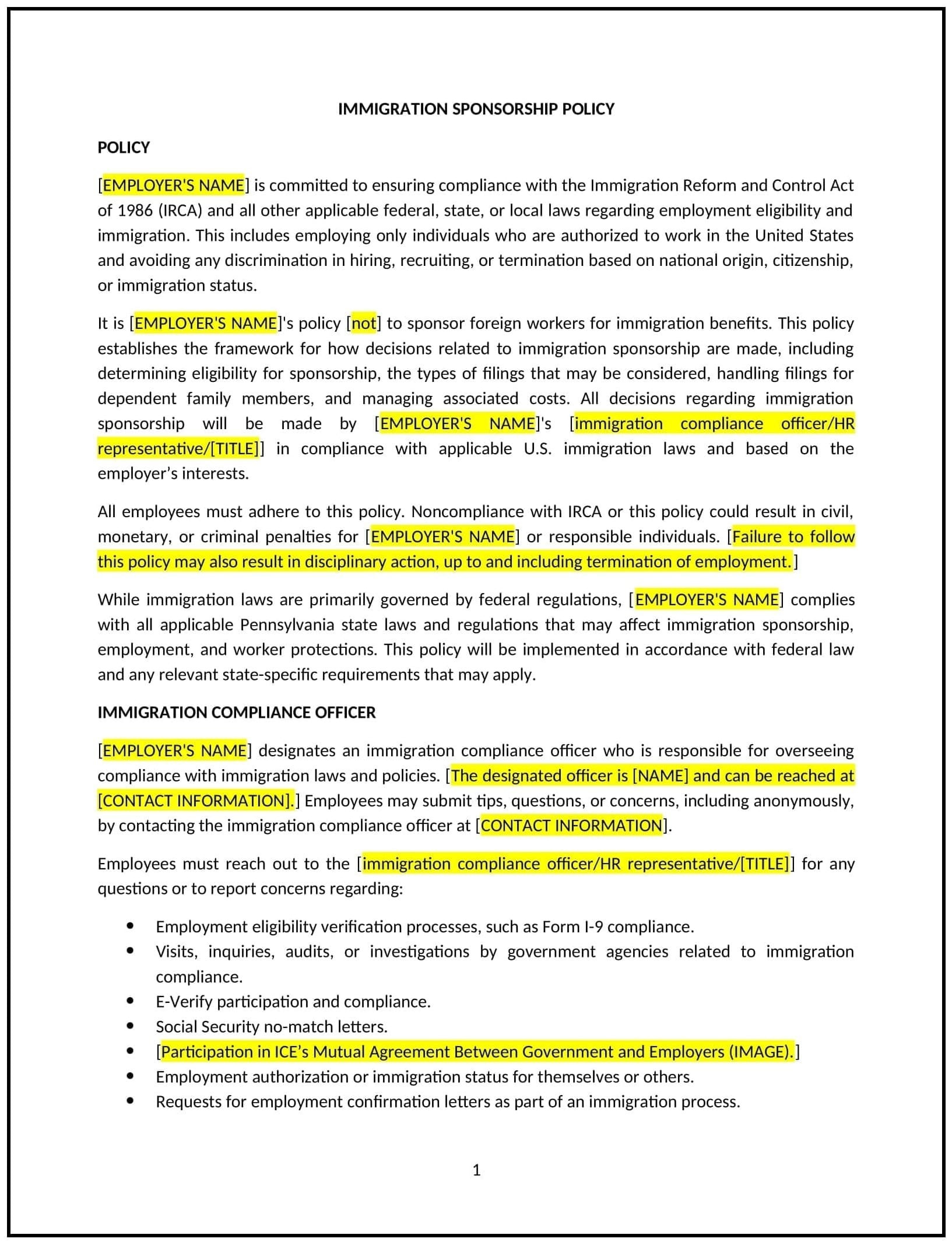
Immigration sponsorship policy (Pennsylvania)
This immigration sponsorship policy is designed to help businesses in Pennsylvania outline clear guidelines for sponsoring work visas or residency for non-citizen employees. Whether hiring international talent or supporting employees through their immigration processes, this template provides instructions for managing sponsorship while aligning with federal immigration laws and Pennsylvania-specific workforce considerations.
By using this template, businesses can support global recruitment efforts, comply with legal requirements, and foster a diverse and inclusive workplace.
How to use this immigration sponsorship policy (Pennsylvania)
- Define sponsorship eligibility: Clearly outline the types of roles eligible for immigration sponsorship and the criteria employees must meet.
- Specify sponsorship types: Include the types of visas or residency programs the business is willing to sponsor, such as H-1B, L-1, or employment-based green cards.
- Detail responsibilities: Identify the roles and responsibilities of the employee, employer, and any external immigration attorneys or consultants involved in the process.
- Include cost guidelines: Specify which immigration-related costs will be covered by the employer and which are the employee’s responsibility.
- Reflect Pennsylvania-specific considerations: Tailor the policy to address local industry needs and workforce trends, such as supporting immigrant employees in industries like healthcare or technology.
Benefits of using an immigration sponsorship policy (Pennsylvania)
A well-structured immigration sponsorship policy supports recruitment and compliance. Here's how it helps:
- Enhances recruitment: Attracts top international talent by providing clear sponsorship guidelines.
- Encourages transparency: Outlines the responsibilities of both the business and employees to avoid misunderstandings.
- Supports compliance: Ensures adherence to federal immigration laws and Pennsylvania labor regulations, reducing legal risks.
- Promotes diversity: Fosters a globally diverse workforce, enhancing innovation and workplace culture.
- Aligns with local needs: Addresses Pennsylvania’s industry-specific workforce demands, such as technology, manufacturing, or education.
Tips for using an immigration sponsorship policy (Pennsylvania)
- Communicate the policy: Share the policy with employees during recruitment or onboarding to ensure understanding of sponsorship options and processes.
- Use experienced legal counsel: Partner with immigration attorneys or consultants to navigate complex immigration laws and procedures.
- Monitor deadlines: Keep track of visa application and renewal deadlines to ensure timely submissions and compliance.
- Support transitioning employees: Provide resources to help employees adjust to working and living in Pennsylvania, such as relocation assistance or cultural integration programs.
- Review periodically: Update the policy to reflect changes in immigration laws, Pennsylvania workforce needs, or organizational goals.
Frequently asked questions (FAQs)
Similar templates
Where deals go from offer to paid
