Importer’s forced labor policy (Vermont): Free template
Targets supply chain risks by setting due diligence requirements to comply with U.S. and Vermont law.
- Policies
- Vermont
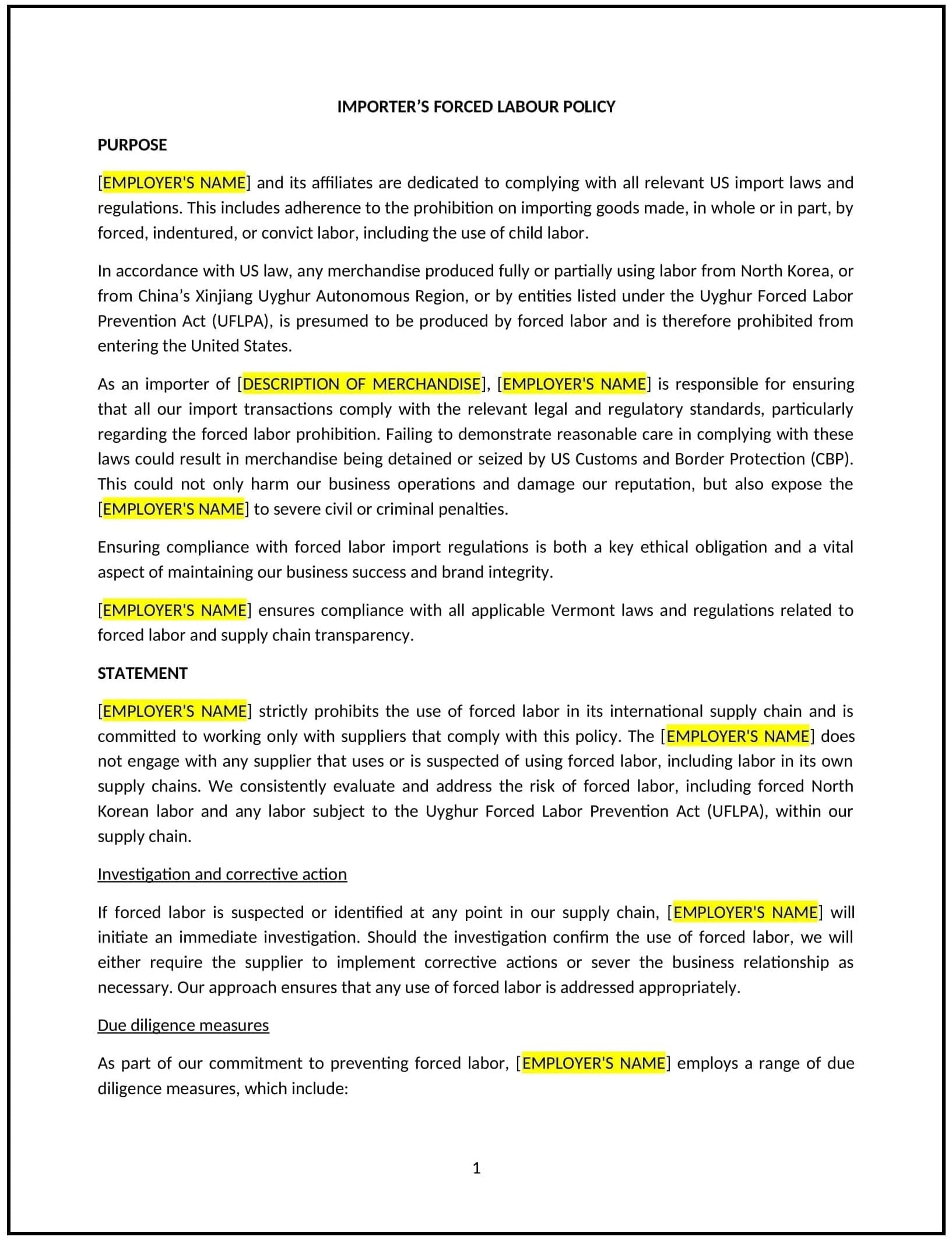
Importer’s forced labor policy (Vermont)
This importer’s forced labor policy is designed to help Vermont businesses comply with laws prohibiting the use of goods produced by forced or child labor. It outlines procedures for ensuring ethical sourcing, conducting due diligence, and maintaining compliance with U.S. regulations, including the Tariff Act of 1930 and related Vermont standards.
By adopting this policy, businesses can promote human rights, improve compliance, and enhance their reputation as ethical importers.
How to use this importer’s forced labor policy (Vermont)
- Define prohibited practices: Specify that sourcing goods produced by forced, child, or involuntary labor is strictly prohibited.
- Include supplier requirements: Require suppliers to adhere to ethical labor standards and certify that their goods are free from forced labor.
- Detail due diligence procedures: Outline steps for conducting supplier audits, reviewing documentation, and identifying potential risks in the supply chain.
- Address risk mitigation: Provide guidelines for resolving concerns, such as corrective action plans or terminating non-compliant supplier relationships.
- Include employee training: Educate employees involved in procurement or supply chain management on forced labor regulations and reporting processes.
- Establish reporting mechanisms: Provide a process for employees or stakeholders to report concerns about forced labor in the supply chain.
- Monitor compliance: Regularly review supplier practices and update procedures to align with Vermont and federal laws.
Benefits of using this importer’s forced labor policy (Vermont)
This policy provides several benefits for Vermont businesses:
- Strengthens compliance: Aligns with U.S. and Vermont regulations prohibiting forced labor in the supply chain.
- Protects reputation: Demonstrates the company’s commitment to ethical sourcing and human rights.
- Reduces risk: Identifies and mitigates potential supply chain vulnerabilities.
- Enhances accountability: Sets clear expectations for suppliers and employees regarding ethical labor practices.
- Supports transparency: Builds trust with customers, stakeholders, and regulatory authorities.
Tips for using this importer’s forced labor policy (Vermont)
- Communicate the policy: Share the policy with employees, suppliers, and stakeholders, and include it in contracts with suppliers.
- Conduct regular audits: Perform scheduled and unscheduled audits to verify supplier compliance with labor standards.
- Build partnerships: Work with suppliers to address concerns and implement improvements rather than immediately severing relationships.
- Use technology: Leverage tools to track and monitor supply chain practices for greater transparency.
- Update regularly: Revise the policy to reflect changes in Vermont laws, federal regulations, or industry best practices.
Frequently asked questions (FAQs)
Similar templates
Where deals go from offer to paid
