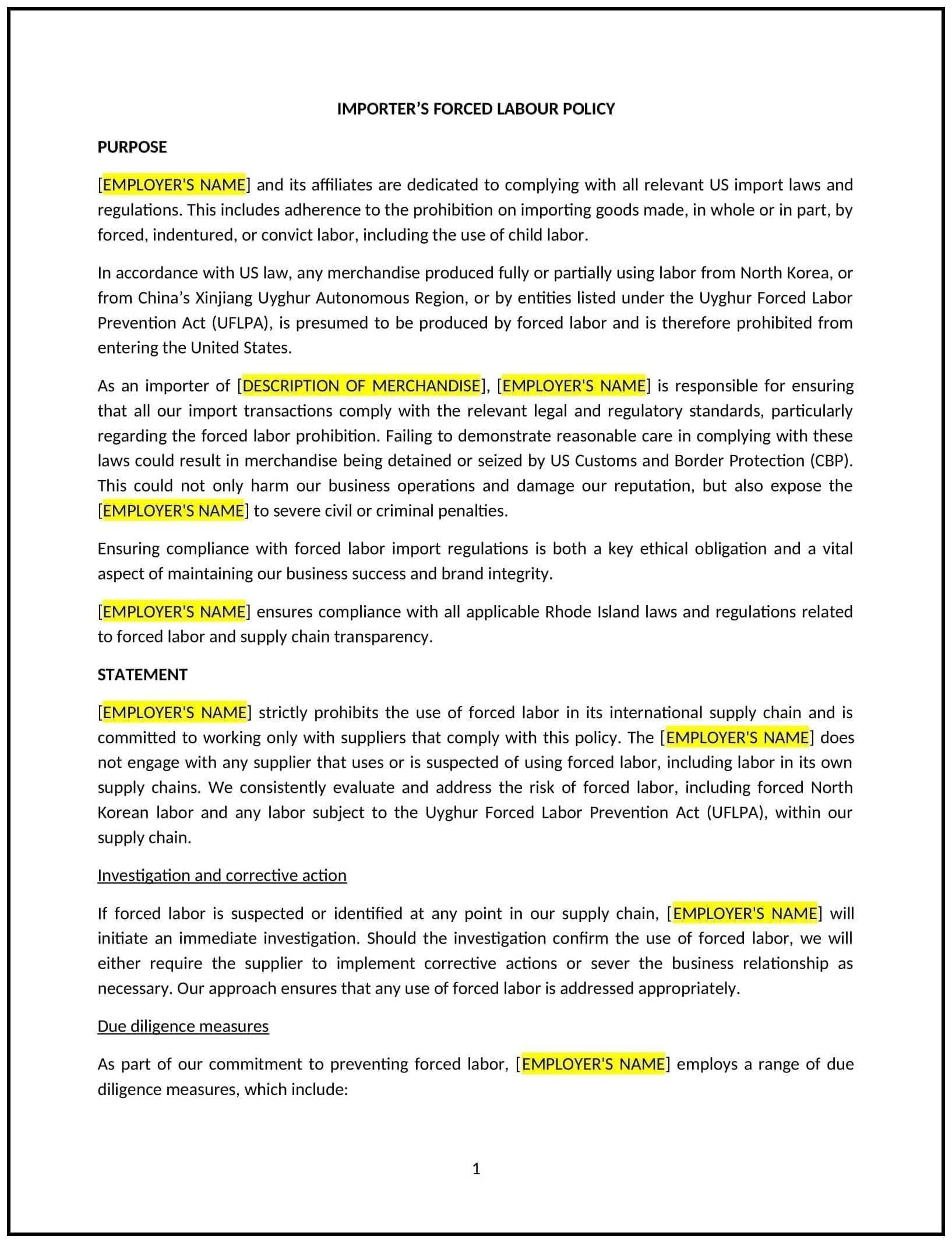
Importer's forced labour policy (Rhode Island): Free template
Prohibits engagement with suppliers involved in forced labor and promotes ethical sourcing practices.
- Policies
- Rhode Island
Importer's forced labour policy (Rhode Island)
This importer's forced labour policy is designed to help Rhode Island businesses ensure their supply chains are free from forced labour. It outlines procedures for vetting suppliers, conducting audits, and addressing violations.
By adopting this policy, businesses can promote ethical practices, comply with anti-forced labour laws, and align with best practices for supply chain management.
How to use this importer's forced labour policy (Rhode Island)
- Define prohibited practices: Specify what constitutes forced labour, such as coercion or debt bondage.
- Establish supplier vetting: Outline steps for evaluating suppliers’ labour practices.
- Conduct audits: Provide guidelines for auditing suppliers to ensure compliance with the policy.
- Address violations: Describe procedures for addressing forced labour violations, such as terminating contracts.
- Train employees: Educate staff on the policy and the importance of ethical supply chain practices.
- Review and update: Assess the policy annually to ensure it aligns with evolving business needs and legal standards.
Benefits of using this importer's forced labour policy (Rhode Island)
This policy offers several advantages for Rhode Island businesses:
- Promotes ethical practices: Demonstrates a commitment to fair labour standards.
- Ensures compliance: Aligns with federal and state anti-forced labour laws, reducing legal risks.
- Enhances reputation: Positions the business as a responsible and ethical organization.
- Builds trust: Shows stakeholders that the business prioritizes human rights.
- Aligns with best practices: Supports adherence to ethical supply chain standards.
Tips for using this importer's forced labour policy (Rhode Island)
- Communicate the policy: Share the policy with employees and include it in supplier contracts.
- Provide training: Educate staff on identifying and addressing forced labour in supply chains.
- Monitor compliance: Regularly audit suppliers to ensure adherence to the policy.
- Address issues promptly: Take corrective action if forced labour violations are identified.
- Update regularly: Assess the policy annually to ensure it aligns with evolving business needs and legal standards.
Frequently asked questions (FAQs)
Similar templates
Where deals go from offer to paid
