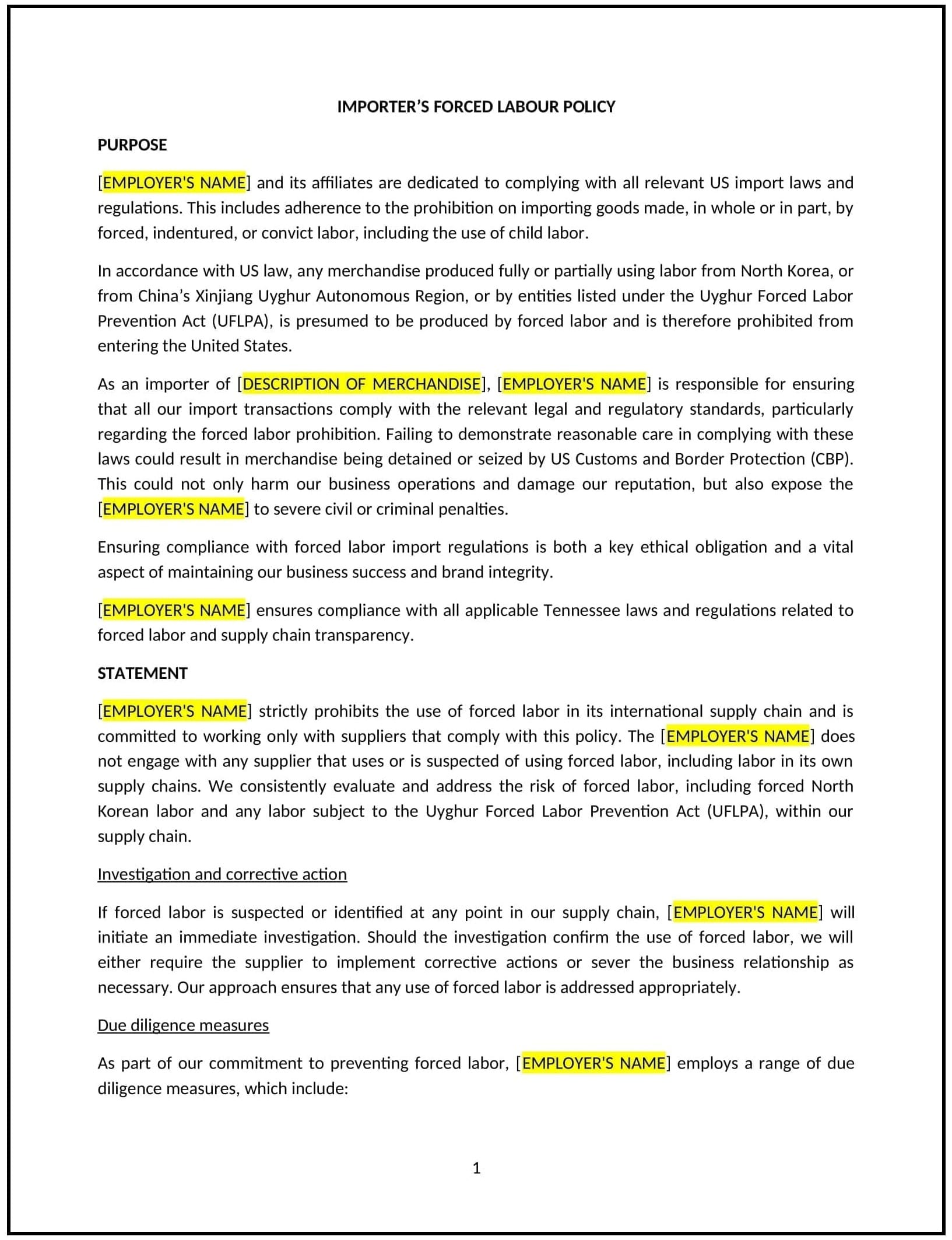
Importer’s forced labour policy (Tennessee): Free template
Prohibits sourcing from suppliers that engage in forced labor, reinforcing ethical trade practices.
- Policies
- Tennessee
Importer’s forced labour policy (Tennessee)
This importer’s forced labour policy is designed to help Tennessee businesses establish guidelines for ensuring that goods imported into the U.S. are not produced using forced labour. It outlines procedures for vetting suppliers, conducting audits, and addressing potential violations.
By adopting this policy, businesses can uphold ethical standards, comply with U.S. import laws, and protect their reputation.
How to use this importer’s forced labour policy (Tennessee)
- Define forced labour: Clarify what constitutes forced labour, such as coercion, debt bondage, or human trafficking.
- Set supplier vetting procedures: Outline steps for evaluating suppliers’ labour practices, such as reviewing certifications or conducting site visits.
- Address audit requirements: Specify how often suppliers will be audited and what criteria will be assessed.
- Establish reporting mechanisms: Provide steps for employees or stakeholders to report suspected forced labour in the supply chain.
- Train employees: Educate staff on identifying and addressing forced labour risks.
- Review and update: Assess the policy annually to ensure it aligns with evolving business needs and legal requirements.
Benefits of using this importer’s forced labour policy (Tennessee)
This policy offers several advantages for Tennessee businesses:
- Upholds ethical standards: Demonstrates a commitment to fair labour practices and human rights.
- Protects reputation: Reduces the risk of being associated with forced labour practices.
- Ensures compliance: Helps businesses comply with U.S. laws prohibiting the import of goods produced using forced labour.
- Enhances transparency: Provides clear guidelines for vetting suppliers and addressing violations.
- Aligns with best practices: Supports a structured approach to ethical sourcing.
Tips for using this importer’s forced labour policy (Tennessee)
- Communicate the policy: Share the policy with employees, suppliers, and stakeholders.
- Provide training: Educate staff on identifying and addressing forced labour risks.
- Monitor compliance: Regularly review supplier audits and reports to ensure adherence.
- Address issues promptly: Take corrective action if forced labour is identified in the supply chain.
- Update regularly: Assess the policy annually to ensure it aligns with evolving business needs.
Frequently asked questions (FAQs)
Similar templates
Where deals go from offer to paid
