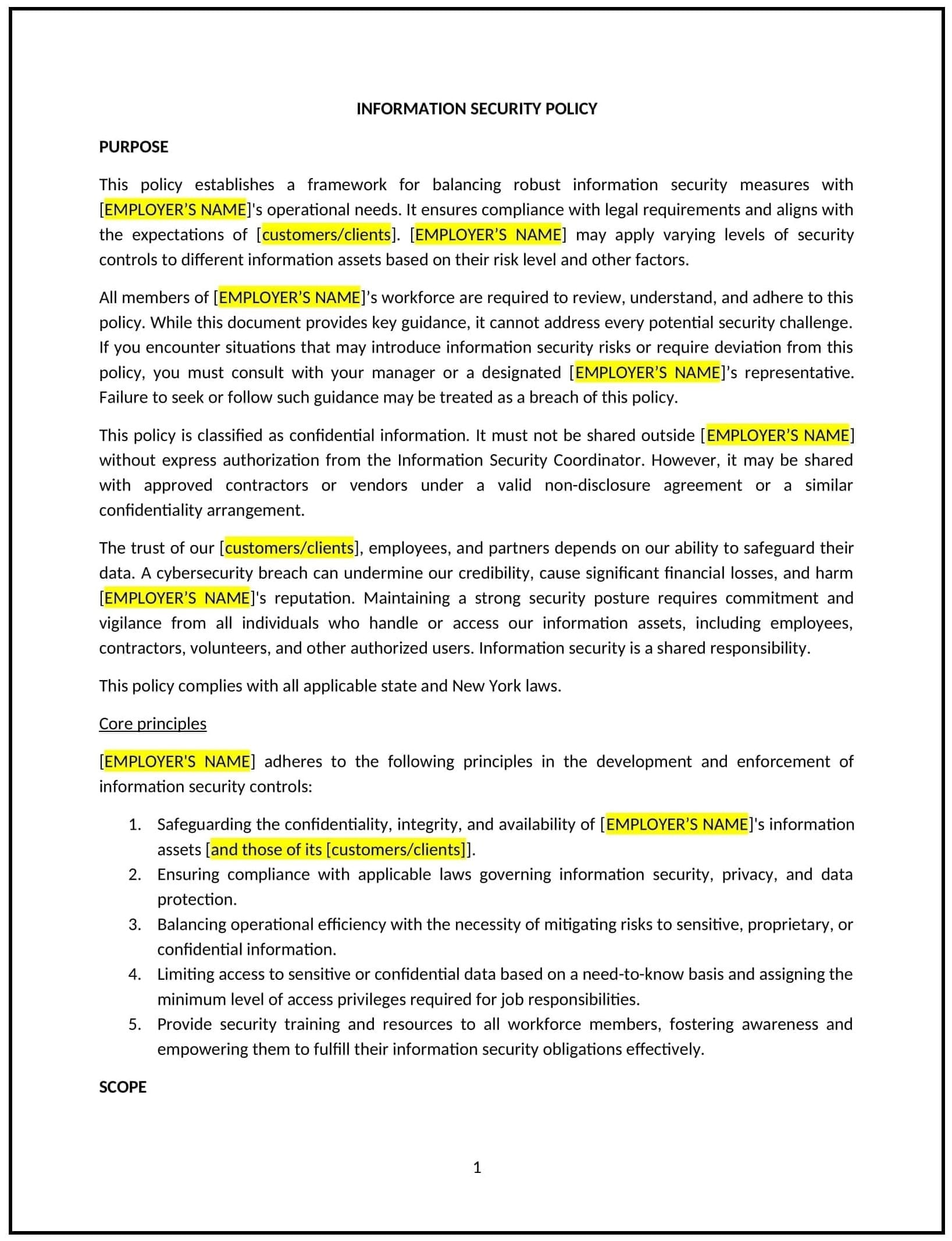
Information security policy (New York): Free template
Defines protocols for safeguarding digital and physical data, preventing breaches, and ensuring cybersecurity compliance.
- Policies
- New York
Information security policy (New York)
This information security policy is designed to help New York businesses establish guidelines for protecting sensitive data, managing cybersecurity risks, and ensuring the secure handling of information. Whether businesses are safeguarding customer data, managing employee information, or securing IT systems, this template provides a framework for maintaining strong information security practices.
By adopting this template, businesses can support operational continuity, reduce risks, and foster trust with customers and stakeholders.
How to use this information security policy (New York)
- Identify sensitive information: Specify the types of data covered under the policy, such as customer information, financial records, and intellectual property.
- Define access controls: Outline how access to sensitive information is granted, monitored, and restricted based on job responsibilities.
- Establish data protection practices: Include guidelines for securing physical and digital data, such as encryption, password policies, and secure file storage.
- Detail incident response procedures: Provide steps for responding to data breaches, including reporting timelines, notification processes, and mitigation measures.
- Promote employee awareness: Require training programs to educate employees on recognizing and preventing cybersecurity threats.
Benefits of using an information security policy (New York)
This policy offers several benefits for New York businesses:
- Protects sensitive data: Clear guidelines help minimize the risk of data breaches or unauthorized access to sensitive information.
- Reduces business risks: Proactive measures lower the likelihood of operational disruptions caused by security incidents.
- Builds customer trust: Demonstrating a commitment to information security fosters trust among clients, partners, and stakeholders.
- Supports regulatory compliance: Aligning with data protection laws and standards, such as the New York SHIELD Act, helps avoid penalties and legal liabilities.
- Enhances operational resilience: A structured approach to information security ensures business continuity in the face of evolving cybersecurity threats.
Tips for using this information security policy (New York)
- Conduct regular audits: Periodically assess the effectiveness of information security measures and identify areas for improvement.
- Use strong access controls: Implement role-based access and multi-factor authentication to limit exposure to sensitive information.
- Provide ongoing training: Offer employees regular training on cybersecurity best practices, such as recognizing phishing attempts and managing passwords securely.
- Establish vendor guidelines: Ensure third-party vendors handling sensitive data comply with the organization’s security standards.
- Update regularly: Review and revise the policy to address changes in regulations, business operations, or emerging security threats.
Frequently asked questions (FAQs)
Similar templates
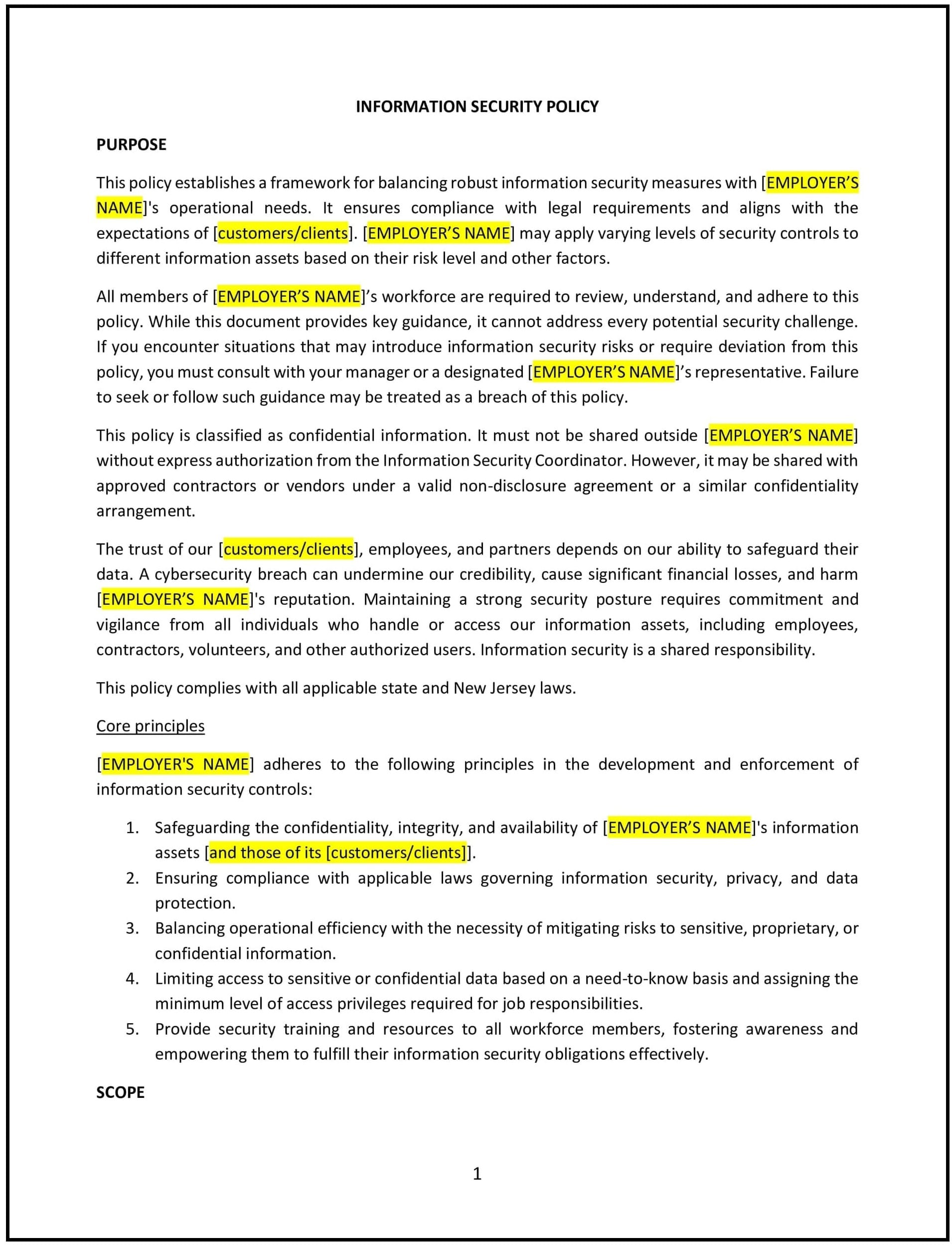
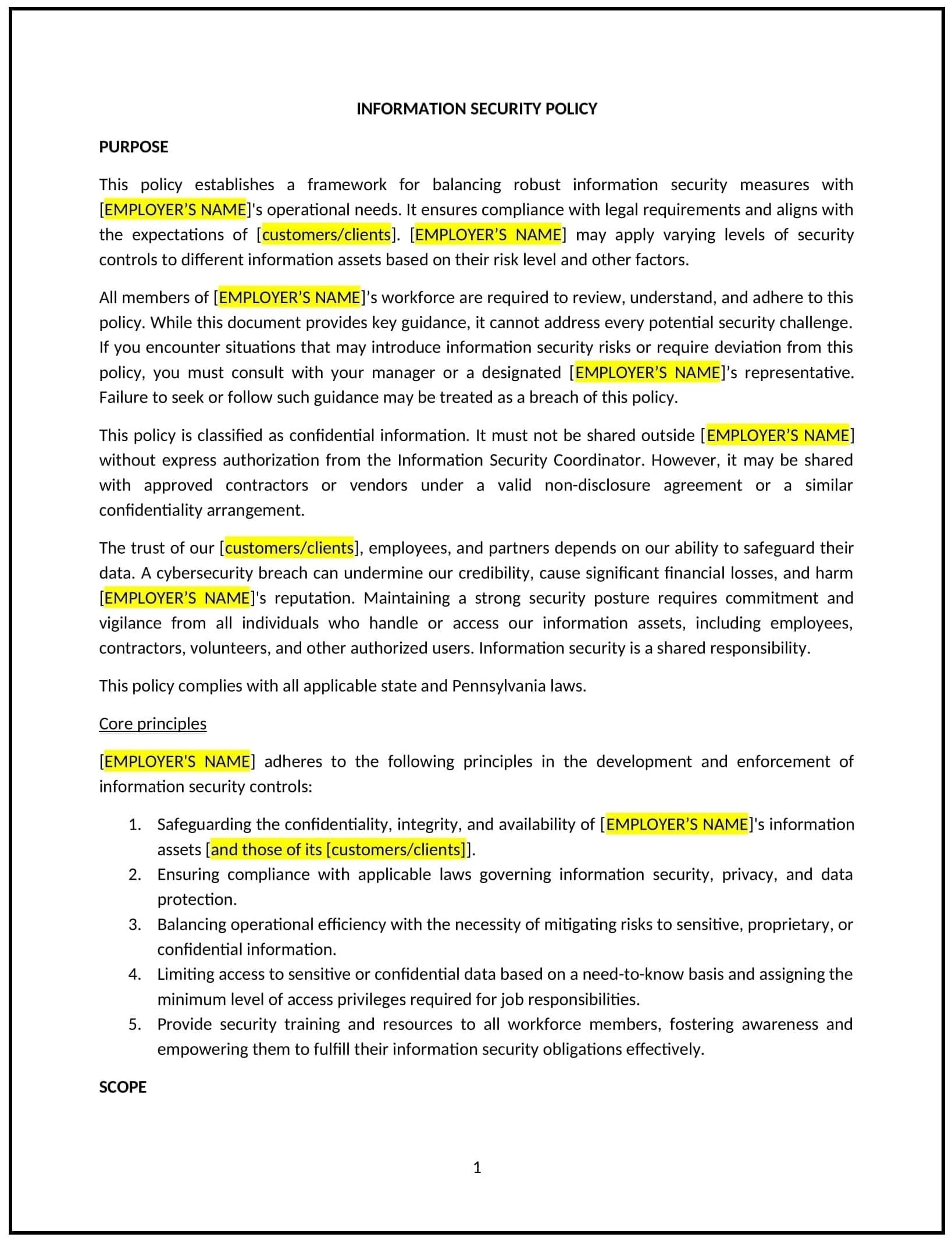
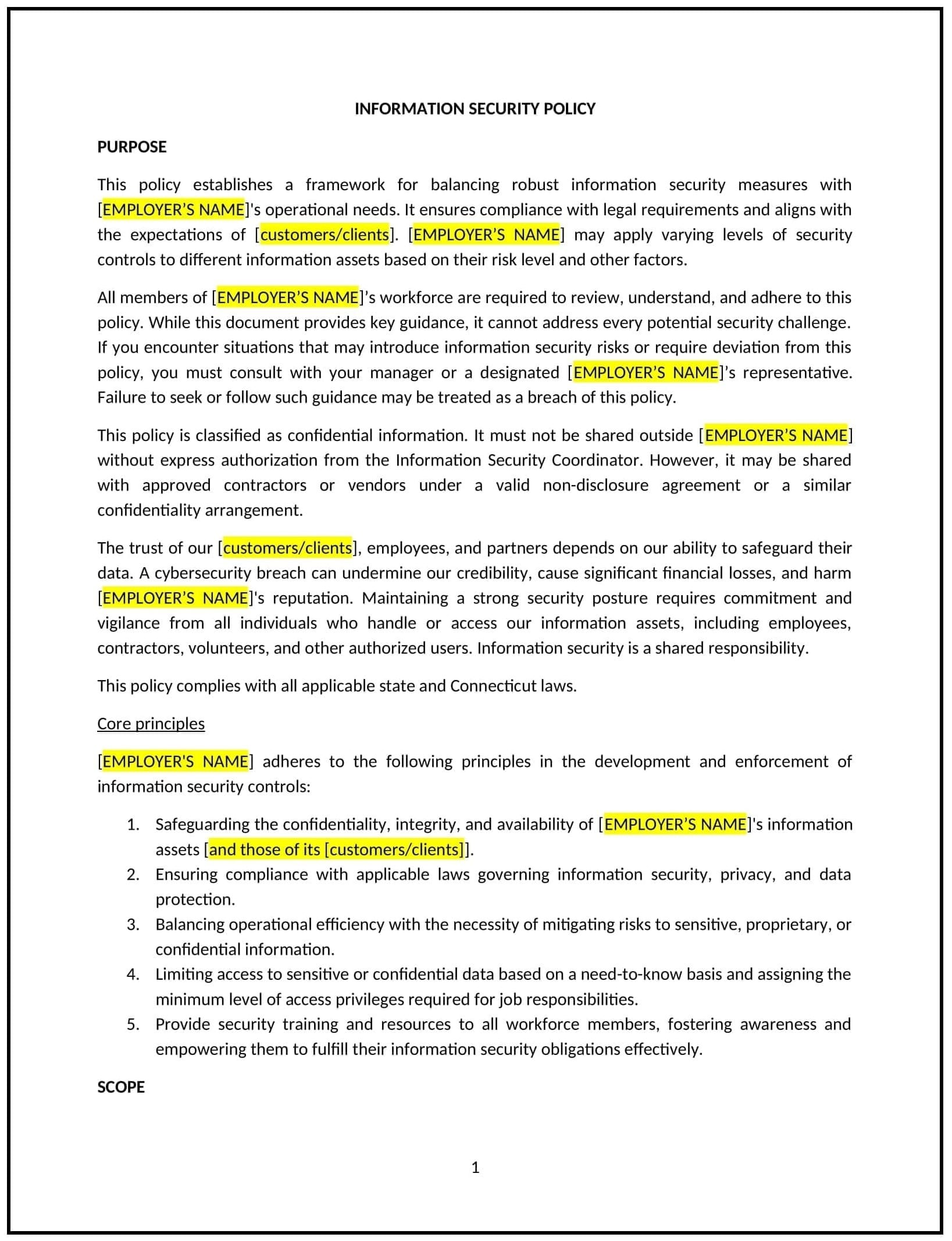
Where deals go from offer to paid
