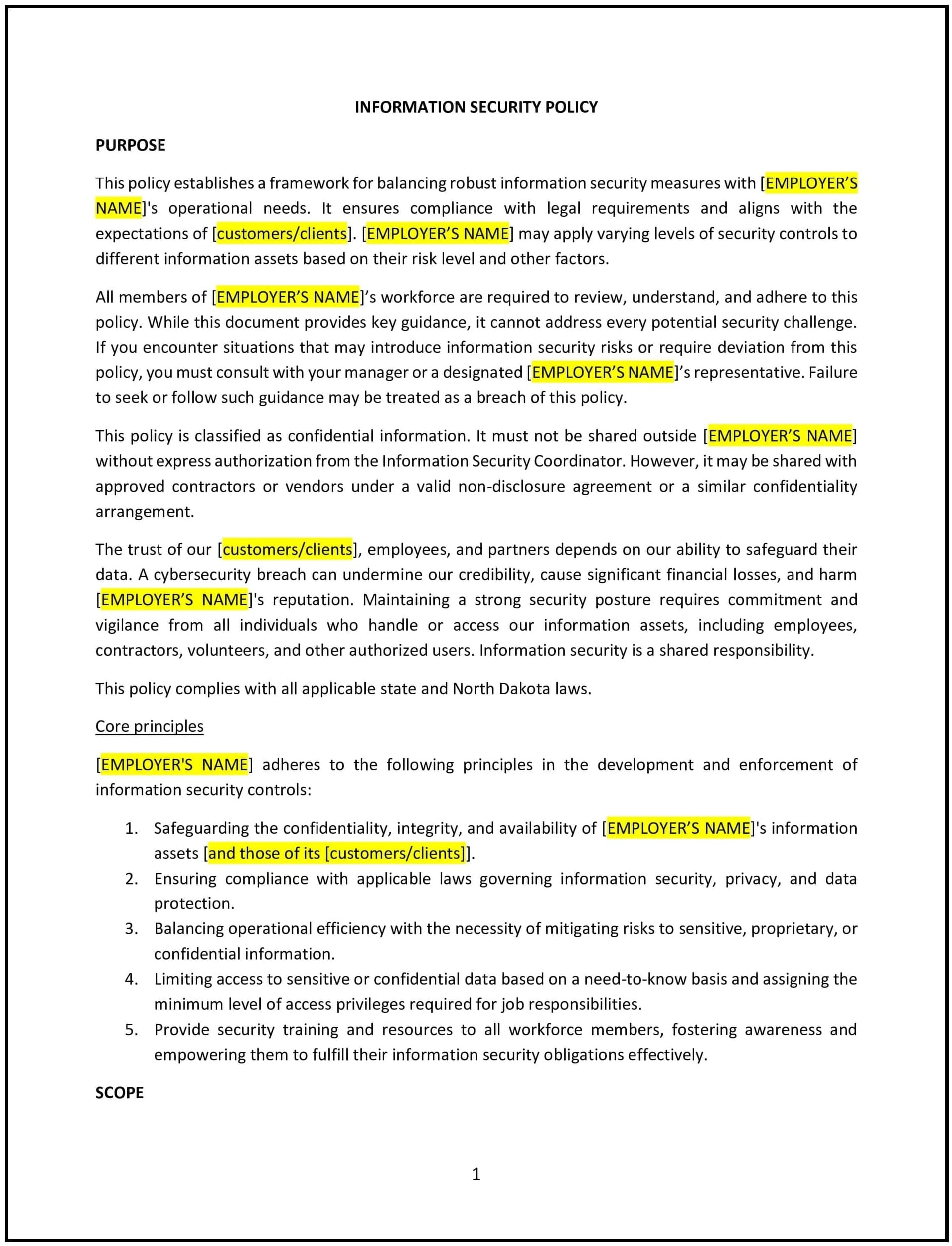
Information security policy (North Dakota): Free template
Protects company data by setting standards for system access, data handling, and cybersecurity.
- Policies
- North Dakota
Information security policy (North Dakota)
This information security policy is designed to help North Dakota businesses establish guidelines for protecting sensitive company and customer data. The policy outlines security measures, access controls, and breach response procedures.
By implementing this policy, businesses can mitigate cybersecurity risks, safeguard confidential information, and maintain regulatory alignment.
How to use this information security policy (North Dakota)
- Define data protection standards: Specify security requirements for handling sensitive information.
- Establish access control measures: Restrict access to authorized employees based on job roles.
- Implement password management: Require strong, regularly updated passwords.
- Address data encryption: Mandate encryption for stored and transmitted sensitive data.
- Set up incident response procedures: Outline steps for reporting and managing security breaches.
- Train employees on cybersecurity practices: Educate staff on phishing, malware, and data handling.
- Review regularly: Update the policy based on emerging threats and regulatory changes.
Benefits of using this information security policy (North Dakota)
Implementing this policy provides several advantages for North Dakota businesses:
- Reduces cybersecurity risks: Protects against data breaches, hacking, and fraud.
- Strengthens regulatory alignment: Supports compliance with industry security standards.
- Enhances customer trust: Demonstrates a commitment to protecting sensitive information.
- Improves incident response: Provides a structured approach to handling security threats.
- Reflects North Dakota-specific considerations: Addresses security concerns relevant to local industries, such as energy and agriculture.
Tips for using this information security policy (North Dakota)
- Enforce multi-factor authentication: Add extra security layers for system access.
- Monitor and audit system activity: Detect unauthorized access or suspicious behavior.
- Implement data backup procedures: Ensure regular backups for disaster recovery.
- Train employees on security threats: Reduce risks associated with human error.
- Adjust as needed: Update policies based on evolving cybersecurity threats.
Frequently asked questions (FAQs)
Similar templates
Where deals go from offer to paid
