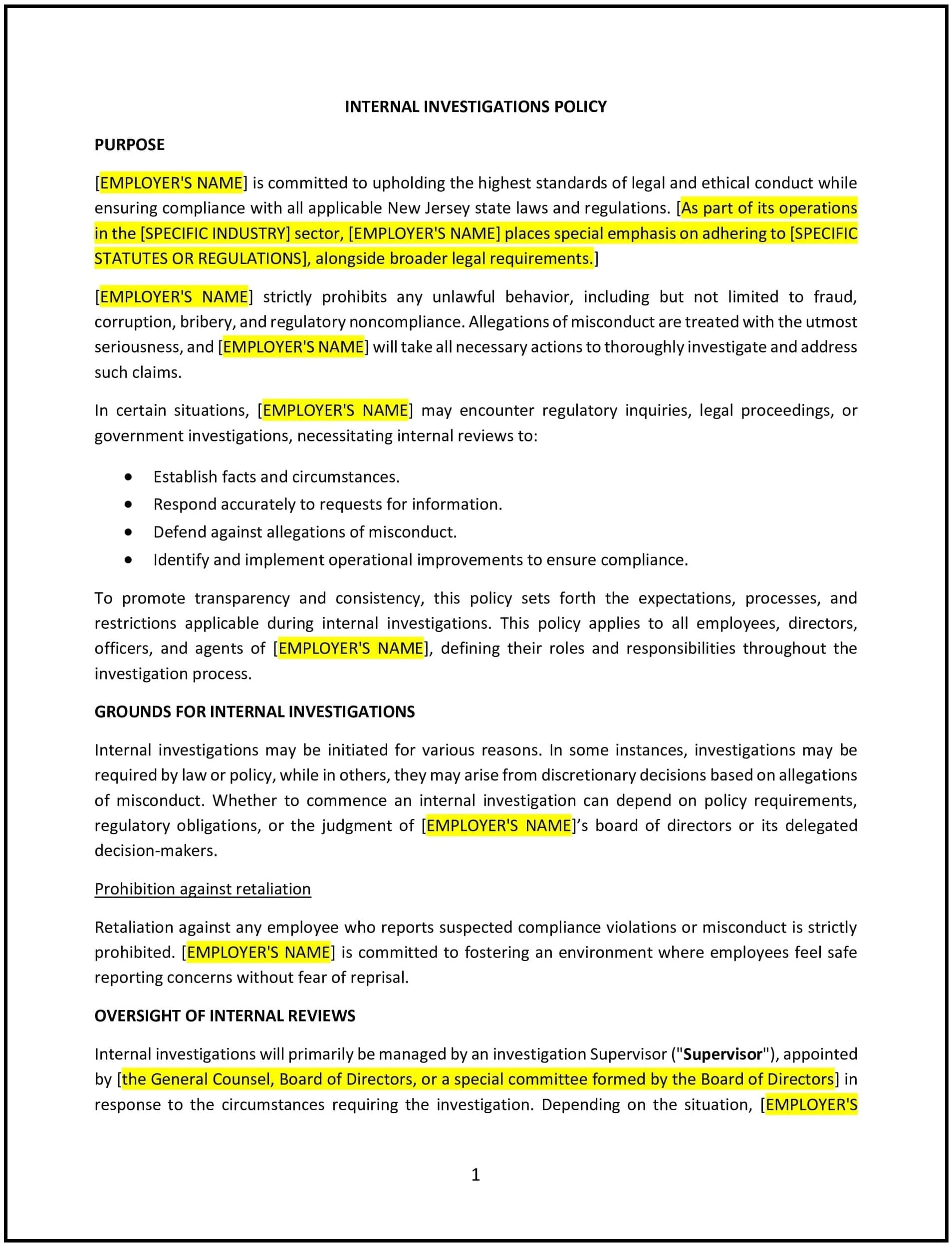
Internal investigations policy (New Jersey): Free template
Details how workplace concerns are investigated fairly, confidentially, and in compliance with the law.
- Policies
- New Jersey
Internal investigations policy (New Jersey)
An internal investigations policy helps New Jersey businesses establish a structured approach to handling workplace complaints, misconduct allegations, and policy violations. This policy outlines investigation procedures, confidentiality expectations, employee rights, and resolution processes. It also sets guidelines for documentation, witness interviews, and corrective actions.
By adopting this policy, businesses in New Jersey can promote workplace accountability, protect employee rights, and resolve internal matters fairly and efficiently.
How to use this internal investigations policy (New Jersey)
- Define the scope of investigations: Outline the types of issues that may require an internal investigation, such as harassment, discrimination, fraud, or workplace misconduct.
- Establish reporting procedures: Provide employees with multiple channels to report concerns, such as HR, anonymous hotlines, or designated managers.
- Assign investigation responsibilities: Identify who will handle investigations, such as HR professionals, compliance officers, or external consultants.
- Maintain confidentiality: Emphasize that investigation details will be shared only with those directly involved in the process.
- Conduct fair and thorough investigations: Establish procedures for gathering evidence, interviewing witnesses, and documenting findings.
- Communicate with involved parties: Inform complainants and respondents about the investigation process and expected timelines.
- Determine corrective actions: Outline potential outcomes based on investigation findings, such as disciplinary action, policy updates, or additional training.
- Review and update: Regularly assess the policy to align with workplace needs, legal requirements, and best practices in investigative procedures.
Benefits of using this internal investigations policy (New Jersey)
This policy provides several benefits for New Jersey businesses:
- Promotes workplace accountability: Establishes clear procedures for addressing complaints and misconduct.
- Protects employee rights: Ensures investigations are handled confidentially and fairly.
- Strengthens business integrity: Encourages ethical behavior and a culture of transparency.
- Reduces legal risks: Provides a structured process for handling workplace disputes.
- Supports workplace morale: Reinforces trust by demonstrating a commitment to resolving concerns professionally.
Tips for using this internal investigations policy (New Jersey)
- Communicate the policy clearly: Ensure employees understand how to report concerns and what to expect during an investigation.
- Train investigators on best practices: Provide guidance on conducting fair, impartial, and legally sound investigations.
- Maintain accurate documentation: Keep detailed records of investigation findings, witness statements, and final resolutions.
- Ensure non-retaliation: Reaffirm that employees who report concerns in good faith will not face retaliation.
- Review the policy regularly: Update the policy to reflect evolving workplace standards and New Jersey regulations.
Frequently asked questions (FAQs)
Similar templates
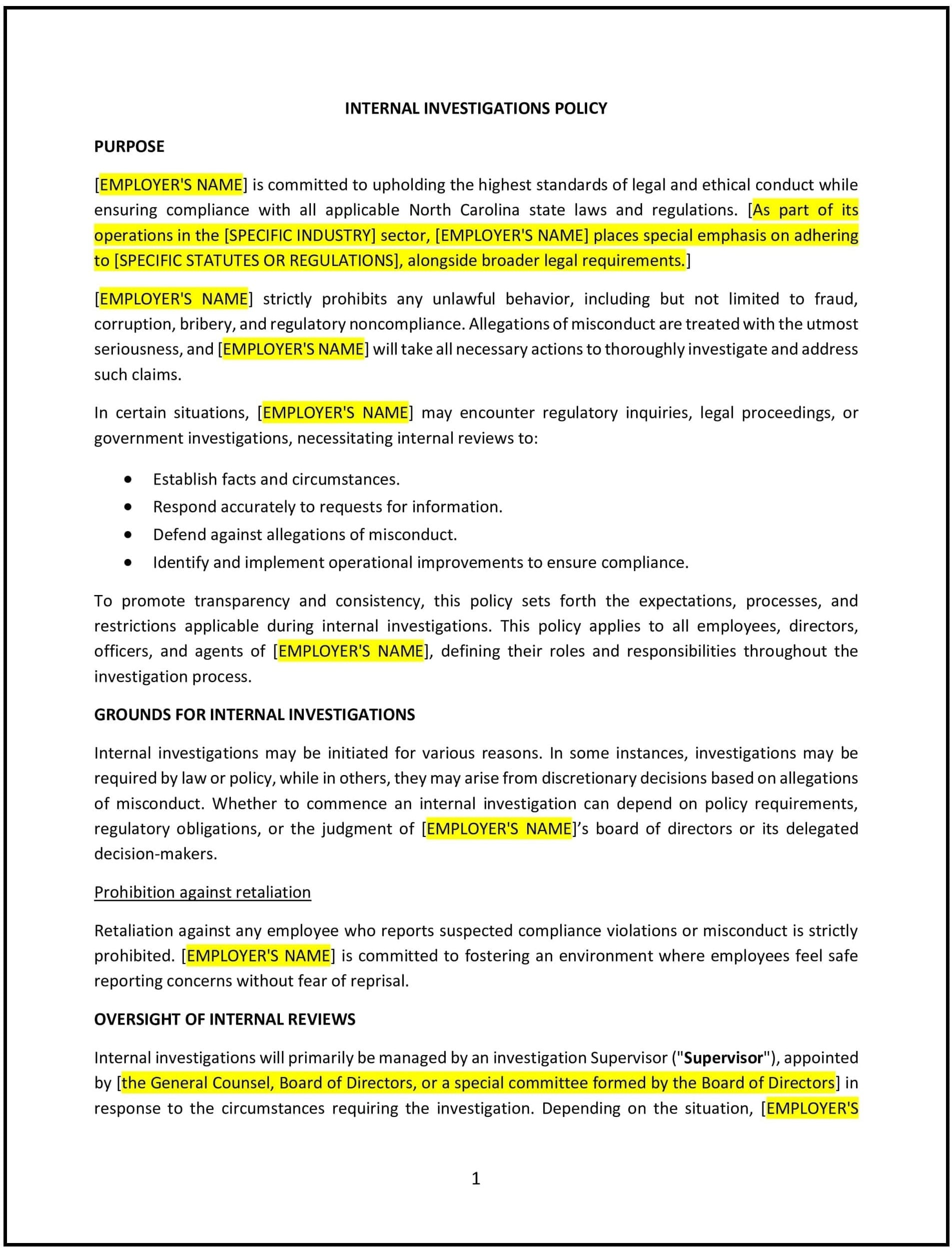
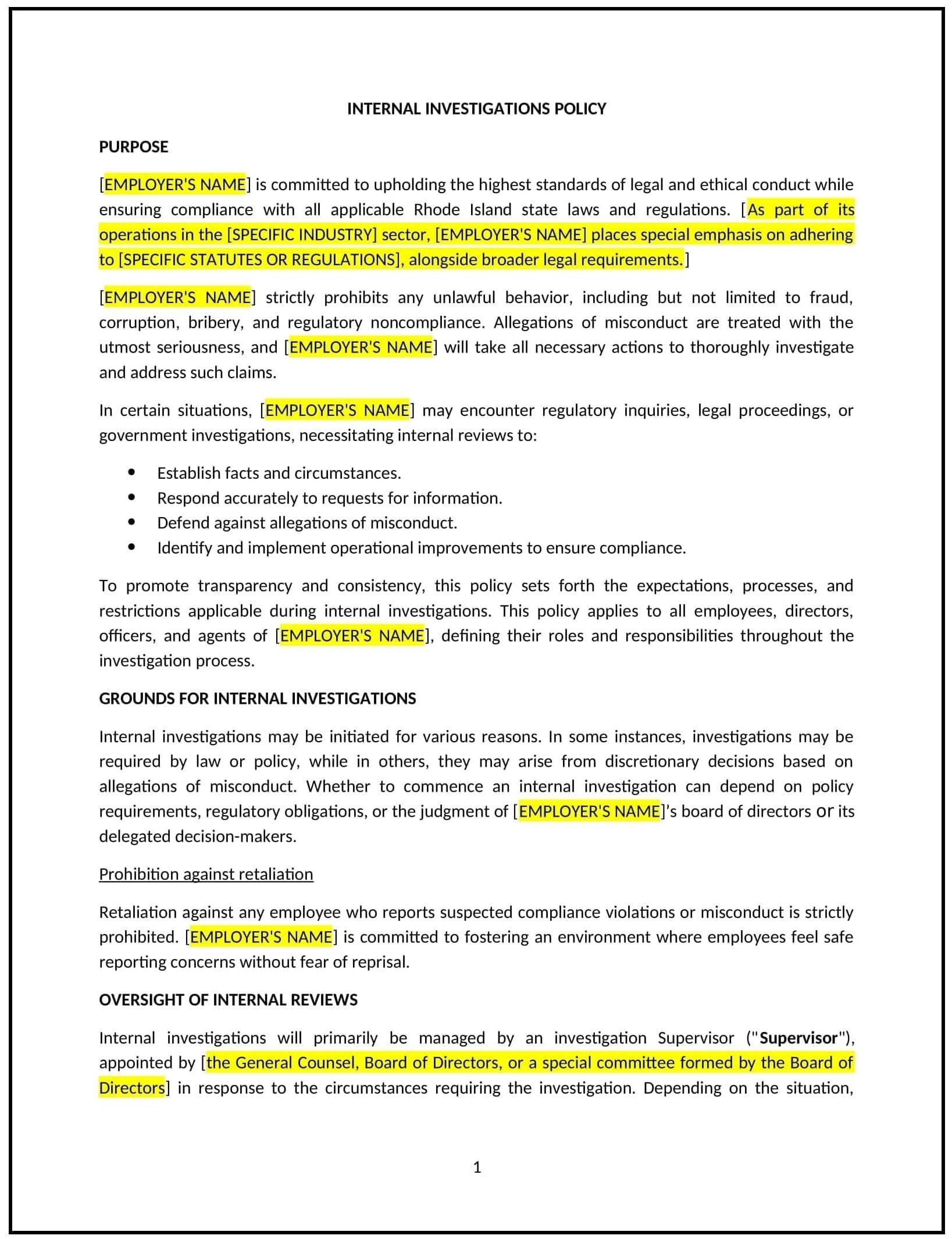
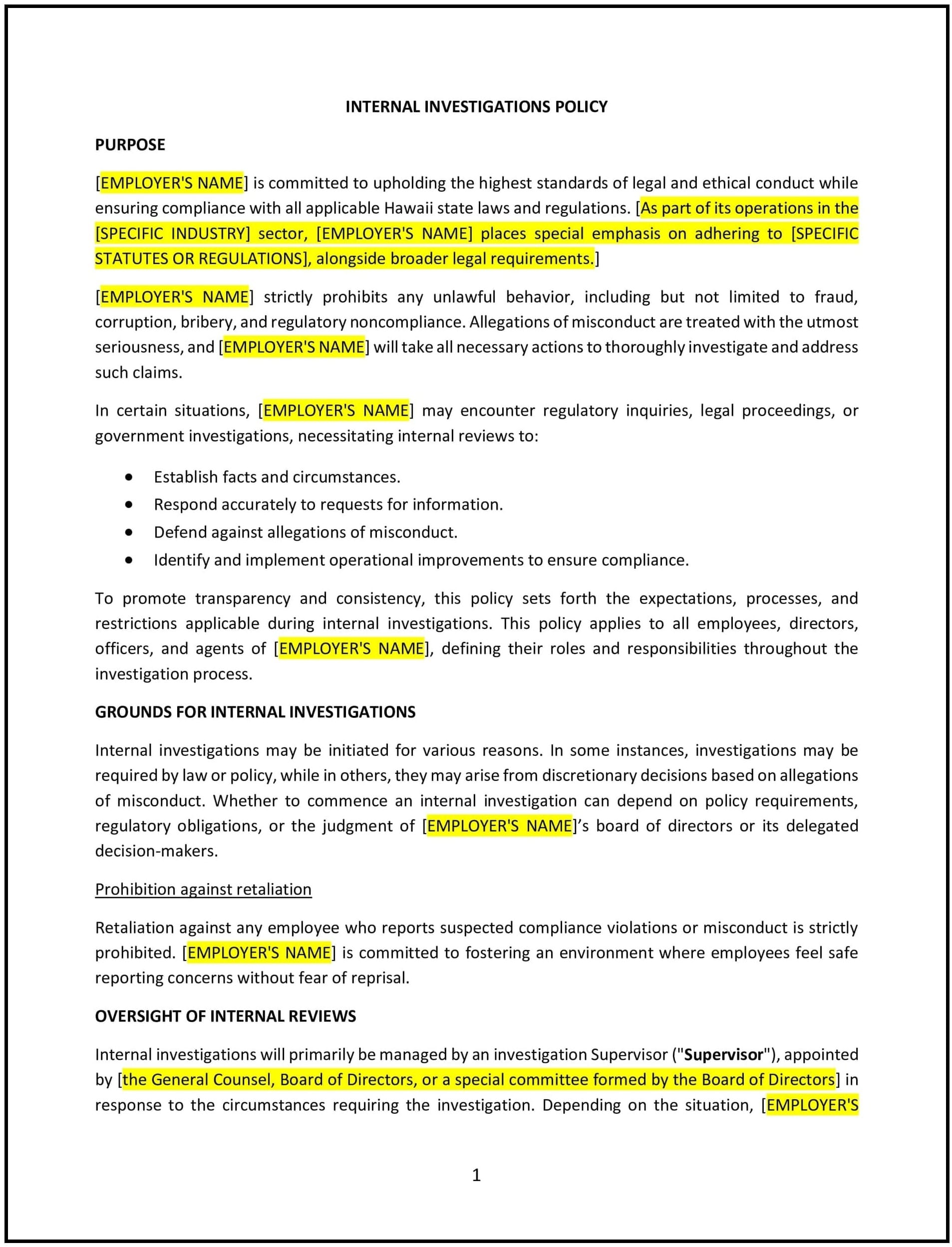
Where deals go from offer to paid
