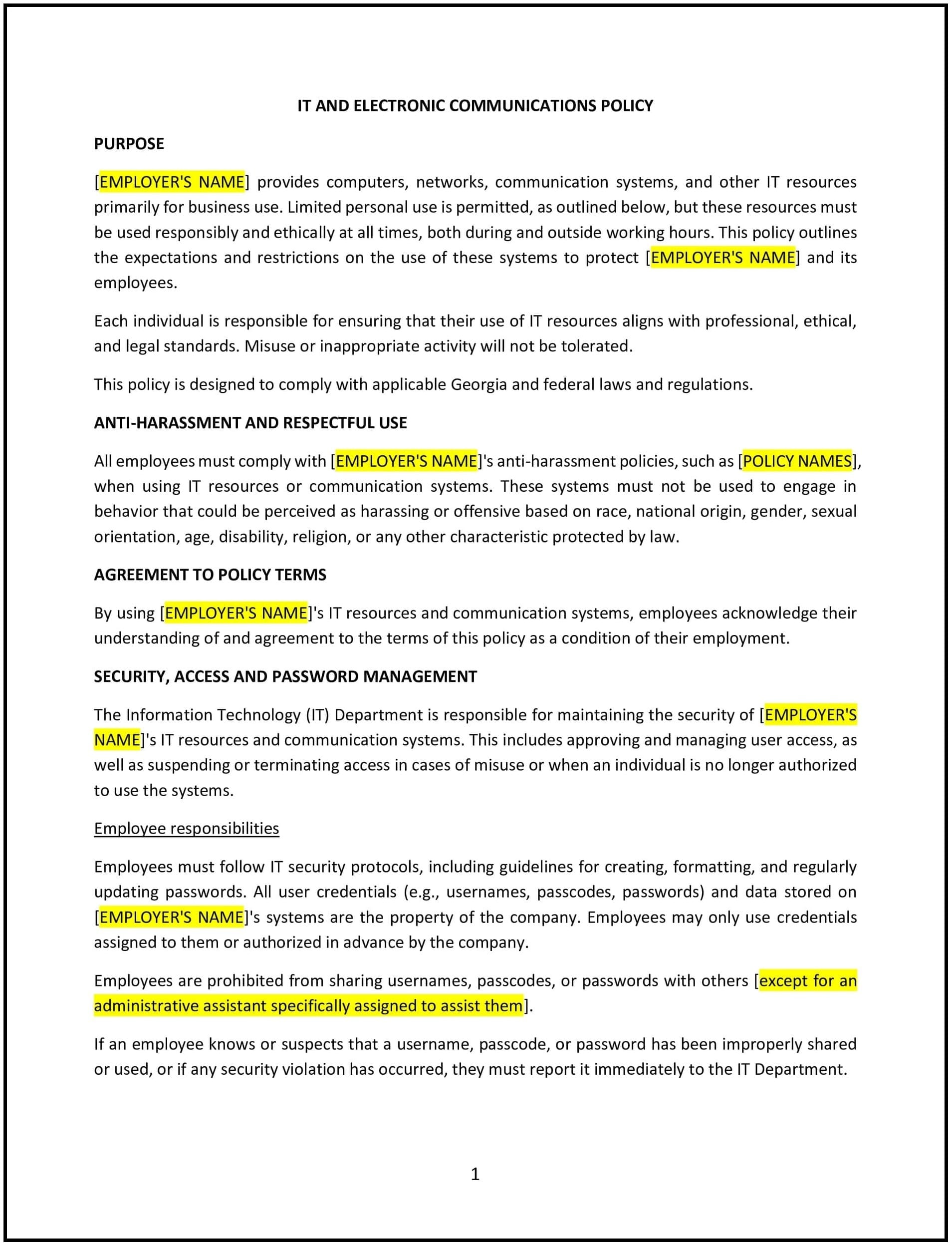
IT and electronics communications policy (Georgia): Free template
Regulates acceptable use of devices, email, and networks to protect data and comply with state guidelines.
- Policies
- Georgia
IT and electronics communications policy (Georgia)
This IT and electronics communications policy is designed to help Georgia businesses manage the appropriate use of company-provided technology, including computers, mobile devices, email, and internet access. The policy outlines usage guidelines, security protocols, and employee responsibilities to protect business resources and data.
By implementing this policy, businesses can enhance productivity, safeguard information, and maintain professional use of electronic communications.
How to use this IT and electronics communications policy (Georgia)
- Define acceptable use: Specify how company-owned technology and communication tools should be used, including restrictions on personal use and prohibited activities.
- Set security protocols: Establish guidelines for creating strong passwords, protecting sensitive information, and avoiding unauthorized software installations.
- Address internet usage: Provide rules for internet access, such as limiting visits to work-related sites and avoiding downloads from unverified sources.
- Outline email and messaging guidelines: Define appropriate use of company email and messaging systems, including avoiding offensive content and unauthorized sharing of information.
- Include monitoring practices: Inform employees that their use of company IT resources may be monitored to ensure compliance with the policy.
- Prohibit misuse: Clearly state that misuse of IT resources, such as accessing inappropriate content or engaging in illegal activities, is subject to disciplinary action.
- Provide reporting procedures: Encourage employees to report suspected security breaches or misuse of technology promptly.
- Review and update regularly: Periodically assess the policy to reflect changes in Georgia business practices, technology advancements, or security risks.
Benefits of using this IT and electronics communications policy (Georgia)
Implementing this policy provides several advantages for Georgia businesses:
- Protects company resources: Clear guidelines prevent misuse of technology and safeguard sensitive information.
- Enhances security: Security protocols minimize the risk of cyberattacks and data breaches.
- Boosts productivity: Limiting non-work-related use of IT resources helps employees focus on their tasks.
- Ensures accountability: Monitoring practices and reporting procedures promote responsible use of technology.
- Reflects Georgia-specific practices: Tailoring the policy to local business needs ensures its relevance and practicality.
Tips for using this IT and electronics communications policy (Georgia)
- Communicate clearly: Share the policy with employees during onboarding and provide regular updates as needed.
- Provide training: Offer sessions on cybersecurity best practices, appropriate use of IT resources, and recognizing phishing attempts.
- Monitor usage appropriately: Implement monitoring systems while respecting employee privacy to ensure ethical oversight.
- Encourage feedback: Invite employees to suggest improvements to IT protocols or highlight areas of concern.
- Adapt to new technology: Regularly review the policy to address changes in IT infrastructure or the introduction of new tools.
Frequently asked questions (FAQs)
Similar templates
Where deals go from offer to paid
