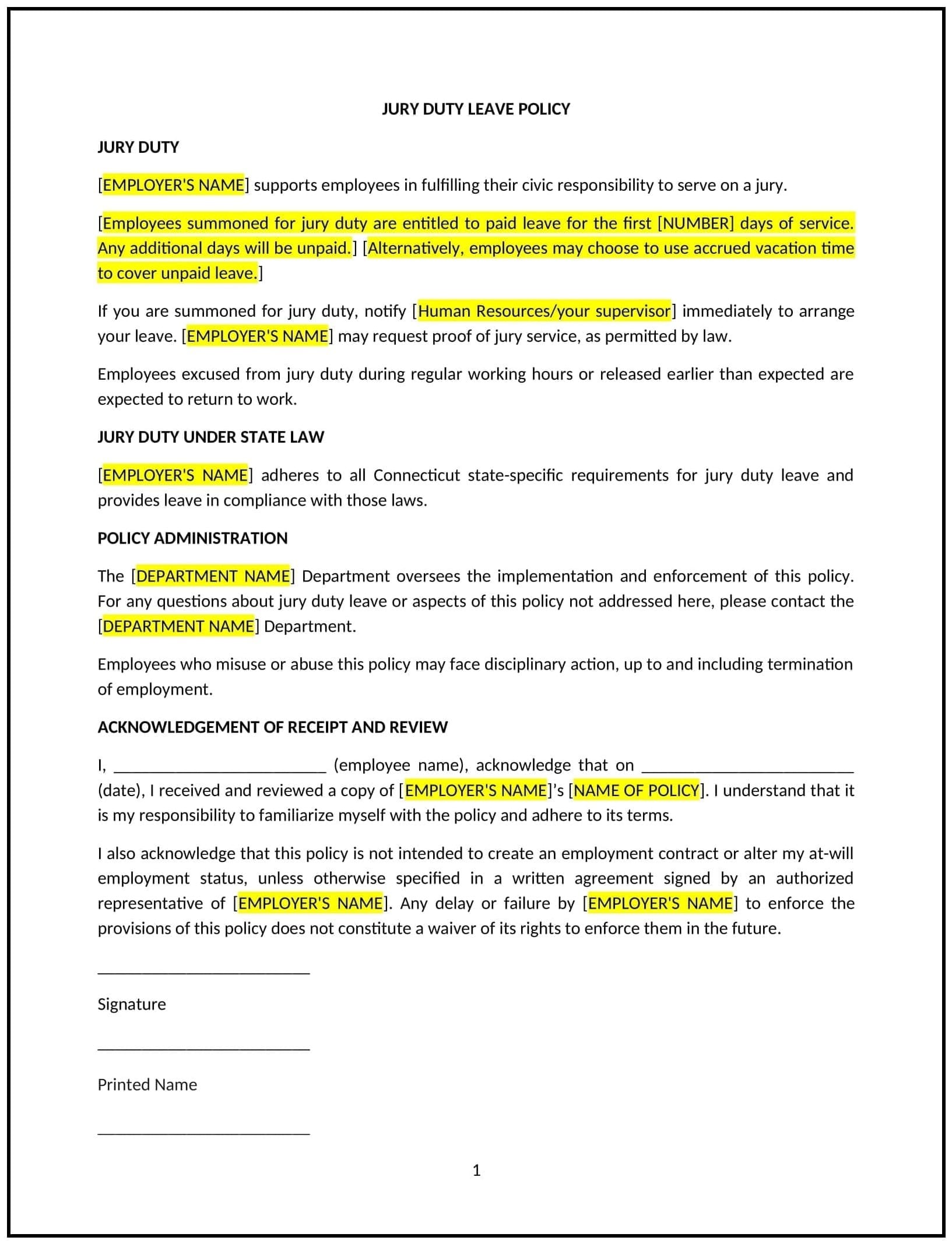
Jury duty leave policy (Connecticut): Free template
Provides job‑protected leave for jury service, prohibiting retaliation per Connecticut labor statutes.
- Policies
- Connecticut
Jury duty leave policy (Connecticut)
A jury duty leave policy helps Connecticut businesses manage employee absences due to jury service while ensuring compliance with state laws. This policy outlines the company’s approach to granting leave for jury duty, including the process for requesting leave, compensation during jury service, and protections against retaliation.
By implementing this policy, businesses can support their employees’ civic duties, ensure legal compliance, and maintain workplace efficiency during jury duty leave.
How to use this jury duty leave policy (Connecticut)
- Grant leave for jury duty: Ensure that employees summoned for jury duty are provided the necessary time off to attend court proceedings, as required by Connecticut law.
- Address pay requirements: Specify whether the business will provide compensation for jury duty leave. Connecticut law does not require employers to pay for time spent on jury duty, but businesses may choose to offer pay as an additional benefit.
- Request documentation: Require employees to provide a copy of their jury summons and verification of attendance from the court as proof of their obligation and service.
- Protect employees from retaliation: Clearly state that employees cannot be penalized, demoted, or terminated for serving on a jury, in accordance with Connecticut law.
- Plan for coverage: Encourage managers to coordinate workload coverage to ensure that the employee’s absence does not disrupt business operations.
Benefits of using this jury duty leave policy (Connecticut)
This policy offers several benefits for Connecticut businesses:
- Supports civic responsibility: Demonstrates the business’s commitment to supporting employees in fulfilling their civic duties and responsibilities.
- Reduces legal risks: Ensures compliance with Connecticut’s legal requirements for jury duty leave, reducing the risk of legal disputes.
- Enhances employee trust: Reassures employees that their legal obligations will not negatively impact their job security or standing in the workplace.
- Minimizes workplace disruptions: Establishes clear procedures for handling jury duty leave, allowing for better planning and workload management.
- Aligns with business values: Reinforces the business’s dedication to fairness and respect for employees’ rights.
Tips for using this jury duty leave policy (Connecticut)
- Reflect Connecticut-specific laws: Ensure the policy aligns with Connecticut’s requirements for jury duty leave, including provisions for protecting employees from retaliation.
- Communicate policy details: Provide employees with clear information about their rights and responsibilities under the policy, including pay provisions and documentation requirements.
- Offer flexibility: Where possible, provide additional support, such as flexible scheduling, to accommodate employees serving on extended jury duty.
- Keep accurate records: Maintain documentation of employee jury service to ensure compliance and provide clarity in case of disputes.
- Review periodically: Update the policy as needed to reflect changes in state laws or business practices.
Frequently asked questions (FAQs)
Similar templates

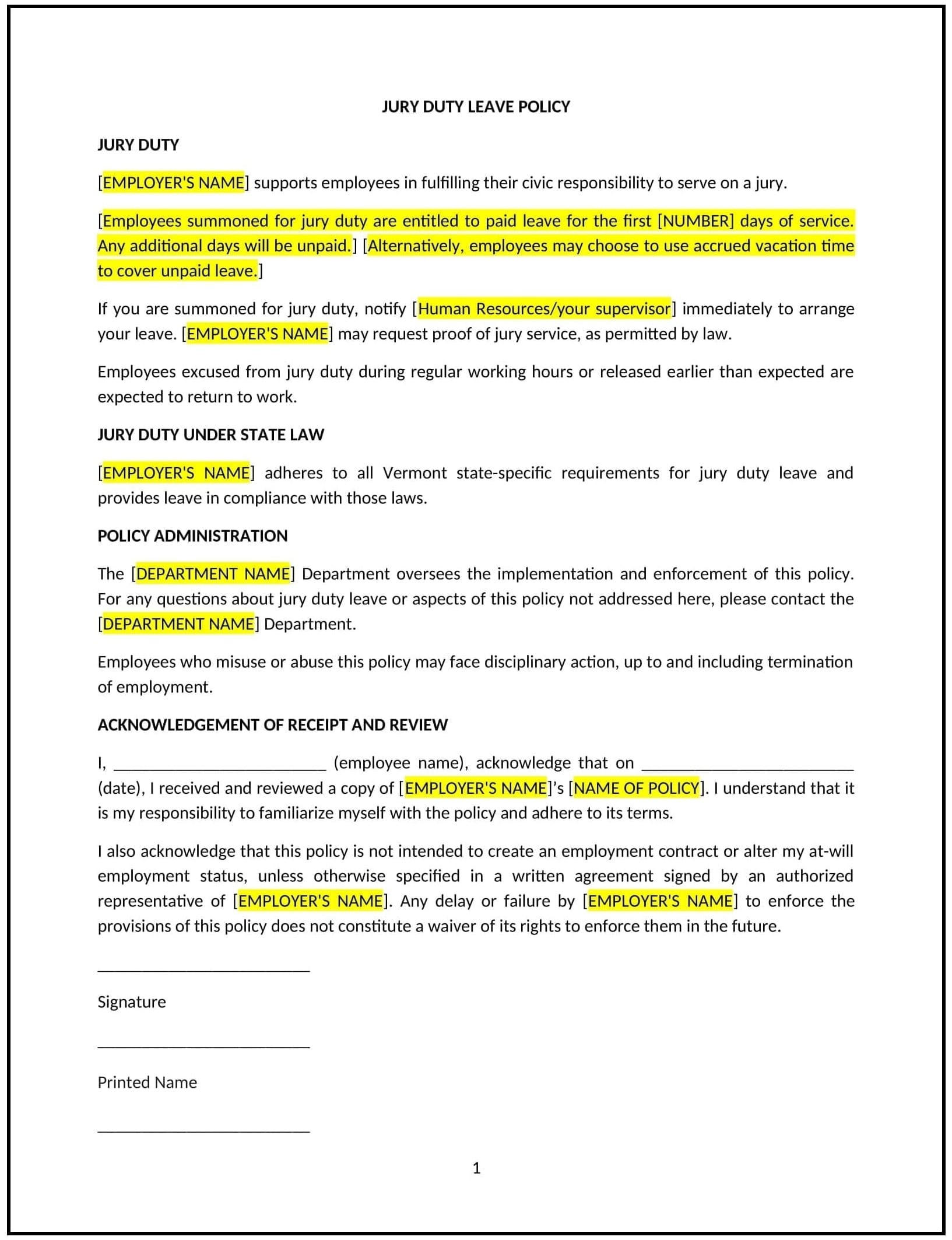
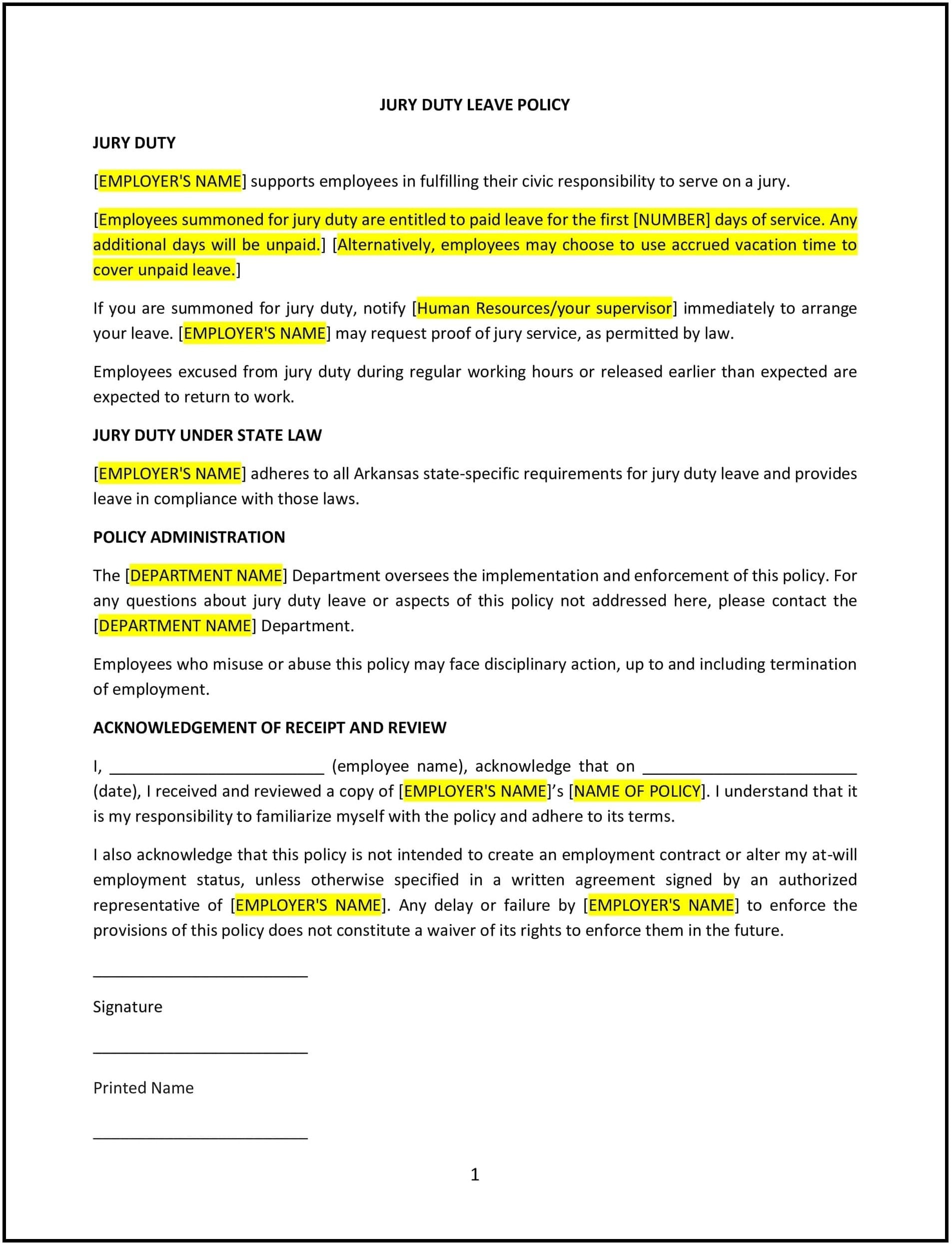
Where deals go from offer to paid
