Jury duty leave policy (New Jersey): Free template
Assures employees of time off and job security while fulfilling civic responsibilities in court.
- Policies
- New Jersey
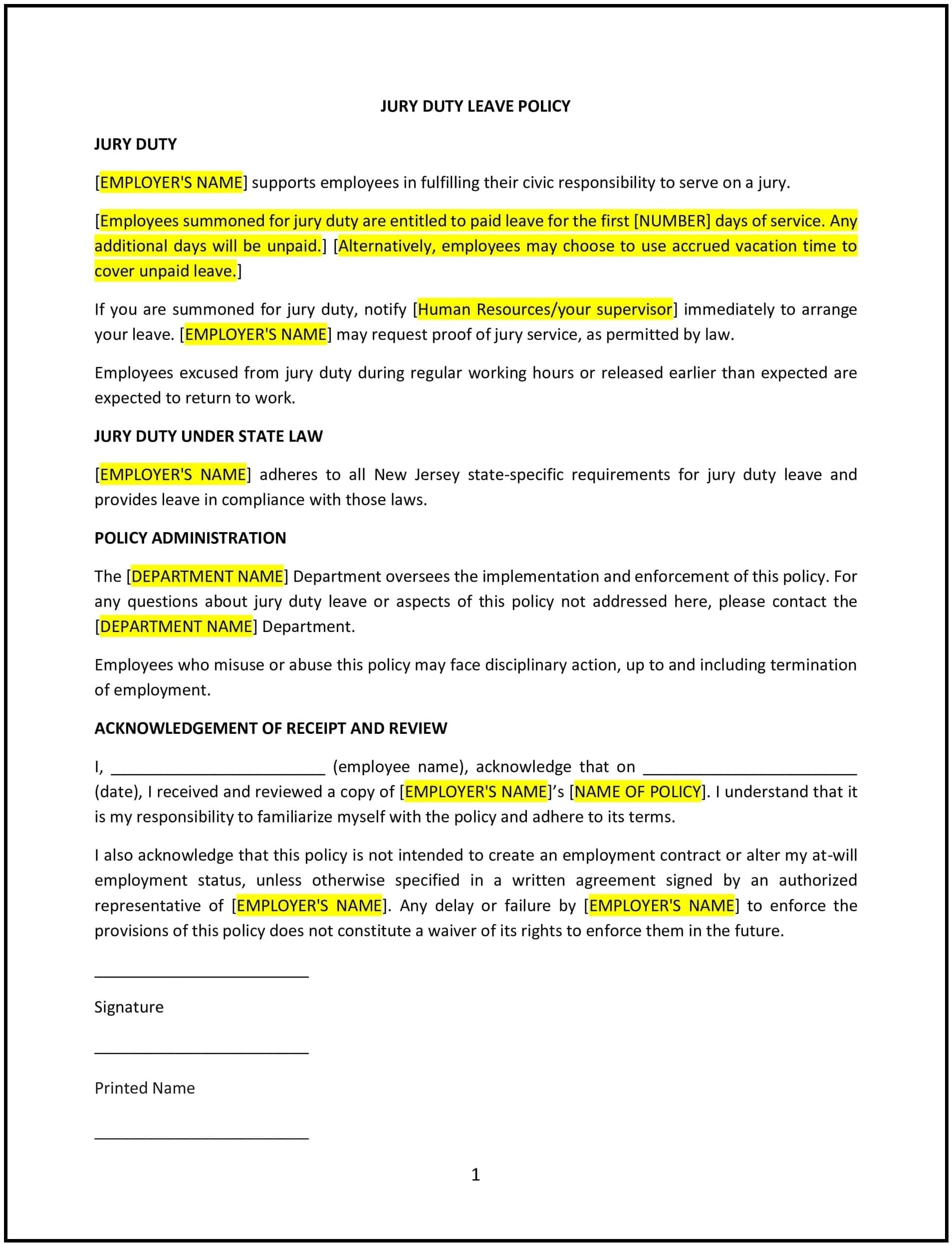
Jury duty leave policy (New Jersey)
A jury duty leave policy helps New Jersey businesses establish clear guidelines for employees who are called to serve on a jury. This policy is designed to support employees in fulfilling their civic responsibilities while maintaining business operations. By formalizing the process for granting jury duty leave, businesses can demonstrate a commitment to community engagement and employee well-being.
By implementing this policy, businesses in New Jersey can foster a supportive workplace culture, enhance employee morale, and align with state and federal laws.
How to use this jury duty leave policy (New Jersey)
- Define jury duty leave: Clearly explain what constitutes jury duty leave and the types of court service covered, such as jury selection or trial participation.
- Establish eligibility: Specify which employees are eligible for jury duty leave, including full-time, part-time, or temporary staff.
- Set notification requirements: Explain how employees should request jury duty leave, including advance notice and documentation.
- Address paid vs. unpaid leave: Clarify whether jury duty leave is paid, unpaid, or a combination, and outline any available benefits.
- Coordinate with other policies: Ensure alignment with other leave policies, such as vacation or sick leave, to avoid conflicts or gaps in coverage.
- Communicate the policy: Share the policy with employees during onboarding and through internal communications to ensure awareness and understanding.
- Train managers: Educate supervisors on how to handle jury duty leave requests fairly and consistently while maintaining business operations.
- Review and update the policy: Periodically assess the policy’s effectiveness and make adjustments as needed to reflect changes in laws or business needs.
Benefits of using this jury duty leave policy (New Jersey)
This policy offers several advantages for New Jersey businesses:
- Supports civic engagement: Providing jury duty leave encourages employees to participate in their civic responsibilities.
- Enhances employee morale: Demonstrating support for employees’ civic obligations fosters loyalty and job satisfaction.
- Aligns with New Jersey values: The policy reflects the state’s emphasis on community involvement, fairness, and responsibility.
- Improves workplace culture: A supportive environment strengthens trust and collaboration among employees.
- Reduces legal risks: Clear guidelines help businesses comply with state and federal laws regarding jury duty leave.
- Builds trust: Transparent procedures demonstrate the business’s commitment to fairness and employee well-being.
- Attracts talent: A competitive policy can make the business more appealing to prospective employees.
Tips for using this jury duty leave policy (New Jersey)
- Communicate the policy effectively: Share the policy with employees during onboarding and through regular reminders, such as emails or training sessions.
- Provide training: Educate managers on how to handle jury duty leave requests fairly and consistently while maintaining business operations.
- Document requests: Maintain records of all jury duty leave requests, approvals, and durations to ensure consistency and accountability.
- Offer flexibility: Consider allowing employees to use paid leave, such as vacation or personal days, for jury duty if applicable.
- Support returning employees: Provide resources or accommodations to help employees transition back to work after their absence.
- Review the policy periodically: Update the policy as needed to reflect changes in laws, employee needs, or business priorities.
- Lead by example: Ensure senior leadership demonstrates support for the policy and encourages a culture of civic engagement.
Frequently asked questions (FAQs)
Similar templates
Where deals go from offer to paid
