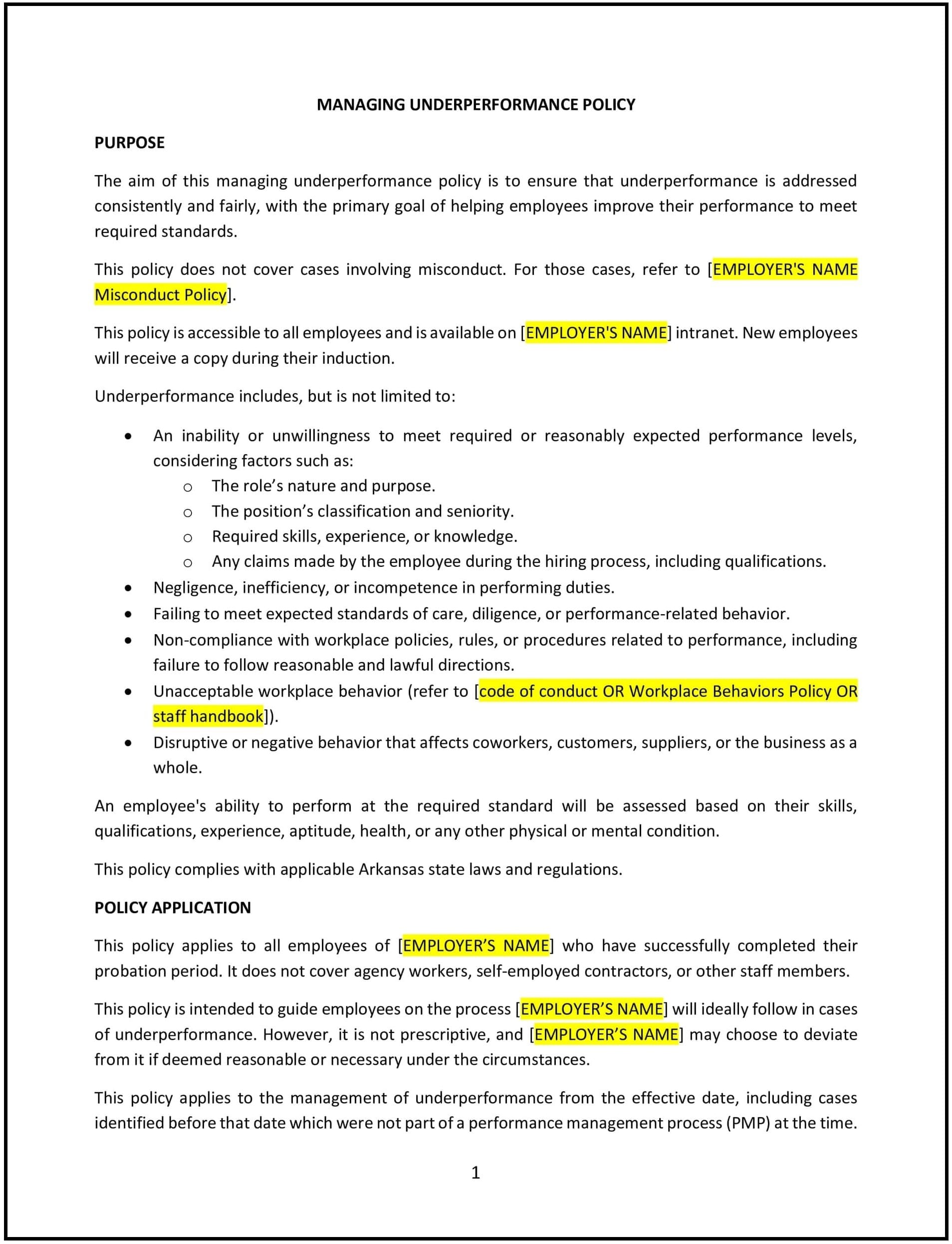
Managing underperformance policy (Arkansas): Free template
Guides supervisors through documentation, feedback, and improvement plans to address underperformance in Arkansas workplaces.
- Policies
- Arkansas
Managing underperformance policy (Arkansas)
In Arkansas, a managing underperformance policy provides businesses with structured guidelines for addressing and improving employee performance issues. This policy helps ensure fairness, consistency, and transparency in handling performance concerns while supporting compliance with employment laws.
This policy outlines the steps for identifying underperformance, setting improvement goals, and implementing corrective actions. By adopting this policy, Arkansas businesses can foster a culture of accountability, improve workforce productivity, and minimize legal risks.
How to use this managing underperformance policy (Arkansas)
- Identify performance issues: Clearly outline the process for evaluating and identifying underperformance based on job expectations and responsibilities.
- Set improvement goals: Work with the employee to develop specific, measurable, and time-bound goals for improvement.
- Provide support: Offer resources, such as training or mentoring, to help employees address performance challenges effectively.
- Document progress: Maintain accurate records of performance discussions, improvement plans, and outcomes for transparency and accountability.
- Communicate consequences: Clearly explain the potential consequences of failing to meet improvement goals, including disciplinary actions or termination.
Benefits of using this managing underperformance policy (Arkansas)
This policy offers several advantages for Arkansas businesses:
- Enhances workplace productivity: Provides a structured approach to address and resolve performance issues, improving overall team efficiency.
- Promotes fairness: Ensures consistent and transparent handling of underperformance across all employees.
- Supports compliance: Aligns with Arkansas and federal labor laws, helping businesses handle performance issues lawfully.
- Reduces turnover: Encourages improvement by offering employees the opportunity to address challenges and succeed in their roles.
- Mitigates legal risks: Protects the business by documenting performance management steps and adhering to labor regulations.
Tips for using this managing underperformance policy (Arkansas)
- Address Arkansas-specific considerations: Ensure the policy reflects state employment laws and aligns with any industry-specific practices.
- Train managers: Provide training on effective performance management techniques, including coaching, setting expectations, and documenting processes.
- Use clear metrics: Define objective performance criteria to avoid ambiguity and ensure fairness in evaluations.
- Foster open communication: Create an environment where employees feel comfortable discussing performance concerns and seeking support.
- Review periodically: Update the policy as needed to reflect changes in laws, workplace practices, or organizational goals.
Frequently asked questions (FAQs)
Similar templates
Where deals go from offer to paid
