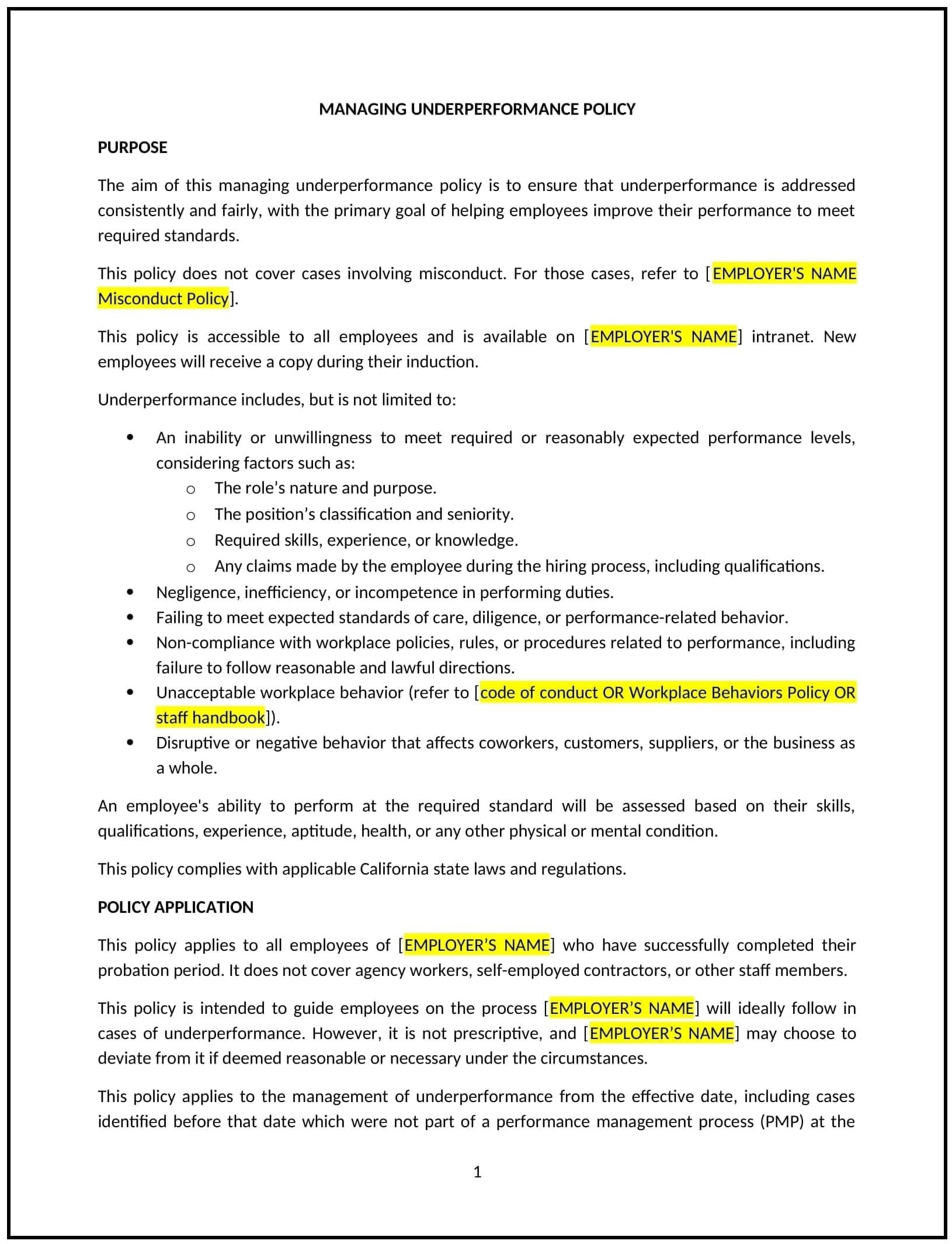
Managing underperformance policy (California): Free template
Guides supervisors through feedback, documentation, and improvement plans to address performance gaps under California HR rules.
- Policies
- California
Managing underperformance policy (California)
In California, a managing underperformance policy provides businesses with guidelines to address and improve employee performance issues while supporting compliance with state labor laws, such as the Fair Employment and Housing Act (FEHA). This policy outlines a structured and fair approach to identifying, addressing, and resolving underperformance in the workplace.
This policy defines the steps for managing underperformance, including documentation, feedback, and potential corrective actions. By implementing this policy, California businesses can enhance productivity, minimize legal risks, and foster a supportive work environment.
How to use this managing underperformance policy (California)
- Define performance expectations: Clearly communicate job responsibilities, performance standards, and business goals to employees.
- Identify underperformance: Use objective metrics and documented observations to determine when an employee’s performance falls below expectations.
- Provide feedback: Conduct private and constructive discussions to address performance issues and outline improvement goals.
- Develop improvement plans: Create a written performance improvement plan (PIP) that includes specific actions, timelines, and measurable outcomes.
- Monitor progress: Regularly review the employee’s progress toward improvement goals and provide additional support or feedback as needed.
Benefits of using this managing underperformance policy (California)
This policy offers several advantages for California businesses:
- Supports compliance: Reflects California laws prohibiting discrimination and ensures fair and consistent handling of performance issues.
- Promotes fairness: Provides employees with clear expectations and opportunities to improve their performance.
- Reduces risks: Minimizes potential legal disputes by documenting performance management steps and adhering to lawful procedures.
- Enhances productivity: Helps employees align their performance with business objectives through structured improvement plans.
- Builds trust: Demonstrates the business’s commitment to employee development and equitable treatment.
Tips for using this managing underperformance policy (California)
- Reflect California-specific laws: Ensure compliance with FEHA and other labor laws when addressing performance issues.
- Train managers: Provide guidance on conducting performance discussions and creating effective improvement plans.
- Document thoroughly: Maintain detailed records of all performance-related communications and actions to ensure transparency and consistency.
- Use measurable metrics: Define clear, objective performance goals to avoid ambiguity and support fair assessments.
- Review regularly: Update the policy to reflect changes in California laws or workplace practices.
Frequently asked questions (FAQs)
Similar templates
Where deals go from offer to paid
