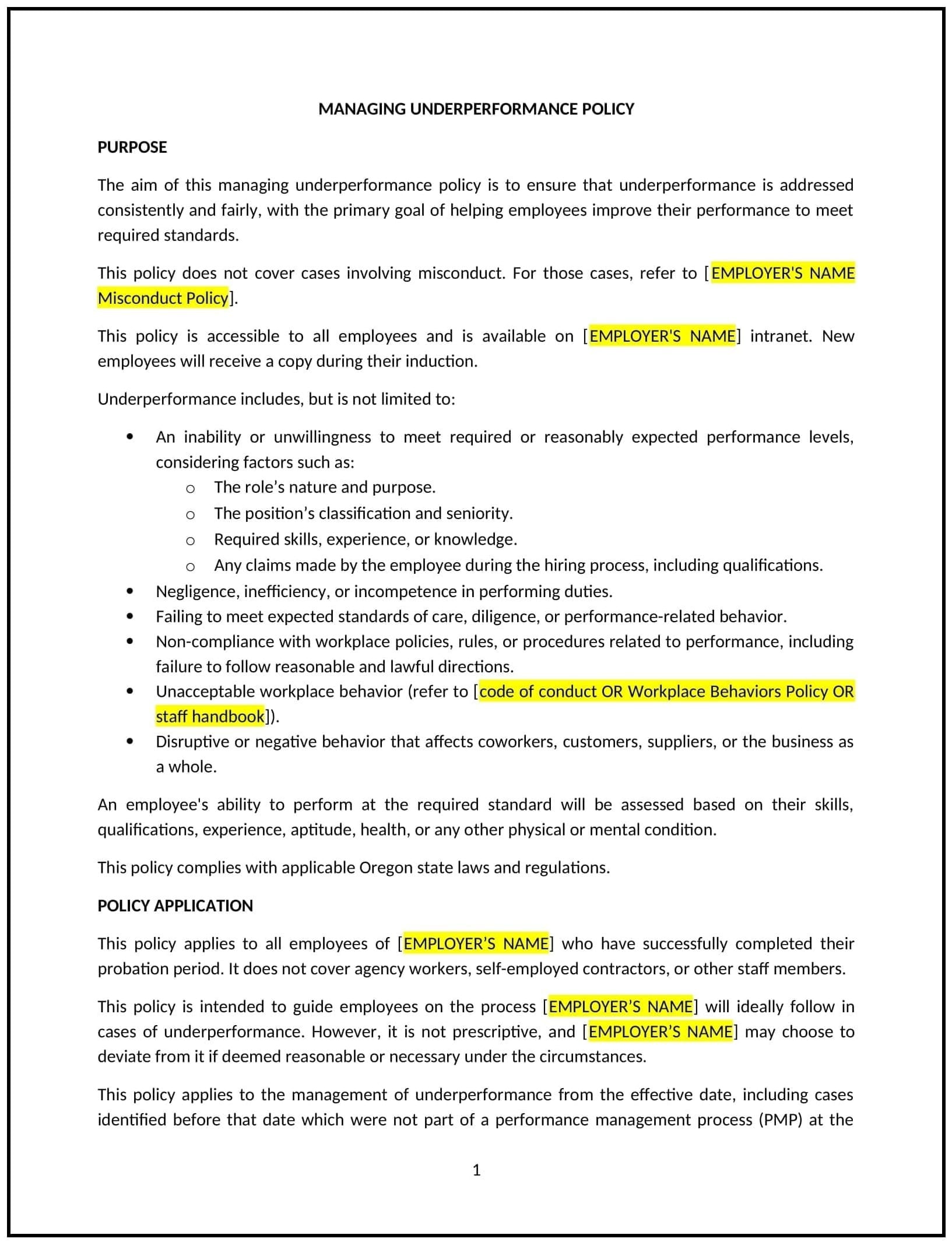
Managing underperformance policy (Oregon): Free template
Describes steps for addressing employee performance issues through feedback, support, and improvement plans.
- Policies
- Oregon
Managing underperformance policy (Oregon)
This managing underperformance policy is designed to help Oregon businesses address employee performance issues in a fair and structured manner. It outlines procedures for identifying underperformance, providing feedback, and implementing improvement plans.
By adopting this policy, businesses can improve productivity, maintain workplace standards, and align with best practices for performance management.
How to use this managing underperformance policy (Oregon)
- Define underperformance: Clarify what constitutes underperformance, such as missed deadlines or poor quality work.
- Establish feedback procedures: Outline steps for providing constructive feedback to underperforming employees.
- Develop improvement plans: Create actionable plans to help employees meet performance expectations.
- Monitor progress: Regularly review employee performance and provide ongoing support.
- Address persistent issues: Specify consequences for employees who fail to improve, such as disciplinary action.
- Train managers: Educate supervisors on handling underperformance issues fairly and effectively.
- Review and update: Assess the policy annually to ensure it aligns with evolving business needs and employee expectations.
Benefits of using this managing underperformance policy (Oregon)
This policy offers several advantages for Oregon businesses:
- Improves productivity: Addresses performance issues promptly, ensuring employees meet expectations.
- Maintains standards: Ensures consistent performance across the organization.
- Enhances fairness: Provides a structured approach to managing underperformance, reducing bias or favoritism.
- Reduces turnover: Helps employees improve rather than resorting to termination.
- Supports growth: Encourages a culture of continuous improvement and development.
Tips for using this managing underperformance policy (Oregon)
- Communicate clearly: Share the policy with employees and include it in the employee handbook.
- Provide training: Educate managers on delivering constructive feedback and creating improvement plans.
- Monitor compliance: Regularly review performance management processes to ensure fairness.
- Address issues promptly: Take corrective action if underperformance is not resolved through improvement plans.
- Update regularly: Revise the policy as needed to reflect changes in business needs or performance standards.
Frequently asked questions (FAQs)
Similar templates
Where deals go from offer to paid
