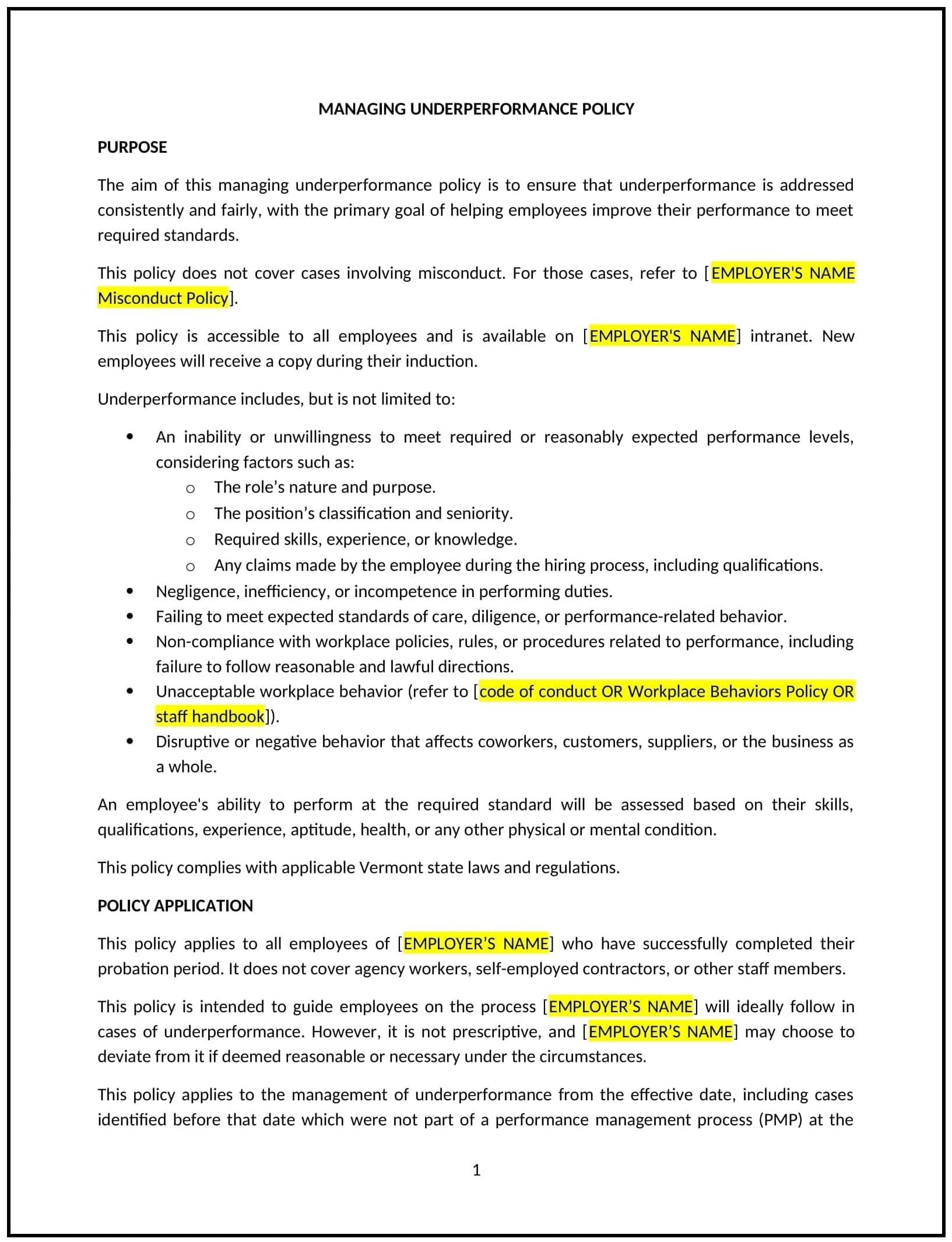
Managing underperformance policy (Vermont): Free template
Guides performance improvement through structured feedback, planning, and documentation consistent with Vermont workplace practices.
- Policies
- Vermont
Managing underperformance policy (Vermont)
This managing underperformance policy is designed to help Vermont businesses address and resolve employee performance issues in a fair, consistent, and constructive manner. It outlines guidelines for identifying underperformance, providing feedback, and implementing improvement plans while promoting compliance with Vermont labor laws.
By adopting this policy, businesses can support employee development, improve productivity, and foster a positive workplace environment.
How to use this managing underperformance policy (Vermont)
- Define underperformance: Specify what constitutes underperformance, such as failing to meet job expectations, deadlines, or quality standards.
- Outline feedback procedures: Provide steps for managers to address performance issues, including documenting concerns and conducting constructive feedback sessions.
- Establish improvement plans: Detail the process for creating performance improvement plans (PIPs), including goals, timelines, and support mechanisms.
- Include monitoring and evaluation: Explain how progress will be tracked and evaluated, including regular check-ins between managers and employees.
- Address consequences: Clarify the potential outcomes if performance does not improve, such as reassignment, further training, or termination.
- Emphasize fairness: Ensure that performance management practices are applied consistently and objectively across all employees.
- Monitor compliance: Regularly review performance management practices to align with Vermont laws and workplace standards.
Benefits of using this managing underperformance policy (Vermont)
This policy provides several benefits for Vermont businesses:
- Encourages improvement: Provides employees with clear expectations and opportunities to enhance their performance.
- Promotes consistency: Establishes a uniform approach for addressing performance issues across the organization.
- Reduces risks: Strengthens compliance with Vermont employment laws, minimizing legal or reputational risks.
- Enhances productivity: Supports employees in achieving their potential, improving overall team performance.
- Builds trust: Demonstrates the company’s commitment to employee development and fairness.
Tips for using this managing underperformance policy (Vermont)
- Communicate the policy: Share the policy with employees during onboarding and include it in the employee handbook or internal resources.
- Train managers: Provide training on how to identify underperformance, deliver constructive feedback, and implement improvement plans effectively.
- Document thoroughly: Maintain detailed records of performance discussions, improvement plans, and progress evaluations.
- Encourage open communication: Foster a culture where employees feel comfortable discussing performance challenges and seeking support.
- Update regularly: Revise the policy to reflect changes in Vermont laws, workplace practices, or industry standards.
Frequently asked questions (FAQs)
Similar templates
Where deals go from offer to paid
