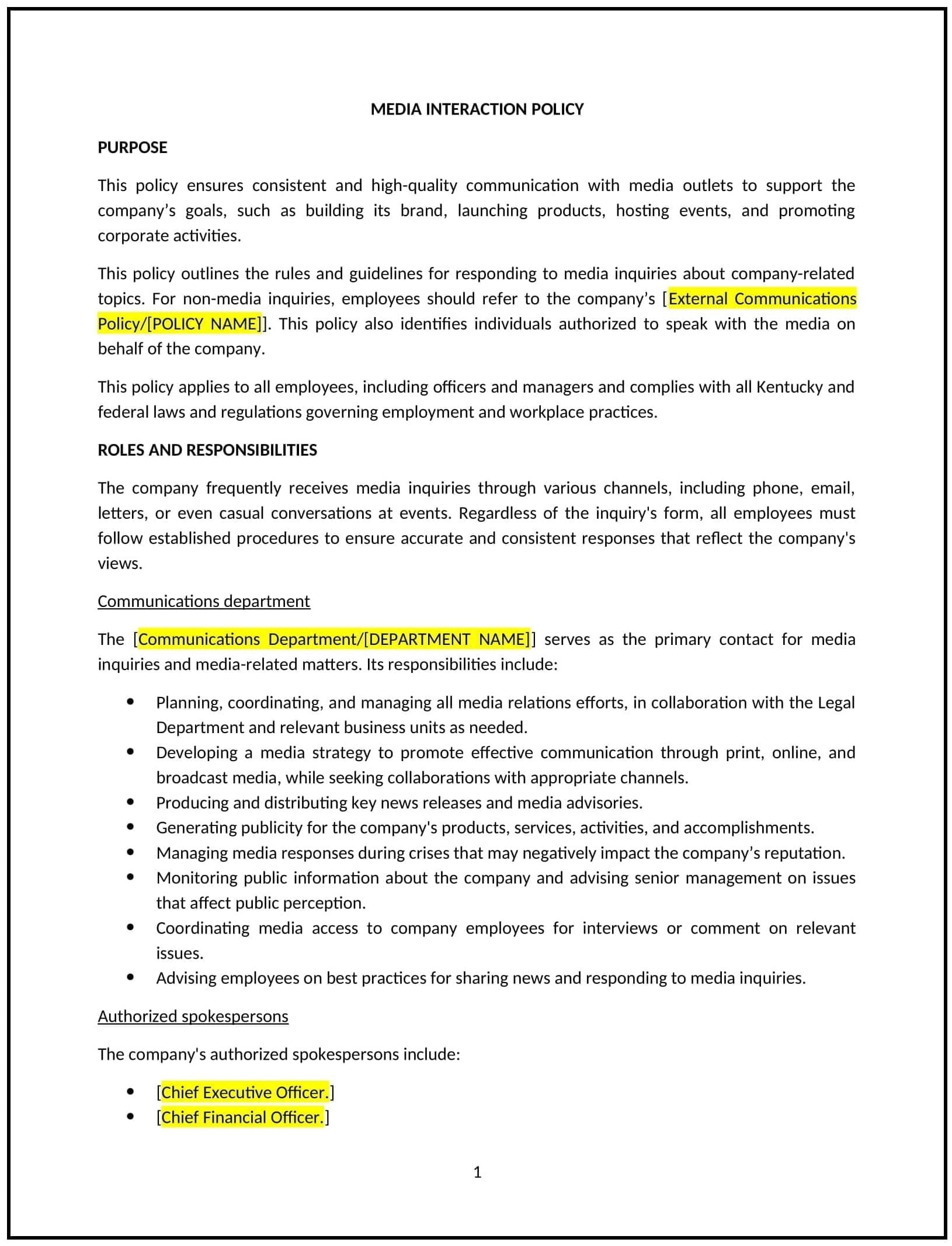
Media relations policy (Kentucky): Free template
Clarifies who can speak to the media and ensures public communications align with the organization's reputation.
- Policies
- Kentucky
Media relations policy (Kentucky)
A media relations policy provides Kentucky businesses with clear guidelines for interacting with the media, ensuring that all communication reflects the organization’s values and objectives. This policy helps businesses manage public perception, control messaging, and respond effectively to media inquiries or coverage.
By adopting this policy, businesses can maintain a consistent public image, build positive relationships with the media, and reduce the risk of miscommunication.
How to use this media relations policy (Kentucky)
- Define spokesperson roles: Businesses should designate specific individuals or departments authorized to communicate with the media and outline their responsibilities.
- Set approval processes: Businesses should require pre-approval for all media statements, interviews, or press releases to ensure consistency and alignment with messaging.
- Provide media inquiry procedures: Businesses should establish a clear process for handling media inquiries, including whom employees should contact when approached by reporters.
- Outline press release protocols: Businesses should include standards for drafting, reviewing, and distributing press releases, ensuring accuracy and professionalism.
- Address crisis communication: Businesses should define procedures for managing media relations during crises, including appointing a spokesperson and preparing consistent messaging.
- Set employee communication guidelines: Businesses should prohibit unauthorized employees from speaking to the media on behalf of the organization and provide guidance on redirecting inquiries.
- Encourage transparency: Businesses should emphasize honesty and clarity in all media communications to build trust and credibility with stakeholders.
Benefits of using this media relations policy (Kentucky)
This policy provides several key benefits for Kentucky businesses:
- Promotes consistent messaging: Ensures that all media communications reflect the business’s values and objectives, reducing the risk of conflicting messages.
- Protects reputation: Provides a framework for handling media interactions professionally and avoiding negative publicity.
- Supports crisis management: Establishes clear procedures for managing media relations during crises, ensuring swift and effective communication.
- Builds media relationships: Encourages positive and productive relationships with journalists, fostering accurate and fair coverage of the business.
- Reduces legal risks: Helps businesses avoid legal or regulatory issues by ensuring that all media communications are accurate and compliant.
Tips for using this media relations policy (Kentucky)
- Communicate the policy: Businesses should share the policy with employees to ensure everyone understands the rules for interacting with the media.
- Train spokespeople: Businesses should provide media training for designated spokespeople to prepare them for interviews, press conferences, and other interactions.
- Monitor media coverage: Businesses should regularly review media coverage to track public perception and address inaccuracies or concerns proactively.
- Update contact lists: Businesses should maintain up-to-date contact lists for journalists and media outlets to streamline communication.
- Review periodically: Businesses should update the policy as needed to reflect changes in media practices, business goals, or Kentucky regulations.
Frequently asked questions (FAQs)
Similar templates
Where deals go from offer to paid
