Media relations policy (Utah): Free template
Details who may speak publicly for the company and how to handle press inquiries in Utah.
- Policies
- Utah
Media relations policy (Utah)
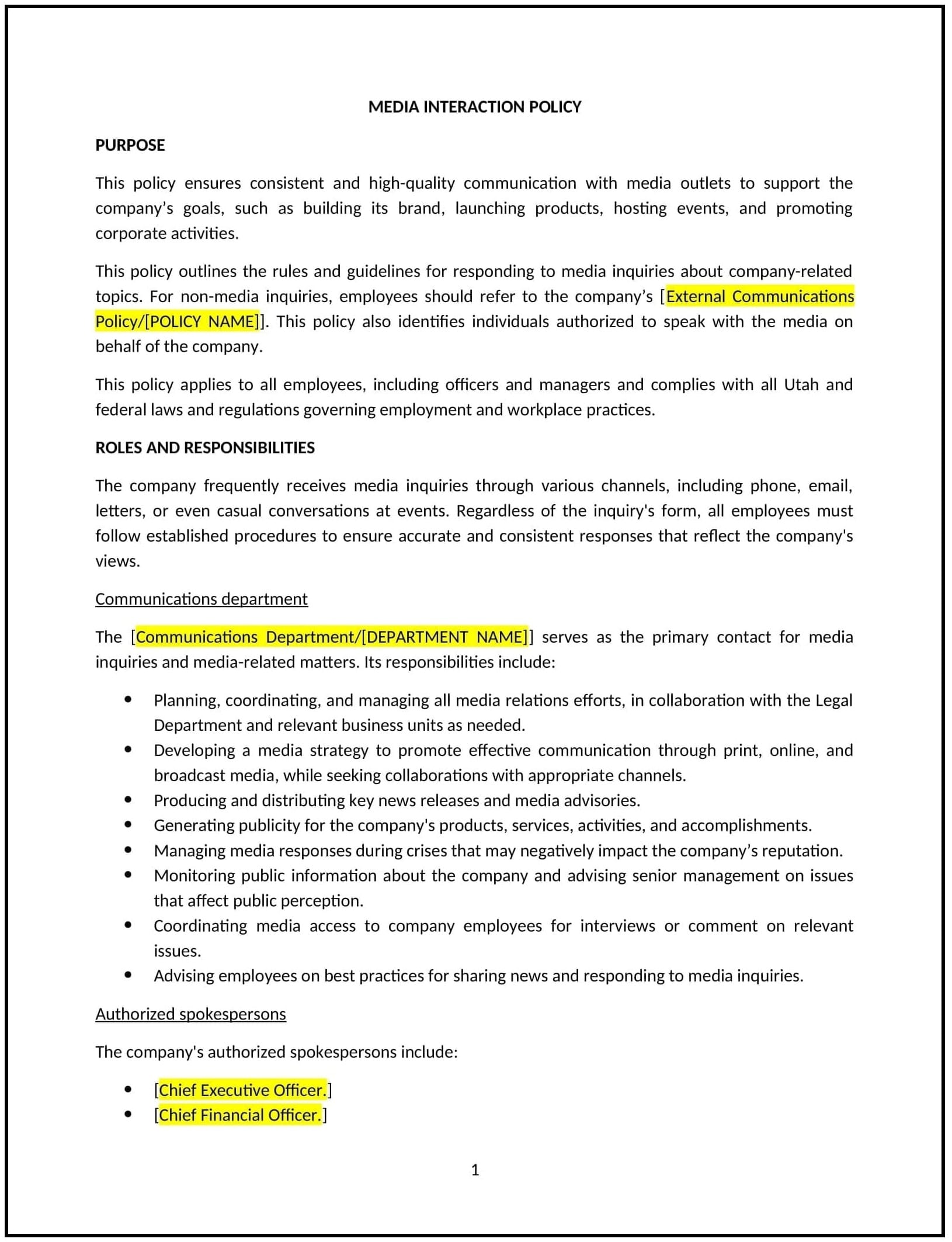
This media relations policy is designed to help Utah businesses establish guidelines for interacting with the media. It outlines procedures for responding to media inquiries, issuing press releases, and managing public statements to protect the business’s reputation.
By adopting this policy, businesses can ensure consistent messaging, maintain control over public communications, and align with general best practices for media relations.
How to use this media relations policy (Utah)
- Define authorized spokespersons: Specify which employees are authorized to speak on behalf of the business.
- Establish approval processes: Outline steps for reviewing and approving media communications, such as press releases or interviews.
- Address confidentiality: Prohibit the sharing of sensitive or proprietary information with the media.
- Provide media training: Educate authorized spokespersons on effective communication techniques and handling difficult questions.
- Monitor media coverage: Track media mentions and respond to inaccuracies or negative coverage promptly.
- Train employees: Educate employees on the policy and their roles in maintaining professional media relations.
- Review and update: Assess the policy annually to ensure it aligns with evolving media trends and business needs.
Benefits of using this media relations policy (Utah)
This policy offers several advantages for Utah businesses:
- Protects reputation: Ensures consistent and professional communication with the media.
- Maintains control: Provides clear guidelines for managing public statements and media inquiries.
- Reduces risks: Minimizes the potential for miscommunication or the release of sensitive information.
- Aligns with best practices: Offers a structured approach to managing media relations.
- Enhances credibility: Builds trust with the media and the public through transparent and professional communication.
Tips for using this media relations policy (Utah)
- Communicate the policy: Share the policy with employees and include it in the employee handbook.
- Provide training: Educate authorized spokespersons and employees on the policy and effective media communication.
- Monitor compliance: Regularly review media communications to ensure adherence to the policy.
- Address issues promptly: Take corrective action if media communications violate the policy or harm the business’s reputation.
- Update regularly: Assess the policy annually to ensure it aligns with evolving media trends and business needs.
Frequently asked questions (FAQs)
Similar templates
Where deals go from offer to paid
