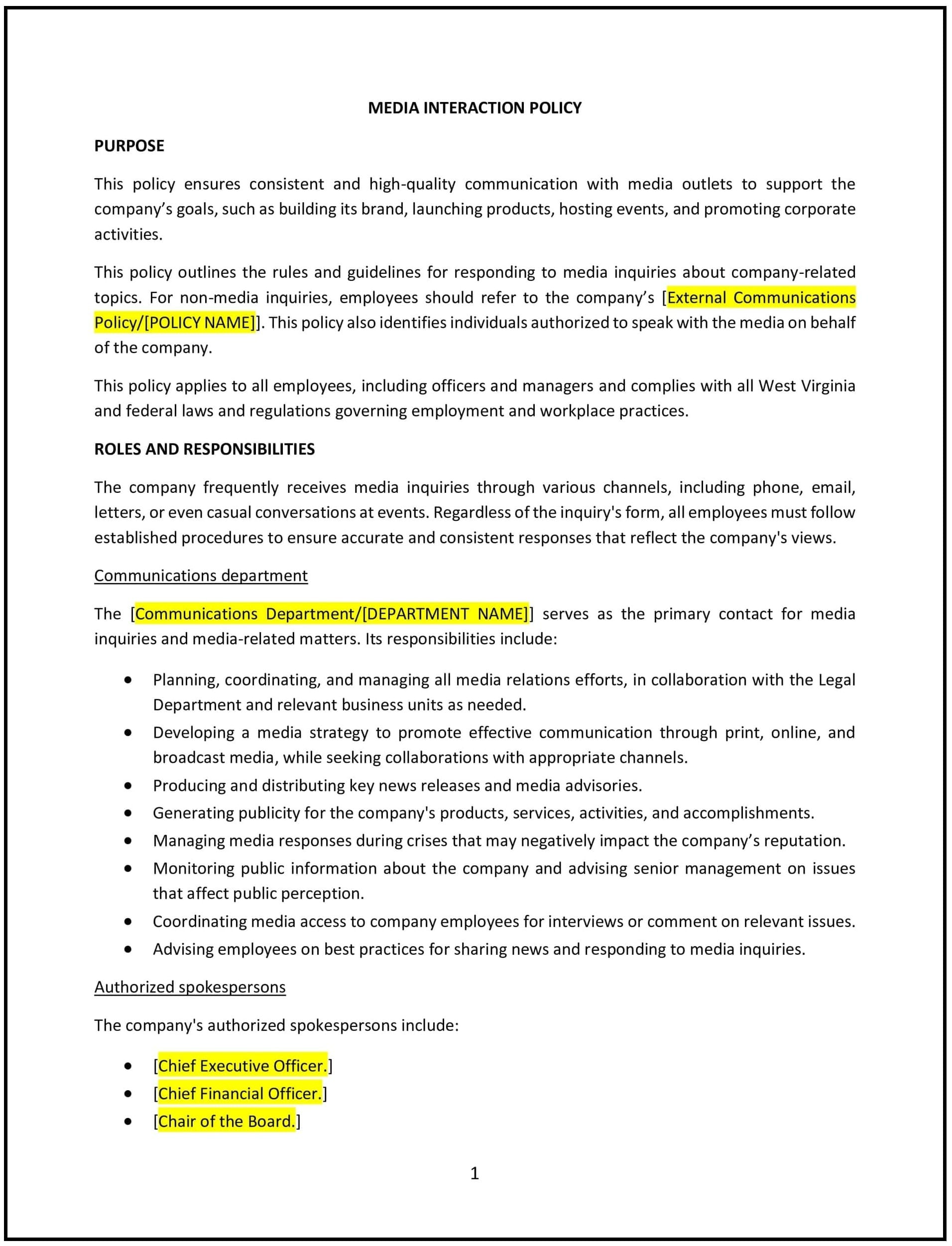
Media relations policy (West Virginia): Free template
Outlines procedures for responding to media inquiries to ensure consistent and authorized communication.
- Policies
- West Virginia
Media relations policy (West Virginia)
In West Virginia, a media relations policy provides guidelines for managing interactions with the media to ensure consistent messaging, protect the organization’s reputation, and comply with legal and ethical standards. This policy identifies authorized spokespersons, outlines procedures for responding to media inquiries, and sets expectations for internal communication regarding media interactions.
The policy supports transparency and accountability while safeguarding confidential or sensitive information.
How to use this media relations policy (West Virginia)
- Define authorized spokespersons: Clearly identify employees who are permitted to communicate with the media on behalf of the organization, such as executives or designated PR representatives.
- Outline response procedures: Provide steps for responding to media inquiries, including redirecting them to the appropriate spokesperson or department.
- Set communication standards: Establish guidelines for public statements, ensuring accuracy, professionalism, and alignment with the organization’s values.
- Address confidentiality: Include rules for protecting proprietary or sensitive information from being disclosed to the media.
- Support compliance: Ensure the policy aligns with West Virginia laws, federal regulations, and industry standards for media and public communications.
Benefits of using a media relations policy (West Virginia)
- Protects brand reputation: Ensures that public statements are accurate, consistent, and reflective of the organization’s values.
- Promotes transparency: Establishes clear protocols for engaging with the media, fostering trust and accountability.
- Reduces risks: Minimizes the likelihood of unauthorized or inaccurate statements that could lead to legal or reputational harm.
- Enhances efficiency: Streamlines the process for handling media inquiries, reducing confusion and delays.
- Supports compliance: Aligns with West Virginia laws and federal regulations governing public disclosures and communications.
Tips for using a media relations policy (West Virginia)
- Communicate clearly: Share the policy with employees to ensure they understand their responsibilities regarding media interactions.
- Provide training: Offer training to authorized spokespersons on media best practices and effective communication techniques.
- Monitor coverage: Regularly review media coverage to identify potential issues and assess the effectiveness of the organization’s messaging.
- Encourage internal reporting: Require employees to report media inquiries to the designated spokesperson or department for proper handling.
- Update regularly: Review and revise the policy to reflect changes in West Virginia laws, industry practices, or organizational priorities.
Frequently asked questions (FAQs)
Similar templates
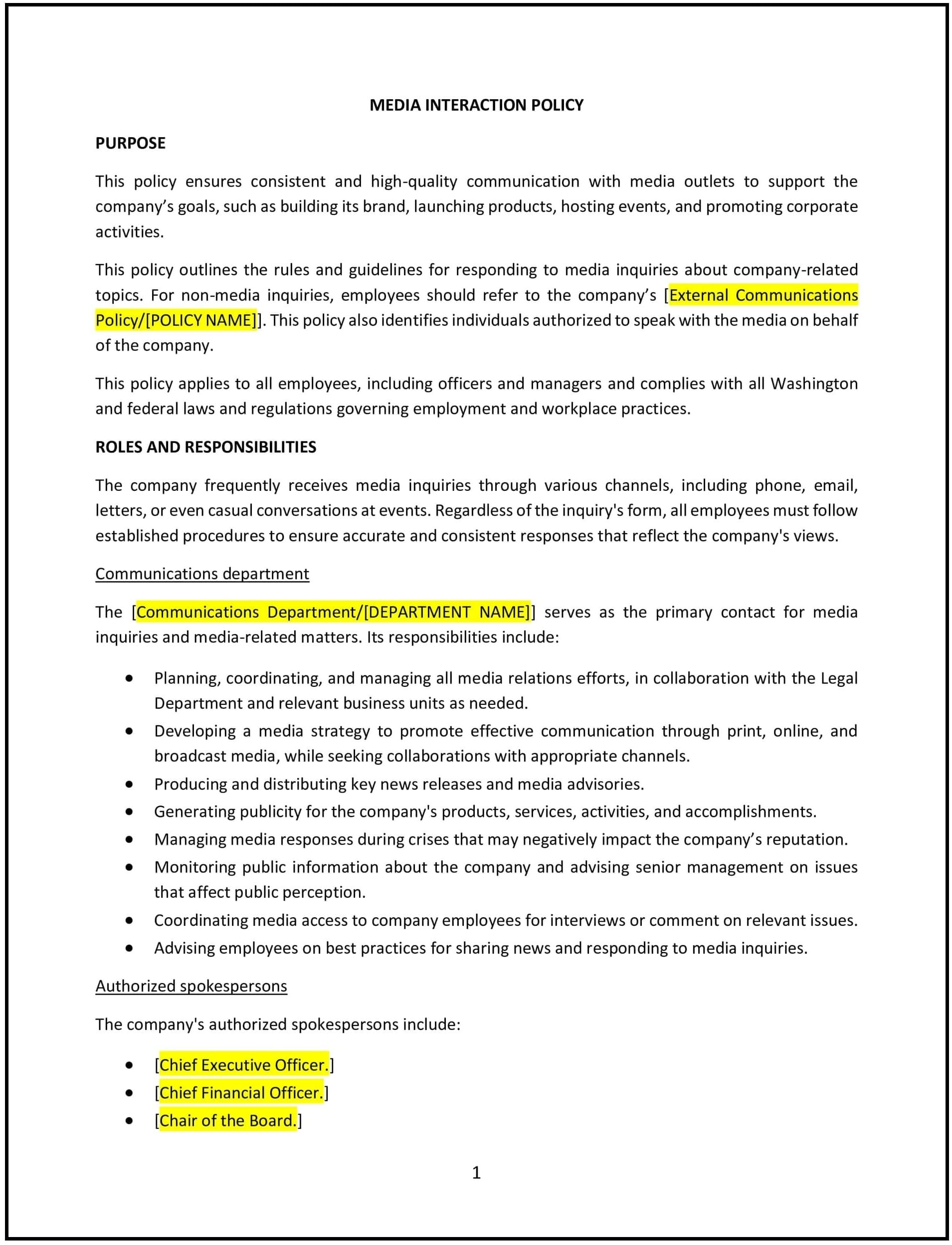
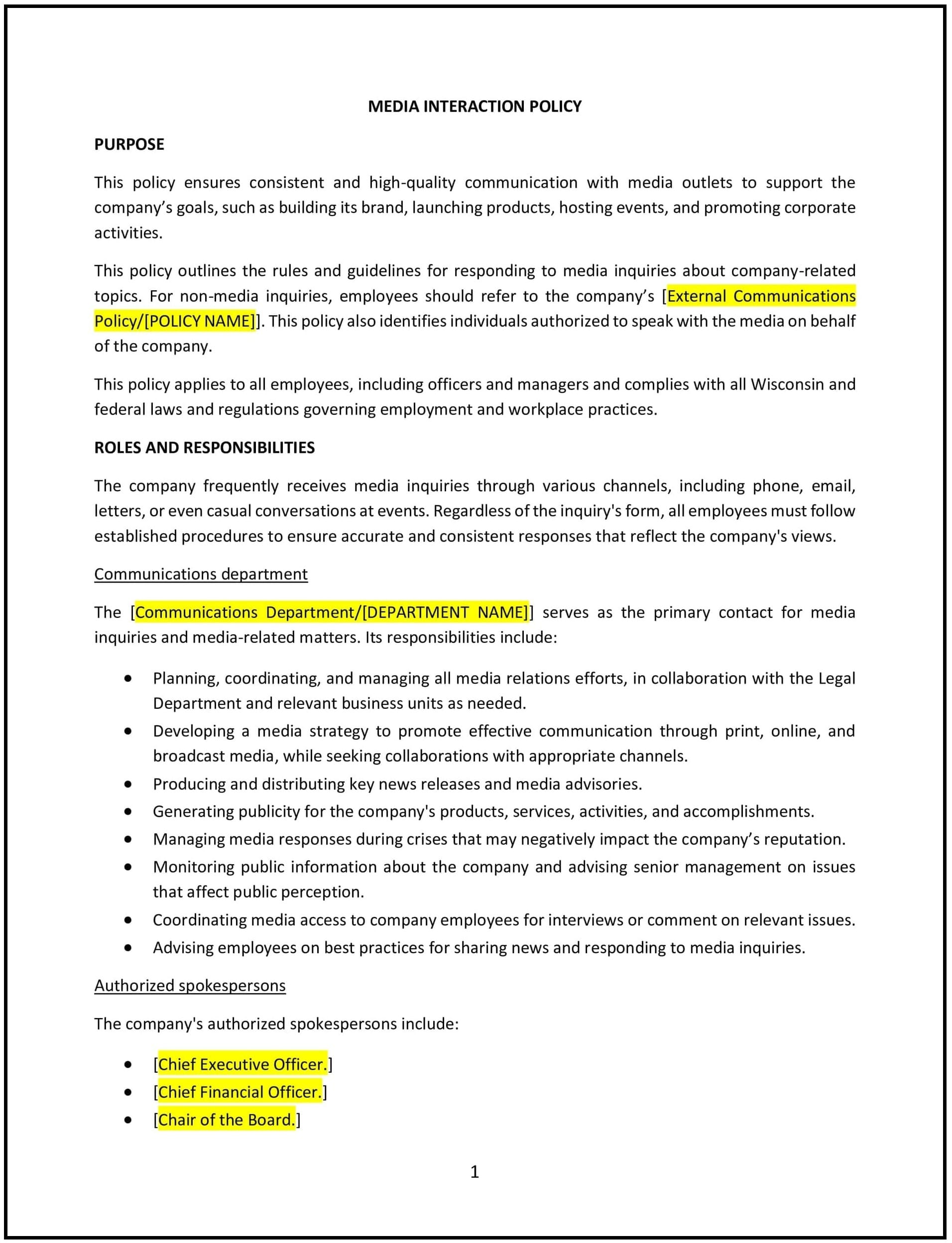
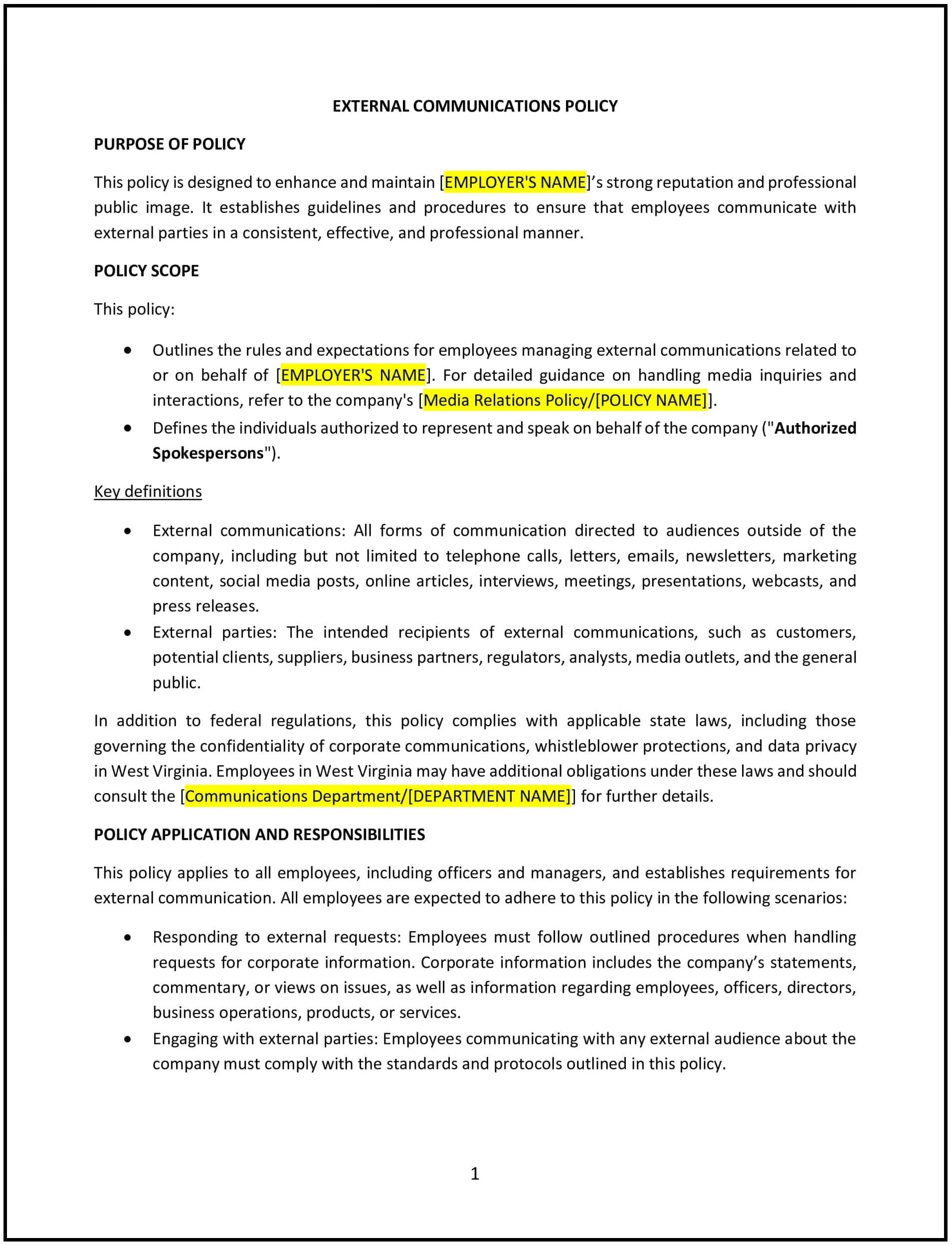
Where deals go from offer to paid
