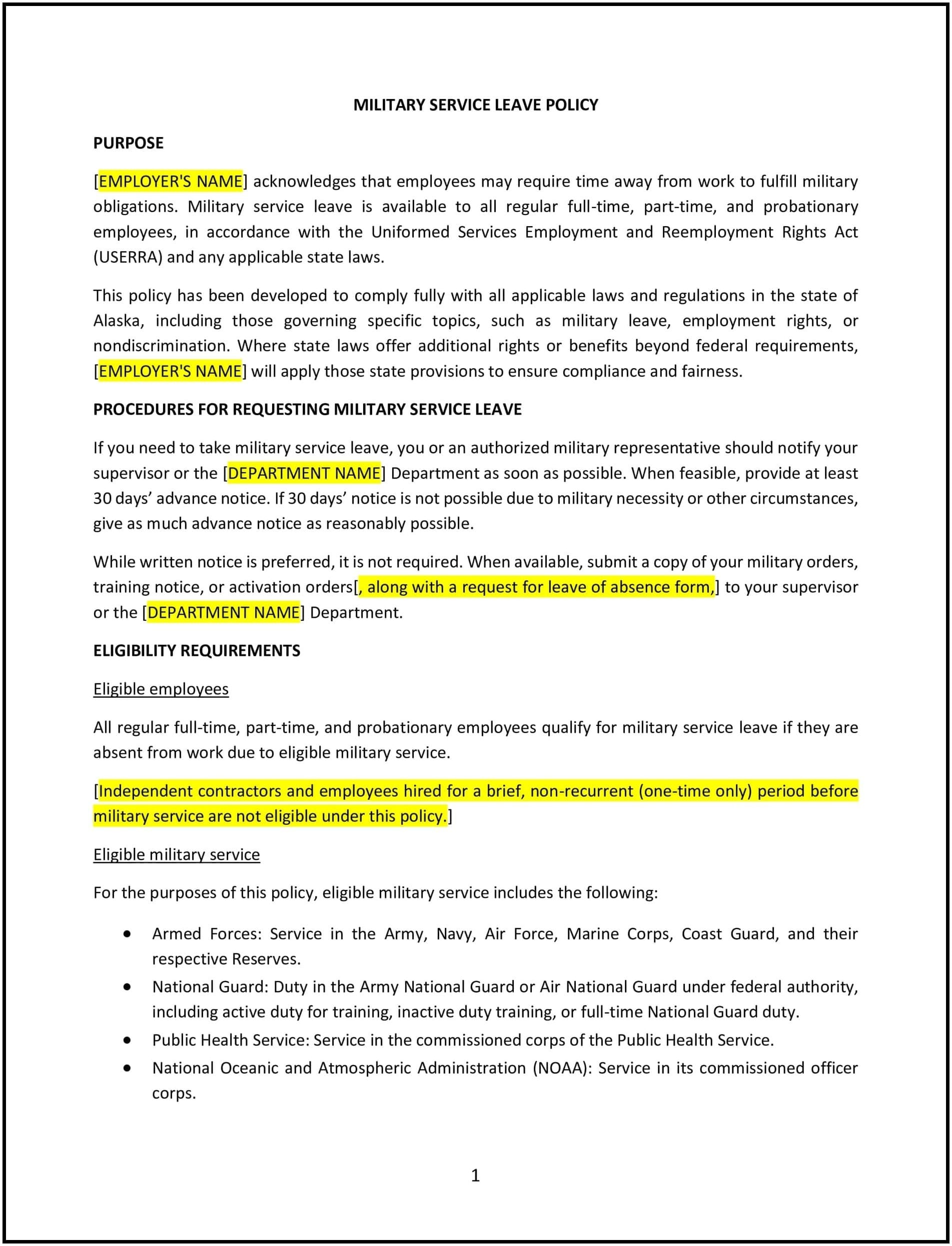
Military service leave policy (Alaska): Free template
Grants job-protected leave for active duty or training, in line with USERRA and Alaska state law.
- Policies
- Alaska
Military service leave policy (Alaska)
In Alaska, a military service leave policy provides guidelines for supporting employees who need to take leave for military duties, such as training, active duty, or deployment. This policy ensures compliance with the Uniformed Services Employment and Reemployment Rights Act (USERRA) and Alaska-specific laws, protecting employees’ jobs and benefits while they fulfill their military obligations.
By implementing this policy, businesses can demonstrate their commitment to respecting and supporting employees who serve in the military.
How to use this military service leave policy (Alaska)
- Define eligibility: Clearly state which employees are eligible for military service leave, including active-duty service members, reservists, and members of the National Guard.
- Outline leave procedures: Provide instructions for requesting leave, including the required documentation, such as military orders or official notices.
- Address job protection: Emphasize that employees are entitled to reinstatement in their previous position or an equivalent role upon returning from military service, as required by USERRA.
- Include benefits information: Clarify how employee benefits, such as health insurance and seniority, are maintained during military leave.
- Communicate expectations: Inform employees of their responsibilities, such as providing advance notice when possible and updating the company on their expected return date.
Benefits of using a military service leave policy (Alaska)
A military service leave policy provides significant advantages for businesses in Alaska. Here’s how it helps:
- Supports compliance: Ensures adherence to USERRA and Alaska-specific legal requirements, reducing the risk of disputes or penalties.
- Protects employees’ rights: Guarantees job protection and benefits continuity for employees fulfilling military obligations.
- Enhances workplace culture: Demonstrates respect and appreciation for employees who serve in the military, fostering loyalty and morale.
- Reduces legal risks: Provides a clear framework for handling military leave requests, minimizing misunderstandings or non-compliance issues.
- Promotes inclusivity: Reinforces the company’s commitment to supporting diverse employee needs and obligations.
Tips for using a military service leave policy (Alaska)
- Address part-time employees: Ensure the policy includes guidelines for part-time or temporary workers who may need military leave.
- Provide manager training: Educate managers on employees’ rights under USERRA and how to handle leave requests appropriately.
- Monitor compliance: Regularly review leave practices to ensure they align with federal and state regulations.
- Offer additional support: Consider providing resources, such as counseling or transition assistance, to employees returning from active duty.
- Update as needed: Revise the policy periodically to reflect changes in laws, regulations, or workforce needs.
Frequently asked questions (FAQs)
Similar templates
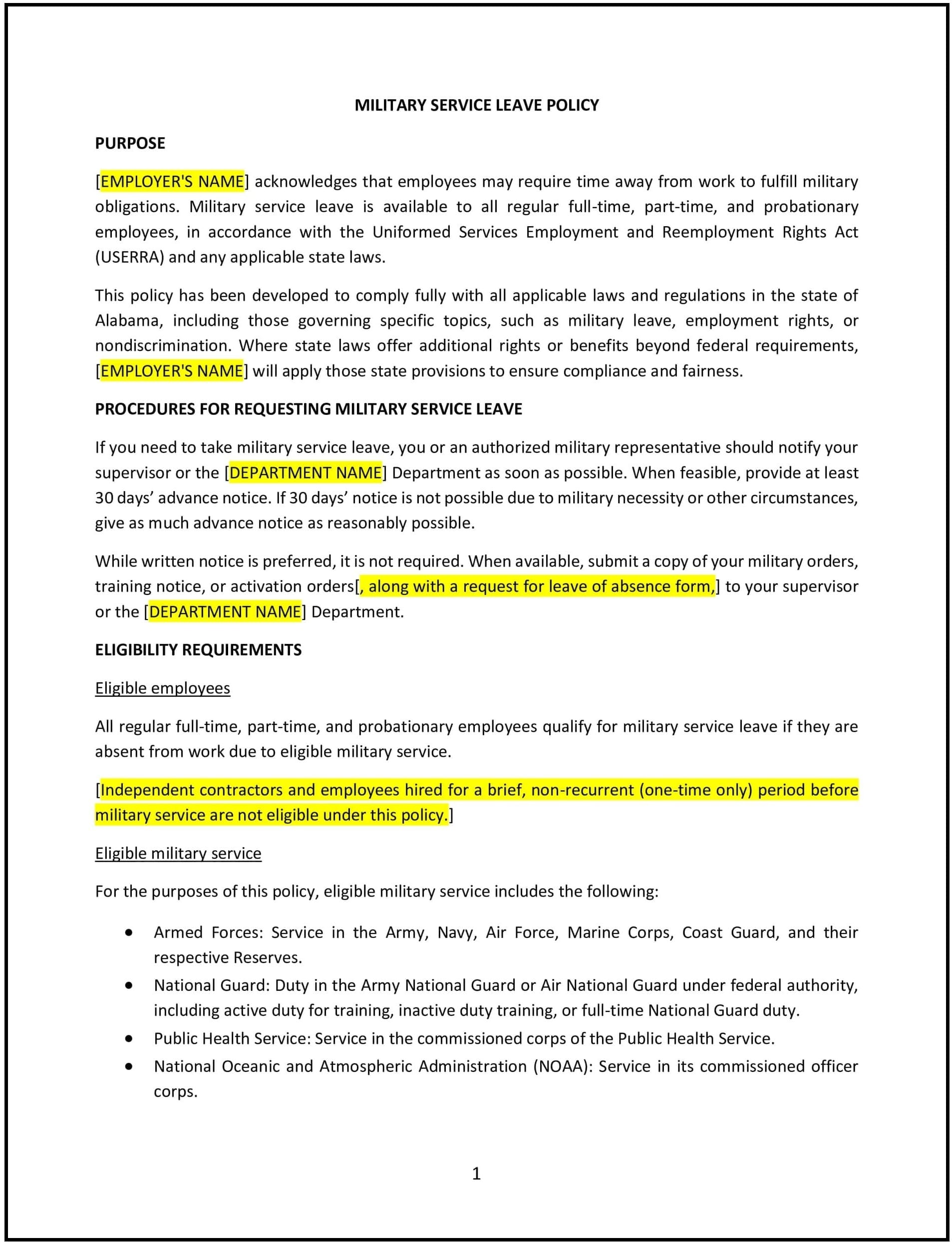
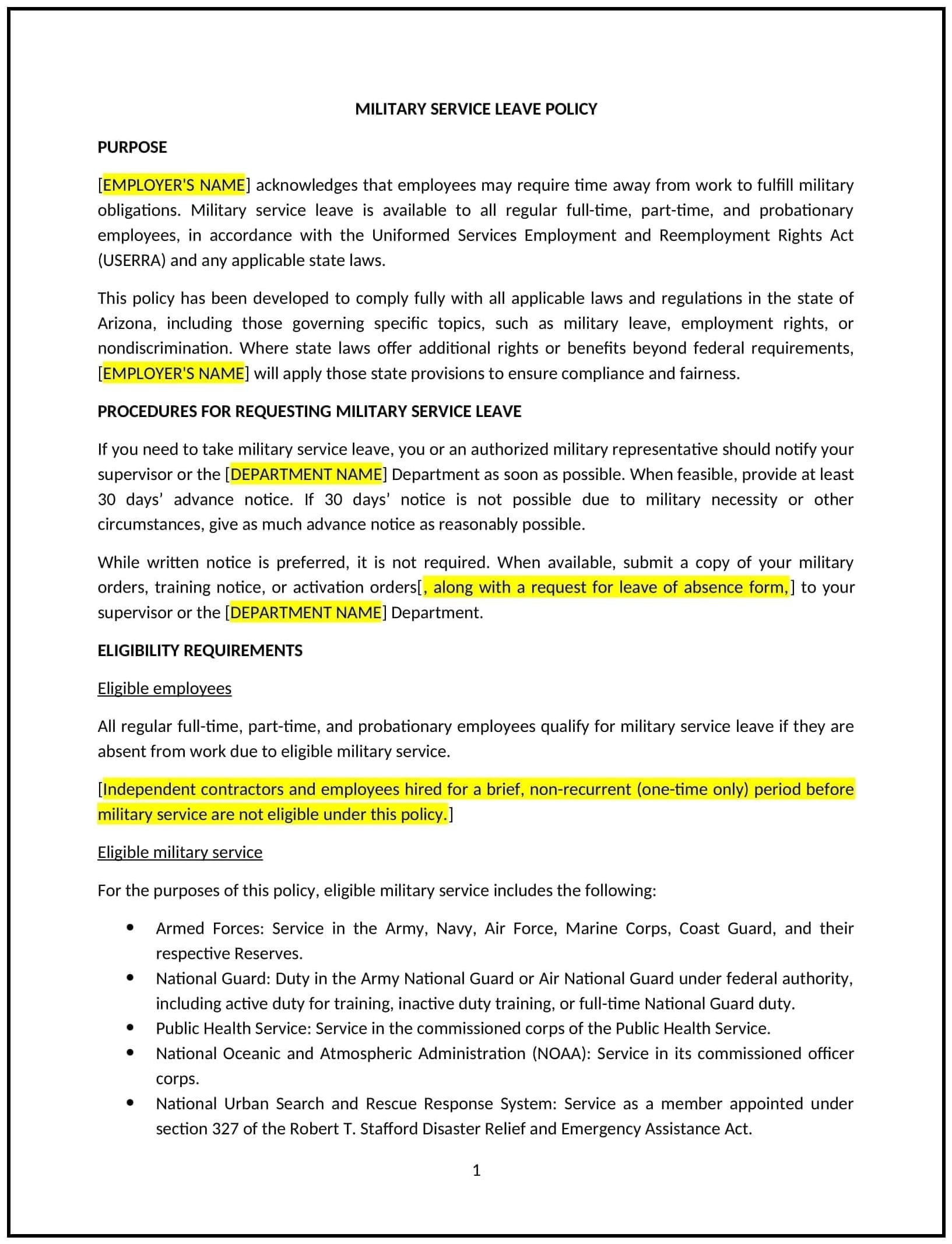
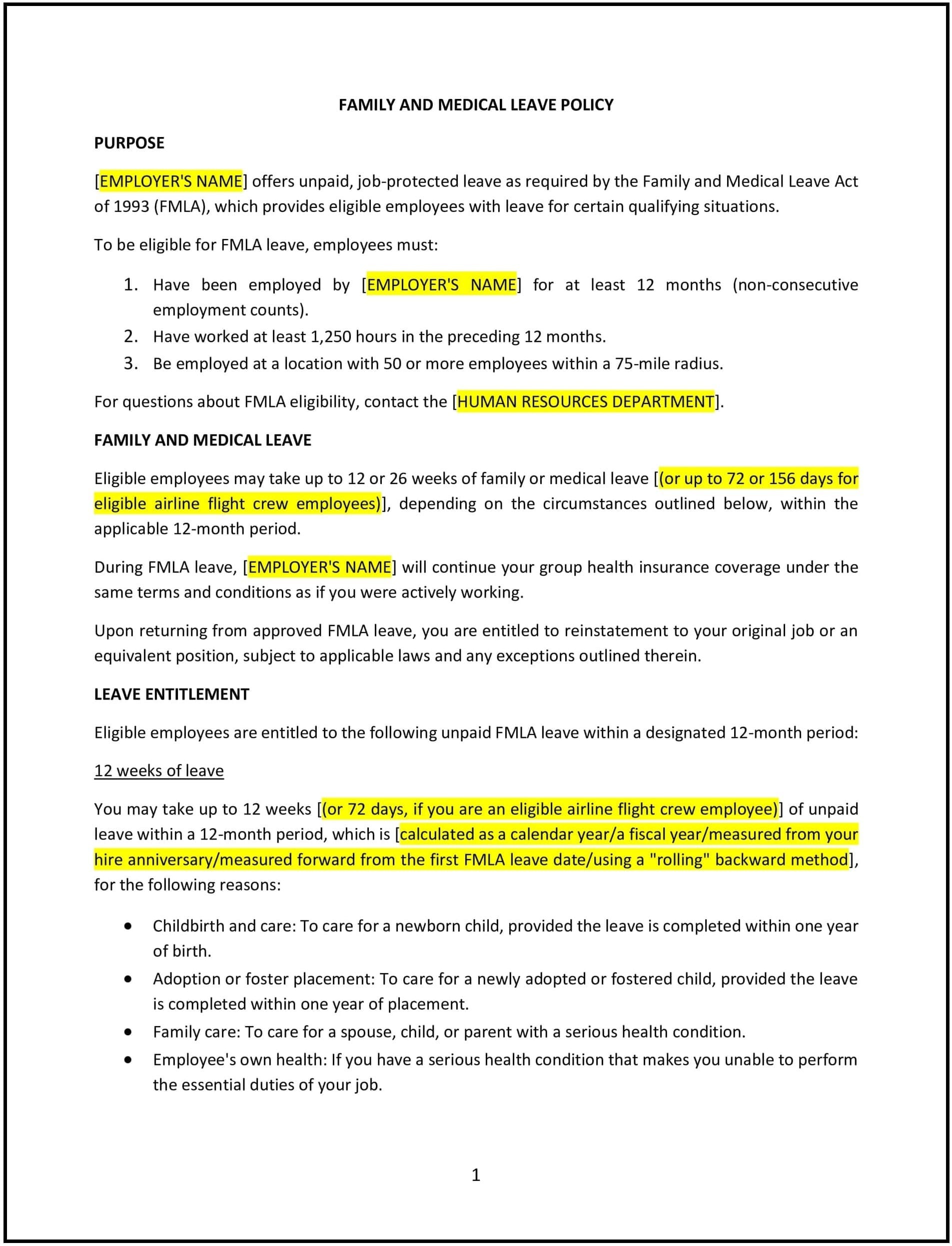
Where deals go from offer to paid
