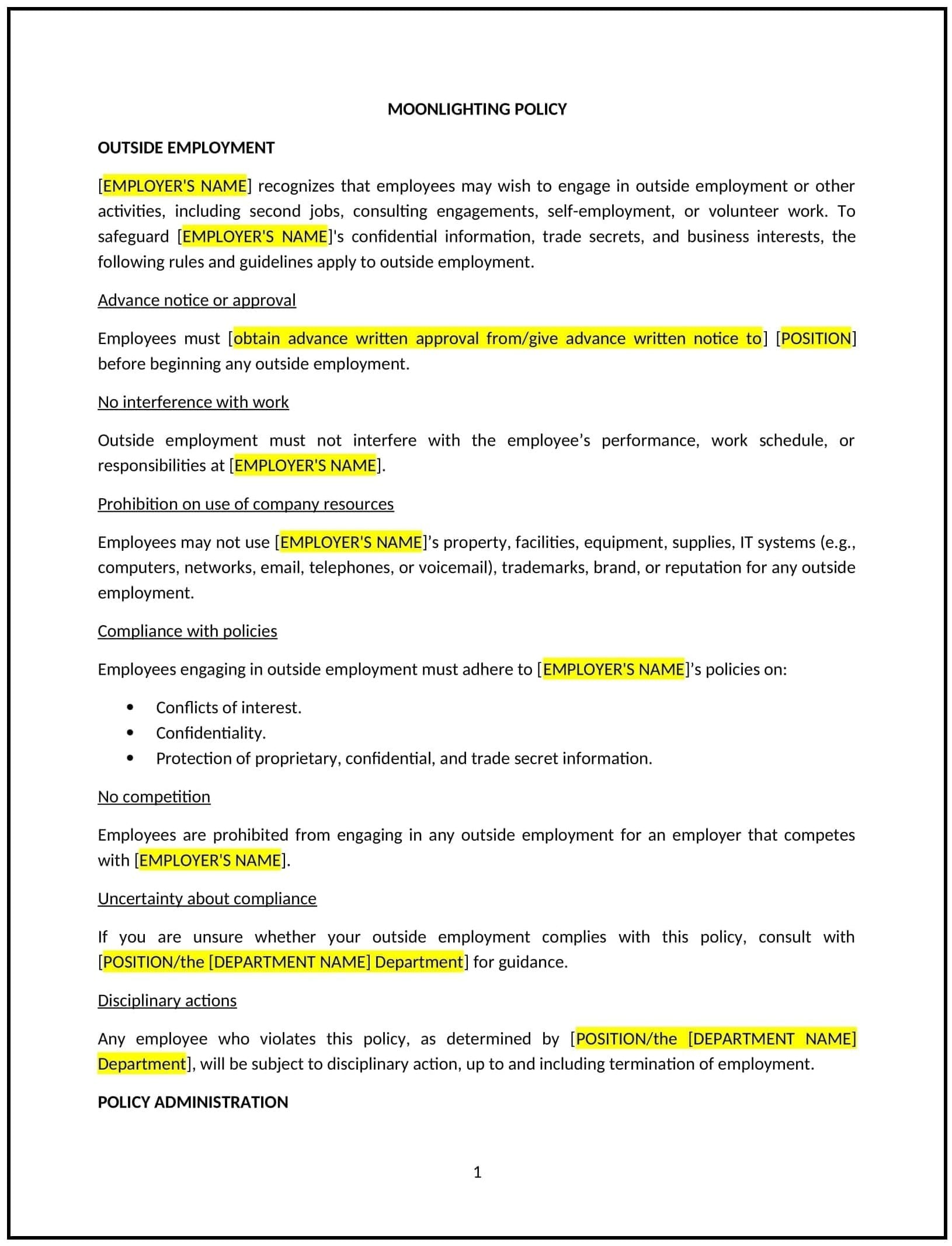
Moonlighting policy (Kentucky): Free template
Regulates outside employment to avoid conflicts of interest or interference with an employee’s primary job duties.
- Policies
- Kentucky
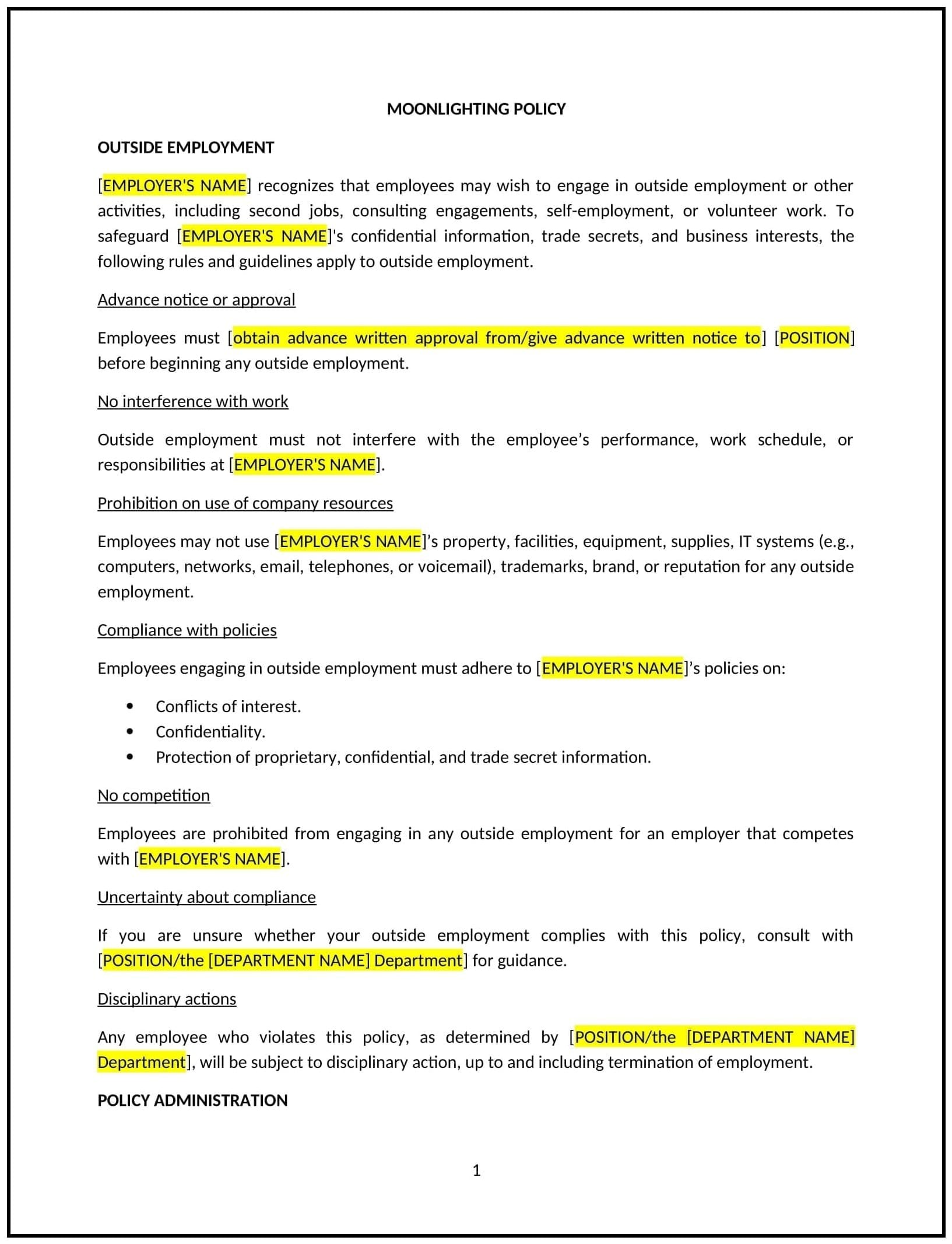
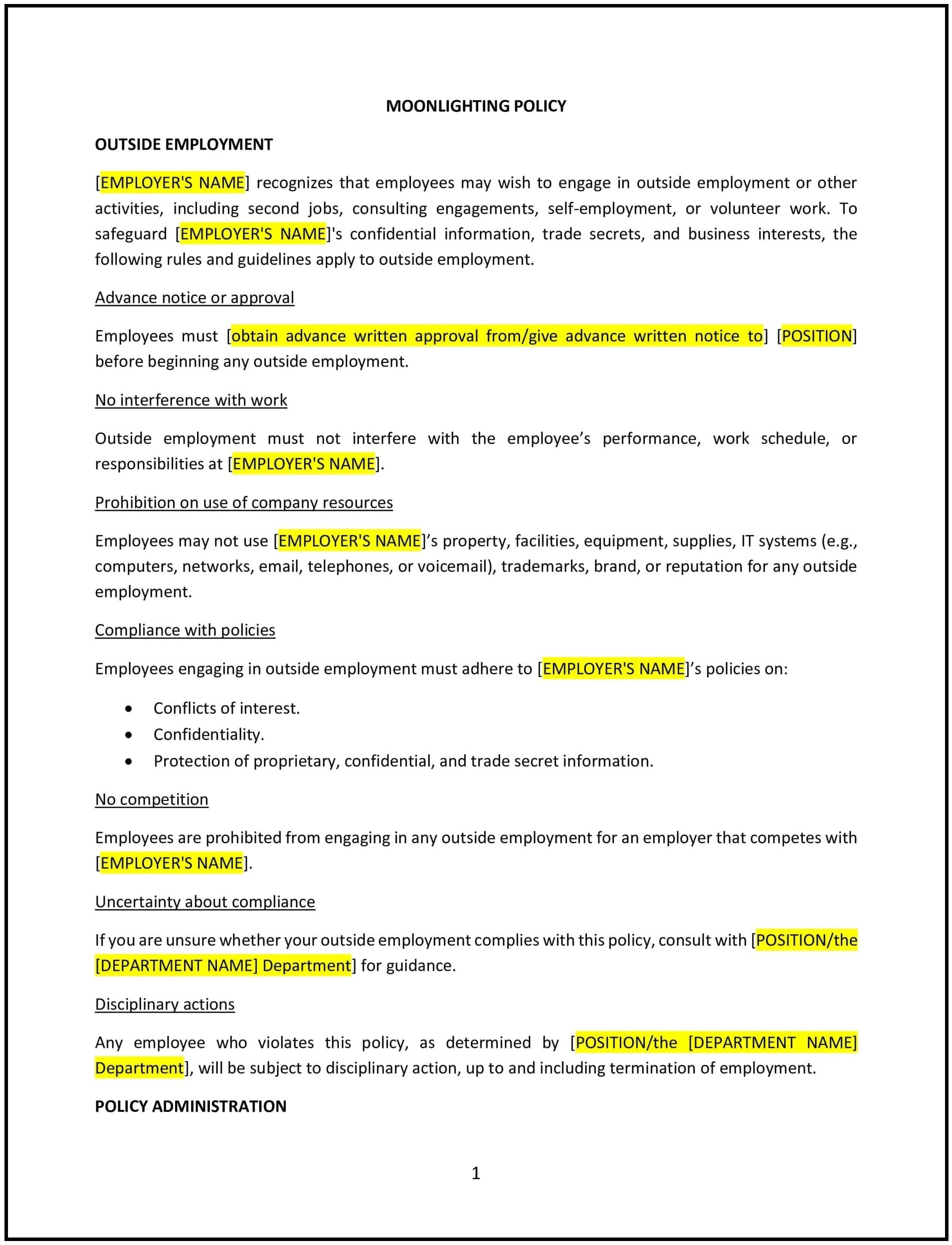
Moonlighting policy (Kentucky)
A moonlighting policy provides Kentucky businesses with guidelines for managing employees who seek secondary employment or engage in outside business activities while maintaining their primary role. This policy ensures that outside work does not conflict with the business’s interests, productivity, or confidentiality.
By adopting this policy, businesses can address potential conflicts of interest, ensure fairness, and promote transparency in employee conduct.
How to use this moonlighting policy (Kentucky)
- Define moonlighting: Businesses should explain what constitutes moonlighting, such as any paid or unpaid work performed outside the employee’s primary role.
- Outline disclosure requirements: Businesses should require employees to disclose any secondary employment or outside activities that could conflict with their primary job.
- Address conflict of interest: Businesses should specify activities that could pose a conflict of interest, such as working for a competitor or engaging in activities that compromise business confidentiality.
- Set performance expectations: Businesses should clarify that employees must continue to meet their primary job responsibilities and not allow outside work to impact productivity or attendance.
- Prohibit use of company resources: Businesses should explicitly forbid employees from using company resources, such as equipment, time, or information, for outside work.
- Detail approval processes: Businesses should outline the process for seeking approval for secondary employment, including submitting details to a manager or HR.
- Establish consequences for violations: Businesses should specify the potential disciplinary actions for failing to comply with the policy, such as warnings, suspension, or termination.
Benefits of using this moonlighting policy (Kentucky)
This policy provides several key benefits for Kentucky businesses:
- Prevents conflicts of interest: Helps businesses address potential issues that could compromise confidentiality or compete with the organization.
- Promotes transparency: Encourages employees to disclose outside work, fostering trust and open communication.
- Maintains productivity: Ensures that employees prioritize their primary job responsibilities and meet performance expectations.
- Protects company resources: Safeguards against the misuse of company assets for personal or outside business purposes.
- Reduces legal risks: Provides a framework for managing moonlighting activities while complying with Kentucky laws and regulations.
Tips for using this moonlighting policy (Kentucky)
- Communicate the policy: Businesses should ensure employees are aware of the moonlighting policy and understand their responsibilities through training and clear communication.
- Monitor compliance: Businesses should regularly assess whether employees are adhering to the policy and address potential conflicts proactively.
- Encourage disclosure: Businesses should foster a culture of transparency where employees feel comfortable disclosing secondary employment.
- Review conflicts of interest: Businesses should evaluate disclosures on a case-by-case basis to determine if outside work presents a conflict of interest.
- Update periodically: Businesses should revise the policy to reflect changes in Kentucky laws, business needs, or employee practices.
Frequently asked questions (FAQs)
Similar templates
Where deals go from offer to paid
