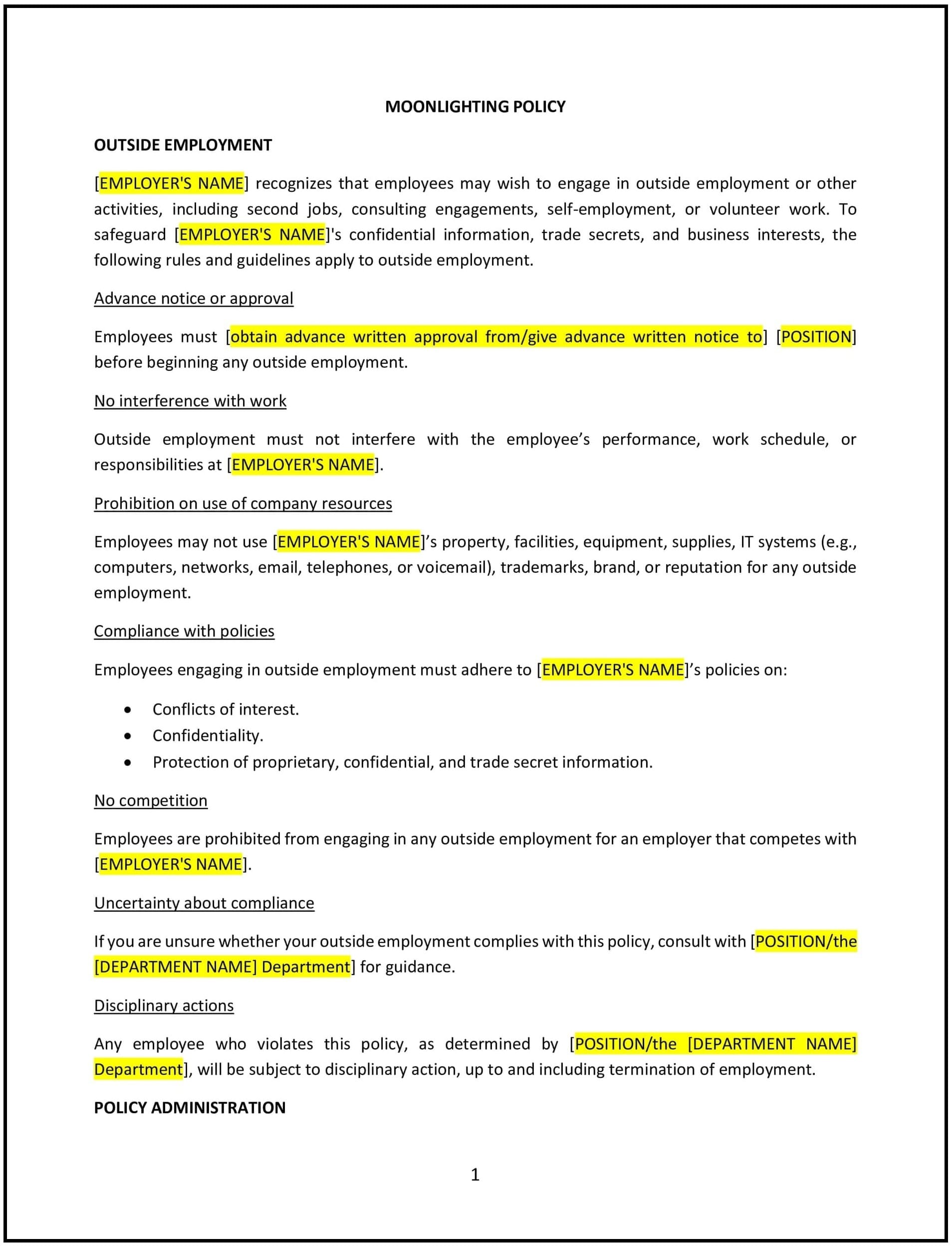
Moonlighting policy (North Carolina): Free template
Clarifies rules for employees working secondary jobs outside their primary employment.
- Policies
- North Carolina
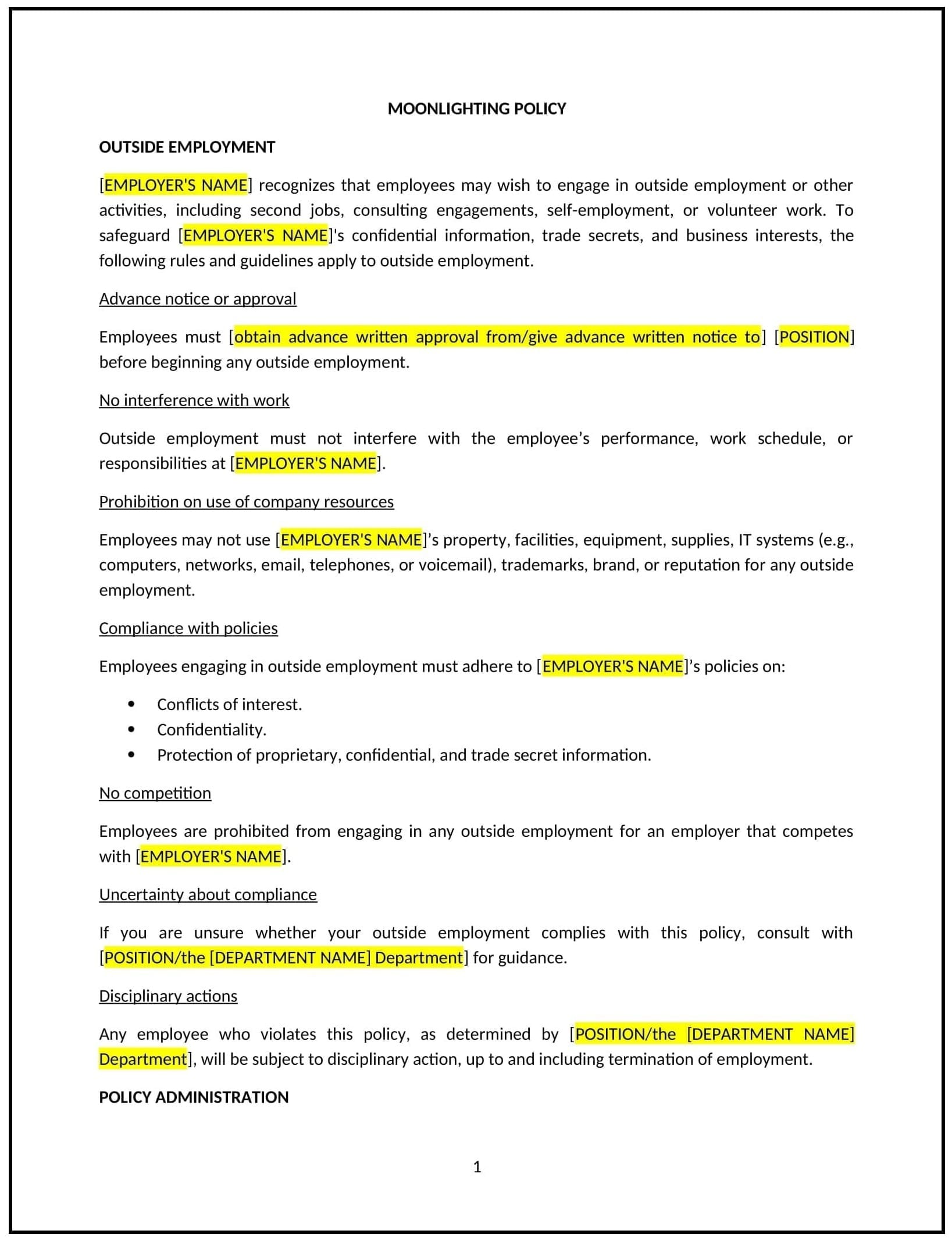
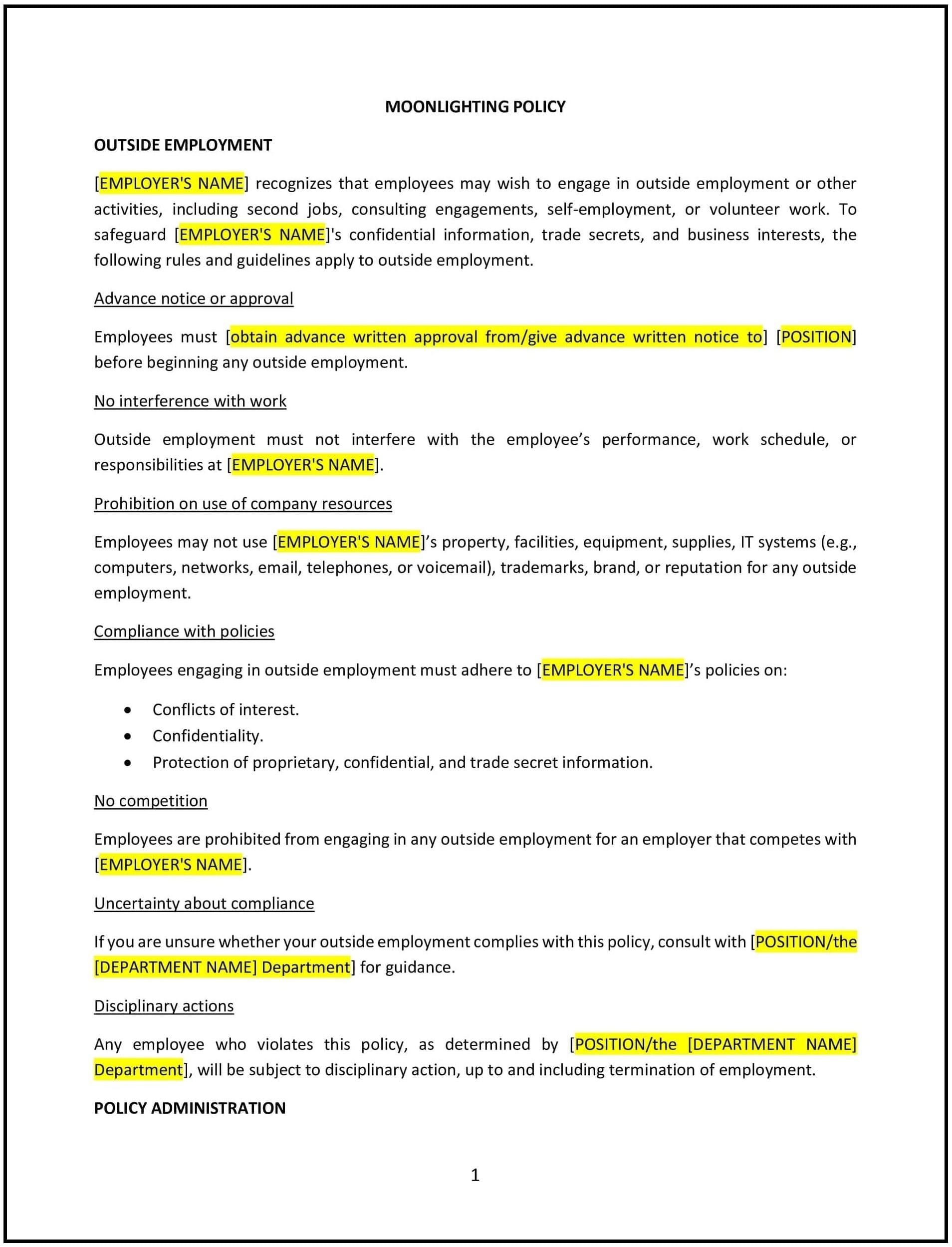
Moonlighting policy (North Carolina)
A moonlighting policy helps North Carolina businesses establish clear guidelines for employees who engage in outside work or secondary employment while employed by the company. This policy addresses concerns about conflicts of interest, productivity, and the potential impact on the employee’s primary job. It also specifies when employees must disclose outside employment and any restrictions or approval requirements.
By adopting this policy, businesses can protect their interests while respecting employees’ rights to engage in secondary employment.
How to use this moonlighting policy (North Carolina)
- Define moonlighting: Clearly define what constitutes moonlighting, including any secondary employment or business activities an employee might engage in outside of their primary job.
- Set disclosure requirements: Establish a process for employees to disclose outside employment, including any required information, such as job description, work hours, and the name of the secondary employer.
- Address conflicts of interest: Specify that employees must avoid any outside employment that creates a conflict of interest or interferes with their job duties.
- Set productivity expectations: Clarify that employees’ performance in their primary role should not be negatively affected by outside work, and outline expectations for maintaining productivity.
- Limit secondary employment: Identify specific job roles or industries where moonlighting may be prohibited due to confidentiality concerns, conflicts of interest, or other business needs.
- Reflect North Carolina-specific considerations: Ensure the policy complies with North Carolina employment laws, including any specific regulations regarding outside work or business activities.
Benefits of using this moonlighting policy (North Carolina)
This policy provides several benefits for North Carolina businesses:
- Protects business interests: Ensures that employees’ outside work does not conflict with the company’s interests or negatively affect their performance.
- Reduces legal risk: Helps businesses avoid legal issues related to conflicts of interest or employee productivity by establishing clear guidelines.
- Fosters transparency: Encourages open communication between employees and managers about outside work, helping to prevent misunderstandings or ethical issues.
- Promotes fairness: By applying the same guidelines to all employees, the company ensures that there are no inconsistencies or biases in handling moonlighting requests.
- Supports employee autonomy: Allows employees to pursue secondary employment, while ensuring that it does not interfere with their primary job responsibilities.
Tips for using this moonlighting policy (North Carolina)
- Communicate the policy clearly: Ensure all employees understand the expectations regarding secondary employment and the disclosure process.
- Be consistent: Apply the policy consistently across all employees to avoid potential issues of favoritism or discrimination.
- Monitor performance: Regularly assess whether employees’ outside work is affecting their productivity or performance, and address concerns as needed.
- Review the policy regularly: The policy should be reviewed annually to ensure it aligns with North Carolina’s labor laws and the company’s business needs.
Frequently asked questions (FAQs)
Similar templates
Where deals go from offer to paid
