Moonlighting policy (Vermont): Free template
Explains conditions for taking secondary jobs while maintaining performance and avoiding conflicts in Vermont employment.
- Policies
- Vermont
Moonlighting policy (Vermont)
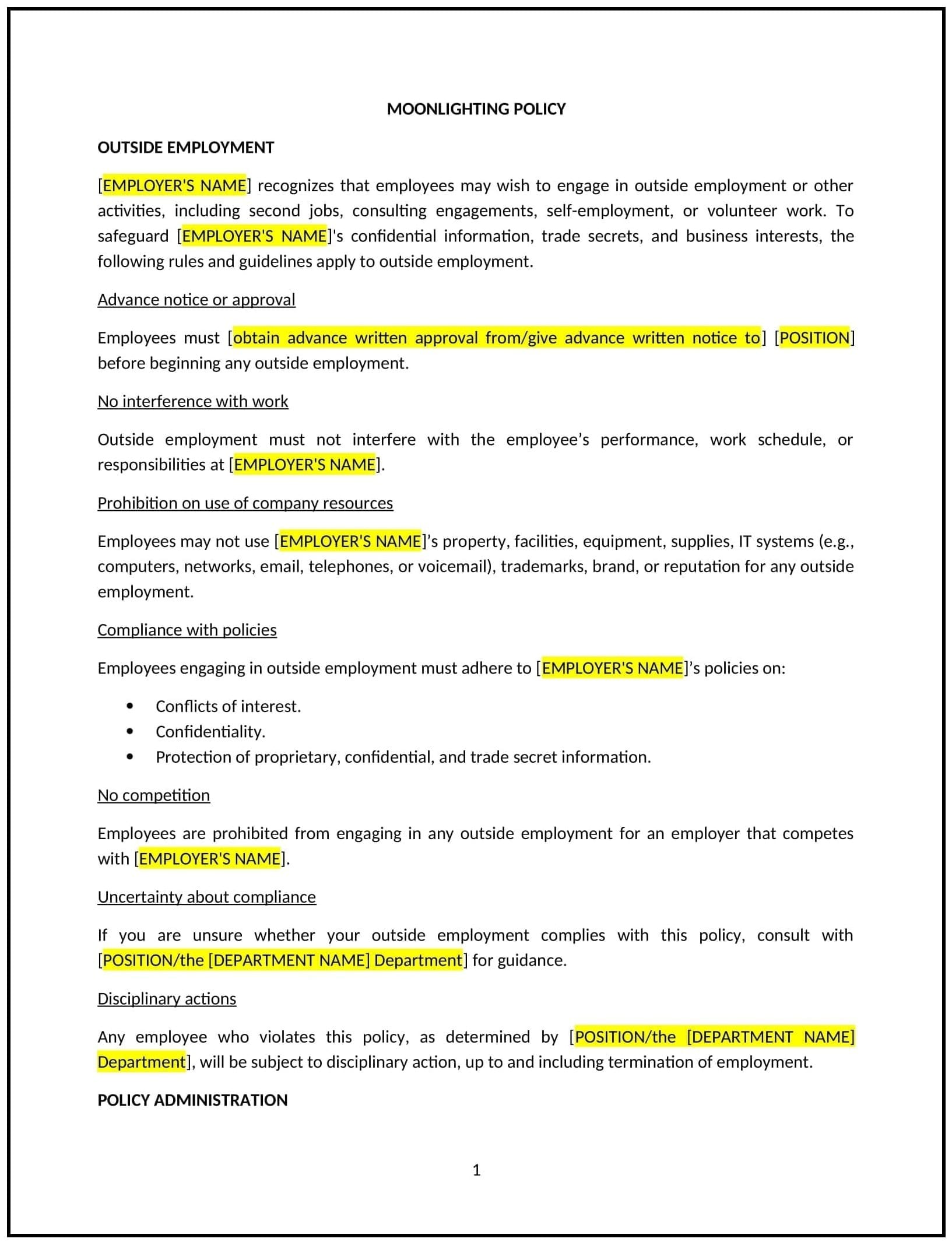
This moonlighting policy is designed to help Vermont businesses manage potential conflicts of interest and ensure employees’ secondary employment does not interfere with their primary job responsibilities. It establishes guidelines for disclosing and approving outside work while maintaining productivity and company integrity.
By adopting this policy, businesses can safeguard operational efficiency, address potential conflicts, and promote transparency.
How to use this moonlighting policy (Vermont)
- Define moonlighting: Specify what constitutes secondary employment, such as freelance work, part-time jobs, or consulting roles outside the company.
- Include disclosure requirements: Require employees to disclose any secondary employment to their manager or HR for review and approval.
- Address conflicts of interest: Prohibit outside work that competes with the company, uses company resources, or creates a conflict of interest.
- Emphasize performance expectations: Clarify that moonlighting must not affect employees’ ability to meet their primary job responsibilities or performance standards.
- Include approval processes: Outline steps for requesting approval, including providing details about the nature of the outside work.
- Monitor compliance: Ensure that secondary employment arrangements are reviewed periodically to align with company policies and Vermont laws.
Benefits of using this moonlighting policy (Vermont)
This policy provides several benefits for Vermont businesses:
- Reduces conflicts of interest: Ensures secondary employment does not interfere with company operations or objectives.
- Promotes transparency: Encourages employees to disclose outside work for evaluation and approval.
- Enhances compliance: Aligns with Vermont employment laws and workplace standards.
- Protects productivity: Ensures employees prioritize their primary job responsibilities.
- Strengthens trust: Demonstrates the company’s commitment to fair and consistent practices regarding outside work.
Tips for using this moonlighting policy (Vermont)
- Communicate the policy: Share the policy with employees during onboarding and include it in the employee handbook or internal systems.
- Provide examples: Clarify what types of secondary employment may or may not be acceptable under the policy.
- Document approvals: Maintain records of disclosed outside work and management approvals for accountability.
- Encourage open communication: Foster a culture where employees feel comfortable discussing their outside work arrangements.
- Update regularly: Revise the policy to reflect changes in Vermont laws, workplace practices, or company needs.
Frequently asked questions (FAQs)
Similar templates
Where deals go from offer to paid
