Moonlighting policy (West Virginia): Free template
Clarifies expectations for employees working a second job to avoid conflicts of interest.
- Policies
- West Virginia
Moonlighting policy (West Virginia)
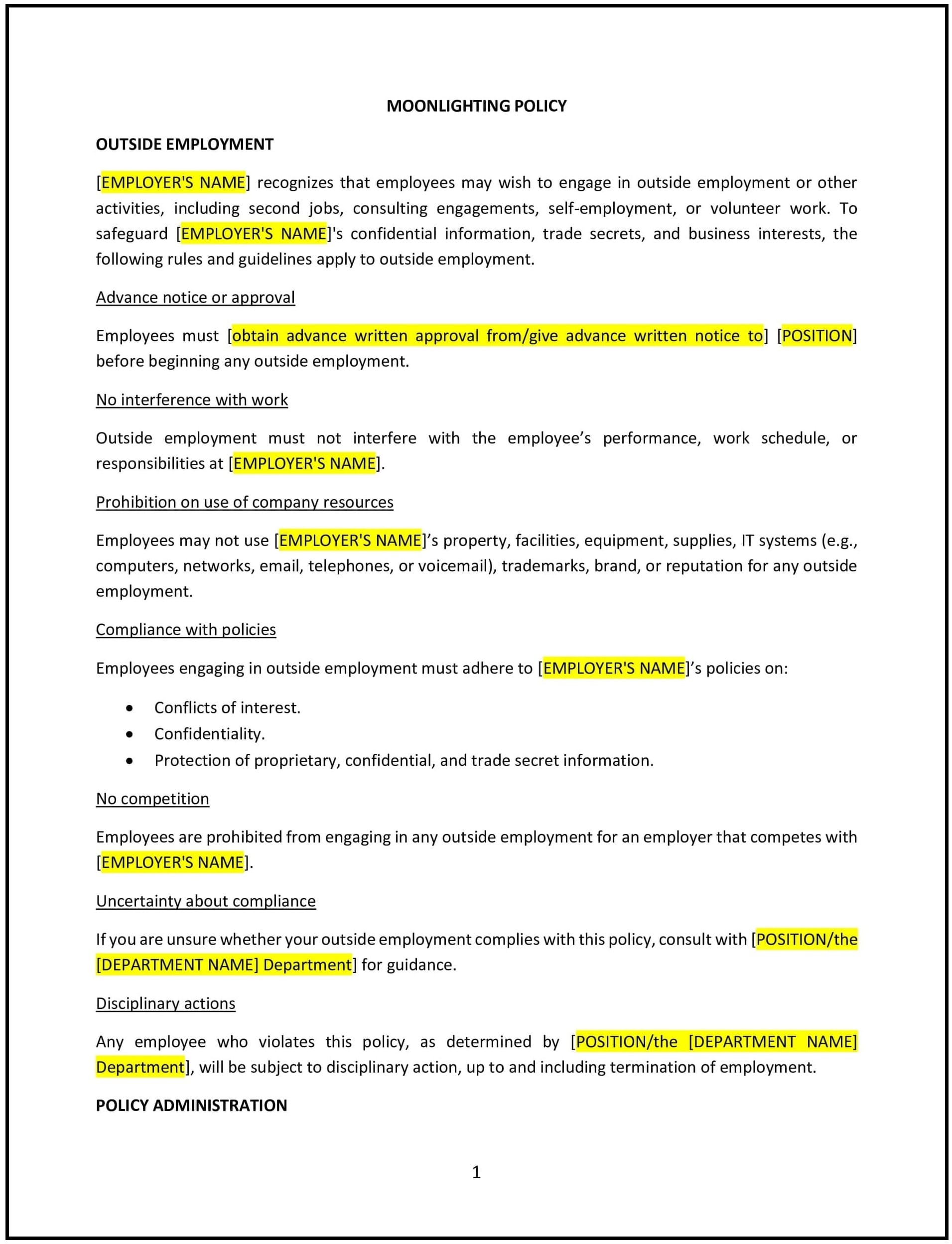
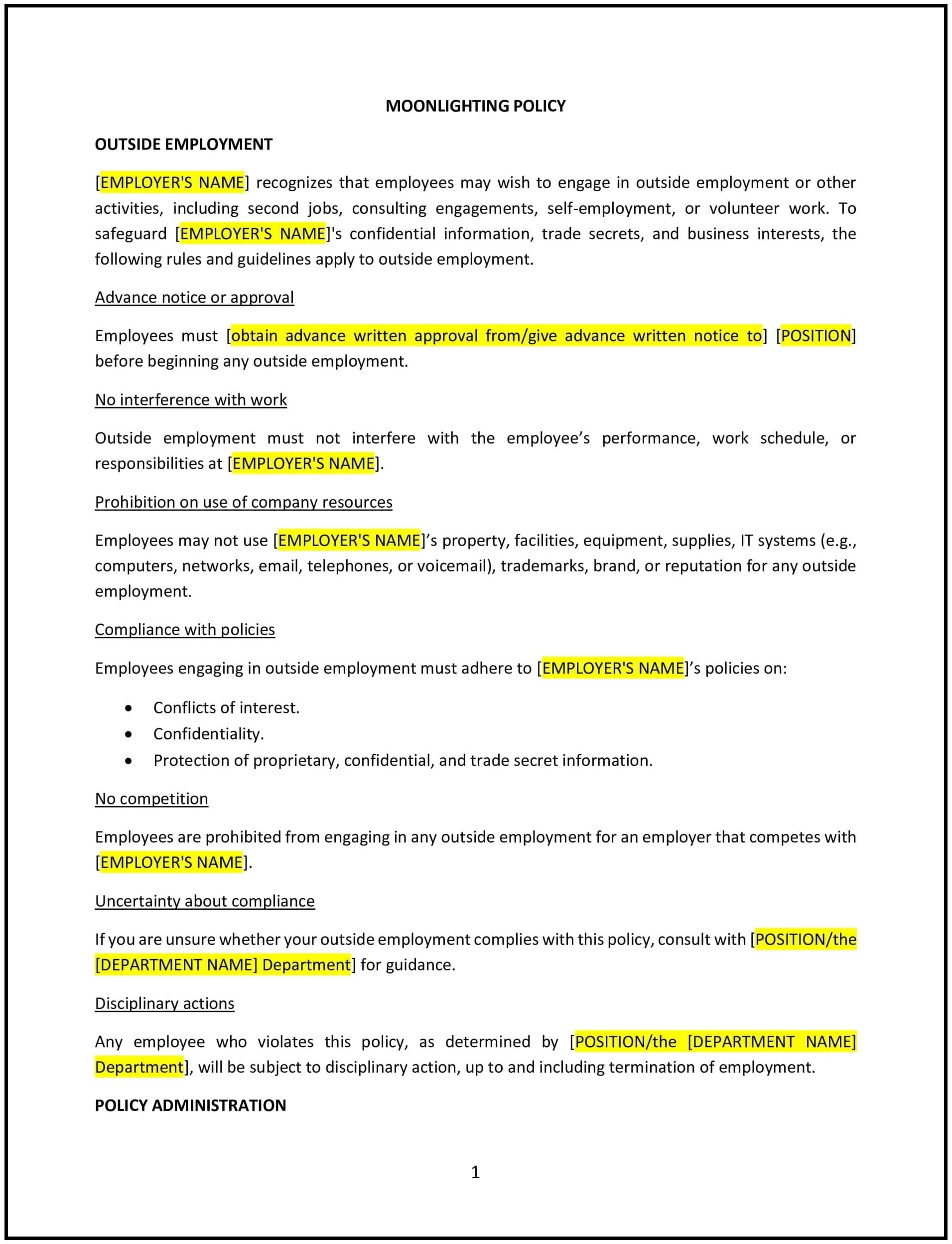
In West Virginia, a moonlighting policy establishes guidelines for employees who engage in secondary employment or side activities outside their primary job. This policy ensures that secondary work does not conflict with the organization’s interests, violate confidentiality, or affect employee performance.
The policy outlines acceptable parameters for moonlighting, disclosure requirements, and the consequences of policy violations.
How to use this moonlighting policy (West Virginia)
- Define moonlighting: Clearly explain what constitutes secondary employment or side activities, such as freelance work, part-time jobs, or entrepreneurial ventures.
- Outline disclosure requirements: Require employees to disclose any secondary employment to HR or their supervisor to assess potential conflicts of interest.
- Set performance expectations: Emphasize that moonlighting must not interfere with the employee’s primary job responsibilities or performance.
- Protect confidentiality: Prohibit employees from sharing proprietary information or using company resources for secondary work.
- Support compliance: Align the policy with West Virginia labor laws and federal regulations to ensure fairness and legal adherence.
Benefits of using a moonlighting policy (West Virginia)
- Prevents conflicts of interest: Ensures employees’ secondary work does not compete with or harm the organization’s interests.
- Protects company resources: Prohibits the use of company equipment, time, or materials for outside employment.
- Maintains performance standards: Ensures employees remain focused on and committed to their primary job responsibilities.
- Supports compliance: Aligns with West Virginia labor laws to ensure fair and lawful implementation of the policy.
- Enhances transparency: Encourages open communication between employees and management regarding secondary work.
Tips for using a moonlighting policy (West Virginia)
- Communicate the policy: Share the policy with employees during onboarding and ensure it is easily accessible for reference.
- Train managers: Provide training to supervisors on identifying and addressing potential conflicts of interest related to moonlighting.
- Monitor performance: Regularly assess employees’ performance to ensure that secondary employment does not negatively impact their primary job responsibilities.
- Encourage open dialogue: Create a culture where employees feel comfortable discussing secondary work to avoid misunderstandings.
- Review periodically: Update the policy to reflect changes in West Virginia laws, workplace practices, or industry standards.
Frequently asked questions (FAQs)
Similar templates
Where deals go from offer to paid
