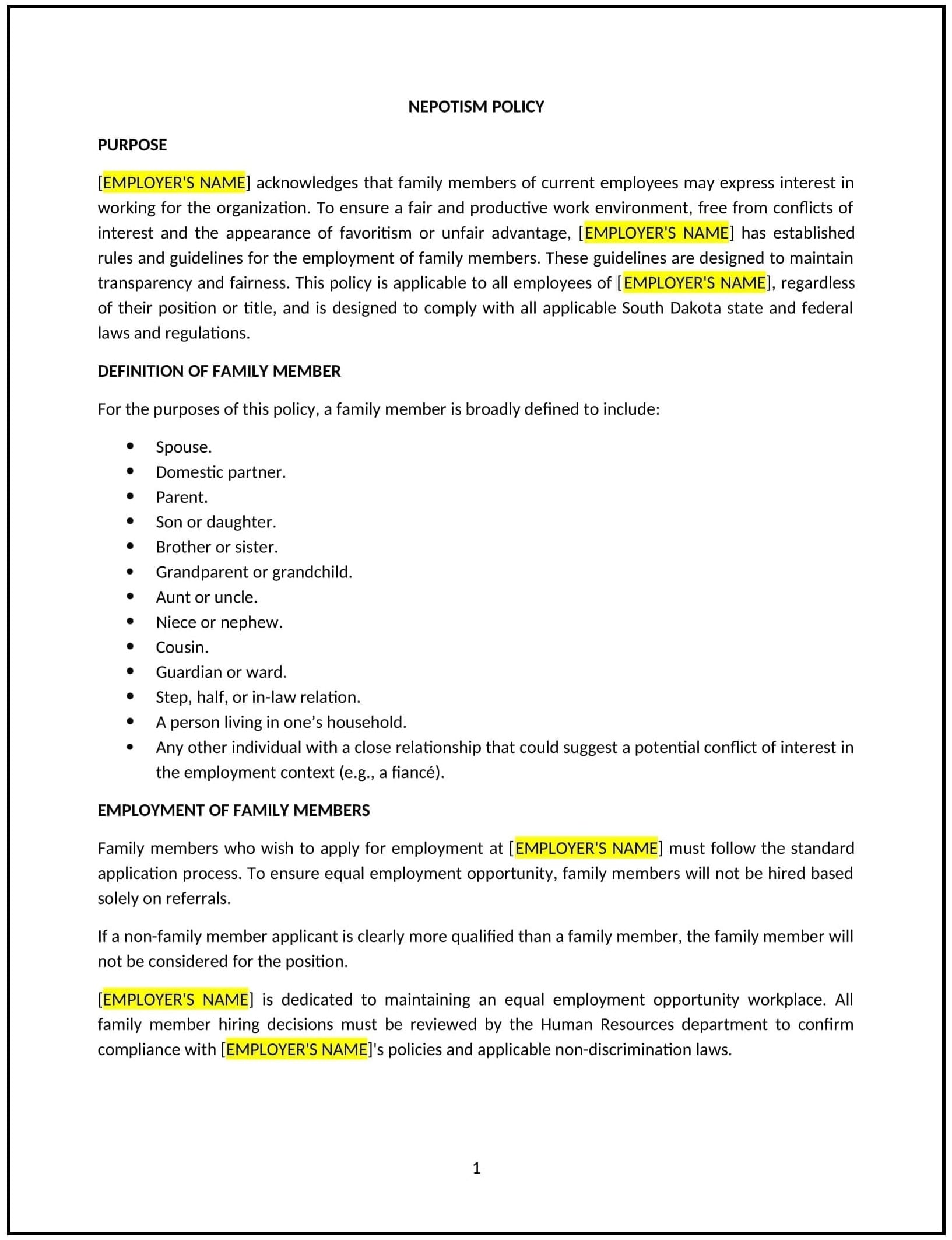
Nepotism policy (South Dakota): Free template
Prevents favoritism in hiring and supervision by setting clear rules regarding employment of relatives.
- Policies
- South Dakota
Nepotism policy (South Dakota)
This nepotism policy is designed to help South Dakota businesses establish guidelines for hiring and managing relatives in the workplace. It outlines procedures for preventing favoritism, conflicts of interest, and unfair advantages.
By adopting this policy, businesses can ensure fairness, maintain professionalism, and align with general best practices for workplace ethics.
How to use this nepotism policy (South Dakota)
- Define nepotism: Explain what constitutes nepotism, such as hiring, promoting, or supervising relatives.
- Establish hiring guidelines: Specify restrictions on hiring relatives, such as prohibiting direct supervision or reporting relationships.
- Address conflicts of interest: Provide examples of prohibited activities, such as influencing decisions or granting unfair advantages.
- Set disclosure requirements: Outline steps for employees to disclose relationships that may create conflicts of interest.
- Train managers: Educate supervisors on handling relationships and maintaining fairness in the workplace.
- Monitor compliance: Regularly review hiring and promotion decisions to ensure adherence to the policy.
- Review and update: Assess the policy annually to ensure it aligns with evolving business needs and ethical standards.
Benefits of using this nepotism policy (South Dakota)
This policy offers several advantages for South Dakota businesses:
- Ensures fairness: Demonstrates a commitment to preventing favoritism and maintaining equal opportunities.
- Maintains professionalism: Helps create a workplace culture based on merit and ethical standards.
- Reduces conflicts: Minimizes potential conflicts of interest and workplace tensions.
- Builds trust: Shows employees that the business values fairness and transparency.
- Supports compliance: Aligns with best practices for workplace ethics and governance.
Tips for using this nepotism policy (South Dakota)
- Communicate the policy: Share the policy with employees and include it in the employee handbook.
- Provide training: Educate managers on handling relationships and maintaining fairness in the workplace.
- Monitor compliance: Regularly review hiring and promotion decisions to ensure adherence to the policy.
- Address issues promptly: Take corrective action if nepotism or favoritism is identified.
- Update regularly: Assess the policy annually to ensure it aligns with evolving business needs and ethical standards.
Frequently asked questions (FAQs)
Similar templates
Where deals go from offer to paid
