Open source software policy (Alabama): Free template
Manages employee use of open source tools to protect intellectual property and comply with Alabama guidelines.
- Policies
- Alabama
Open source software policy (Alabama)
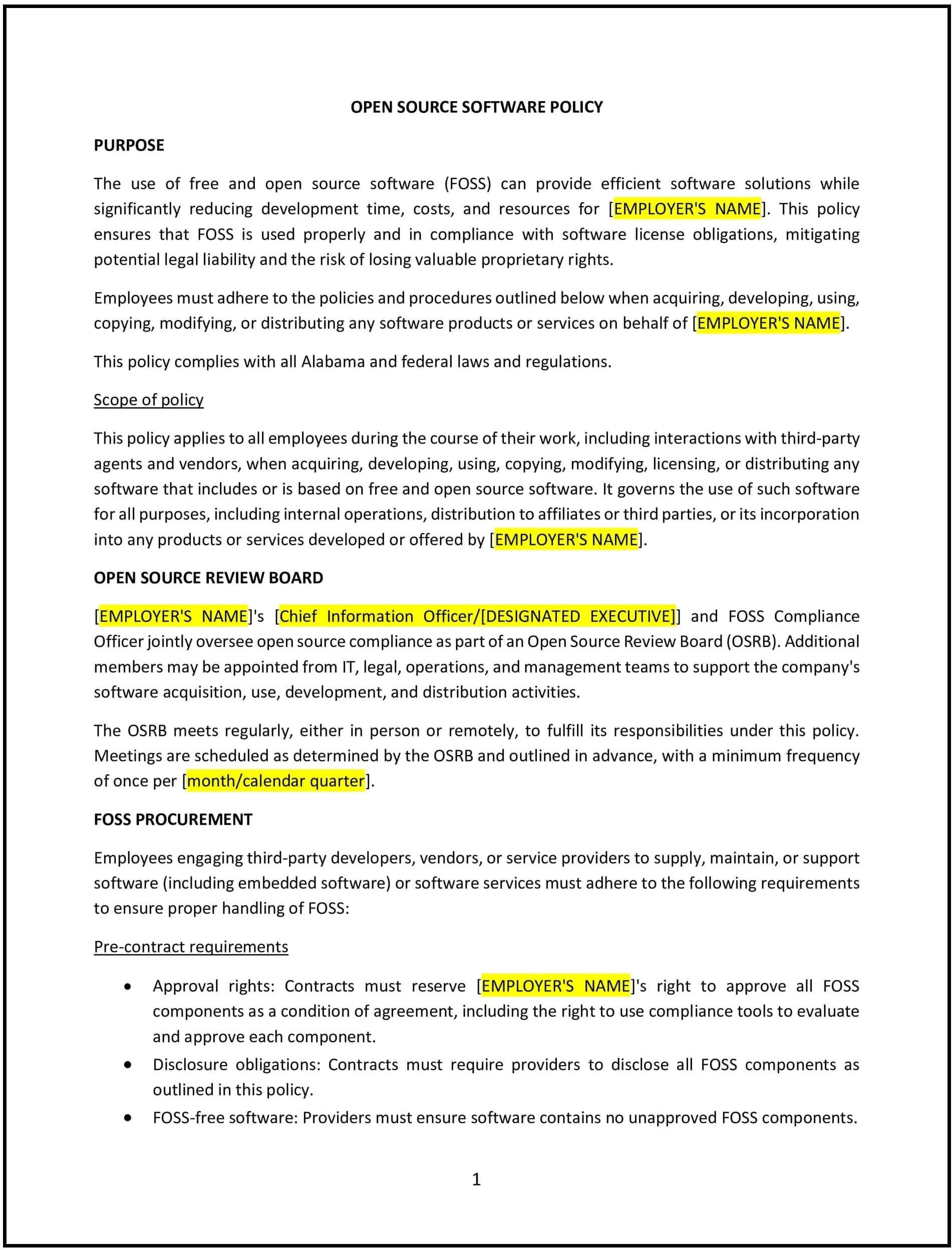
An open source software policy provides guidelines for using, contributing to, and managing open source software within a company. For SMBs in Alabama, this policy ensures the secure and legal use of open source tools while mitigating risks related to compliance, intellectual property, and cybersecurity.
This policy outlines procedures for evaluating open source software, managing contributions, and ensuring alignment with the company’s goals and responsibilities.
How to use this open source software policy (Alabama)
- Define permitted use: Specify the types of open source software that are approved for use within the company and any restrictions on usage.
- Establish an approval process: Require employees to seek approval before introducing or using open source software in company projects.
- Address licensing compliance: Provide guidelines for understanding and adhering to open source license requirements, such as attribution or sharing source code.
- Manage contributions: Outline the process for employees to contribute to open source projects, including obtaining approval and ensuring compliance with company policies.
- Include security measures: Require employees to evaluate the security and reliability of open source tools before use, including regular updates and vulnerability checks.
Benefits of using an open source software policy (Alabama)
An open source software policy ensures the effective and responsible use of open source tools. Here’s how it helps:
- Protects intellectual property: Minimizes risks of unintentionally sharing proprietary code or violating license terms.
- Ensures compliance: Helps the company adhere to open source licenses and avoid legal issues.
- Enhances security: Reduces risks of vulnerabilities by requiring evaluations of open source software before use.
- Promotes innovation: Encourages responsible use of open source tools to enhance productivity and creativity.
- Fosters clarity: Provides clear guidelines for employees, reducing misunderstandings and ensuring consistent practices.
Tips for implementing an open source software policy (Alabama)
- Train employees: Offer training on understanding open source licenses, evaluating software, and following approval processes.
- Create an approval workflow: Develop a streamlined process for reviewing and approving the use of new open source tools.
- Use monitoring tools: Implement systems to track open source software usage and ensure compliance with licensing terms.
- Promote transparency: Encourage employees to report any potential issues with open source usage or contributions promptly.
- Regularly review the policy: Update the policy periodically to reflect changes in technology, industry standards, or company goals.
Frequently asked questions (FAQs)
Similar templates
Where deals go from offer to paid
