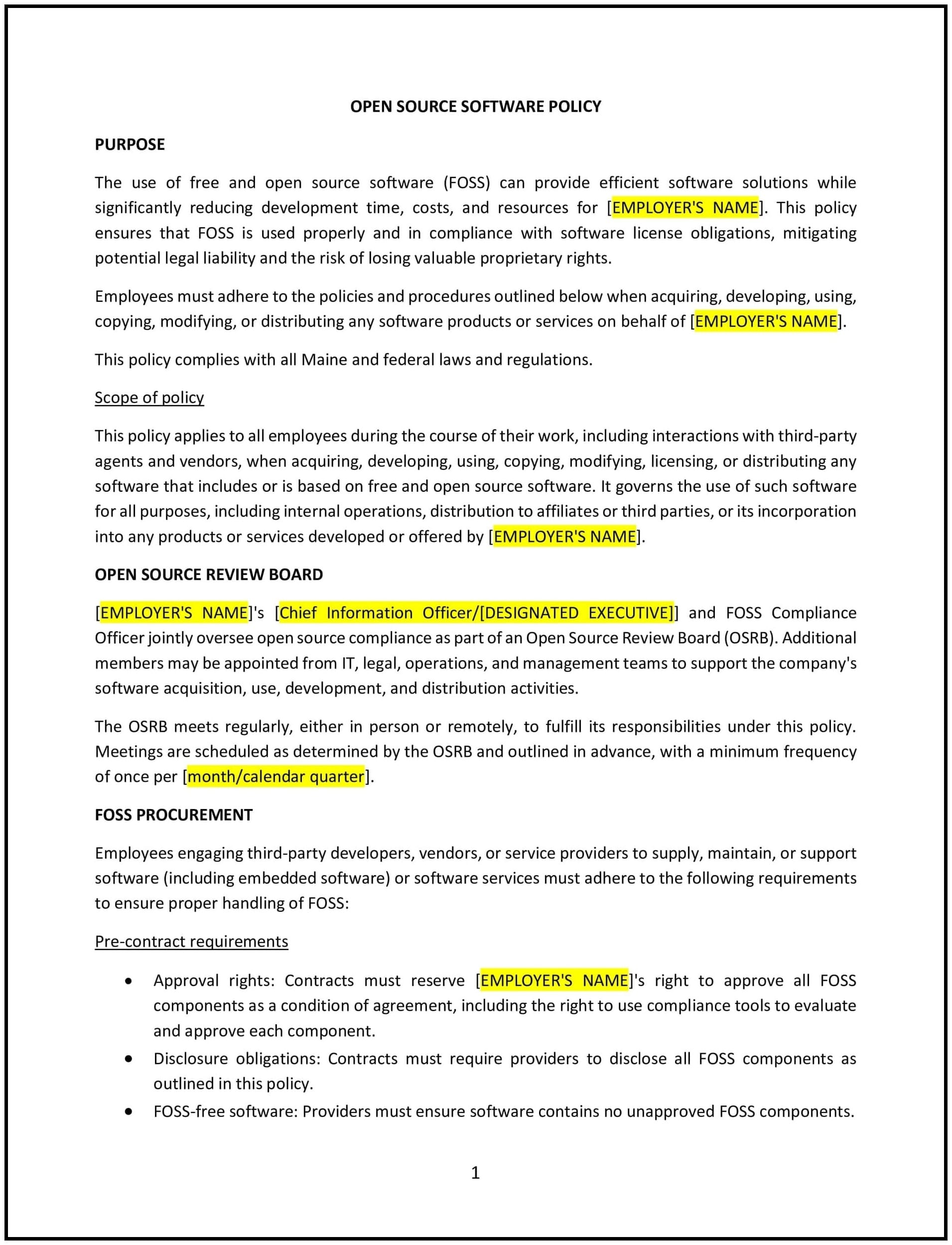
Open source software policy (Maine): Free template
Provides guidelines for using and contributing to open-source software in Maine, balancing innovation with legal and security risks.
- Policies
- Maine
Open source software policy (Maine): Free template
This open source software policy is designed to help Maine businesses manage the use, distribution, and contribution to open source software (OSS) within the organization. It outlines guidelines for selecting, implementing, and complying with open source licenses, ensuring that the use of OSS aligns with business goals and legal requirements.
By implementing this policy, Maine businesses can ensure that open source software is used effectively, responsibly, and legally, minimizing risks associated with licensing and security.
How to use this open source software policy (Maine)
- Define open source software: Provide a clear definition of what constitutes open source software, including the characteristics of OSS licenses such as permissive and copyleft licenses.
- Set guidelines for usage: Establish acceptable uses of open source software within the business, including criteria for selecting OSS based on functionality, compatibility, and legal considerations.
- Outline compliance with licenses: Detail the obligations of employees when using, modifying, or distributing open source software, such as complying with specific license terms (e.g., GPL, MIT).
- Address contribution guidelines: Specify how employees may contribute to open source projects, including the process for obtaining approval and ensuring that contributions align with company policies.
- Include security considerations: Emphasize the importance of evaluating the security of open source software and monitoring updates to address vulnerabilities.
- Provide documentation requirements: Ensure that any open source software used within the business is properly documented, including the licensing terms and any modifications made.
- Review regularly: Update the policy to reflect changes in open source licensing trends, legal requirements, or internal practices.
Benefits of using this open source software policy (Maine)
Implementing this policy provides several benefits for Maine businesses:
- Ensures compliance: Reduces legal risks by ensuring that open source software is used in accordance with licensing terms.
- Protects intellectual property: Ensures that the company’s intellectual property is not inadvertently exposed or misused when interacting with open source projects.
- Promotes responsible use: Establishes clear guidelines for using, contributing to, and distributing open source software to avoid misuse or licensing conflicts.
- Enhances security: Provides guidance for evaluating the security risks of open source software and addressing vulnerabilities proactively.
- Encourages innovation: Fosters a culture of collaboration and innovation through the responsible use and contribution to open source software.
Tips for using this open source software policy (Maine)
- Train employees: Provide training to developers and staff on open source licenses, compliance requirements, and security best practices.
- Use management tools: Implement tools to track the open source software used within the business, including versioning and licensing information.
- Monitor contributions: Review any external contributions to open source projects to ensure they align with company interests and intellectual property policies.
- Conduct audits: Regularly audit open source software usage within the business to ensure compliance with licensing terms and security standards.
- Stay current: Monitor developments in open source licensing and security to ensure the policy remains relevant and compliant with evolving laws and practices.
Frequently asked questions (FAQs)
Similar templates
Where deals go from offer to paid
