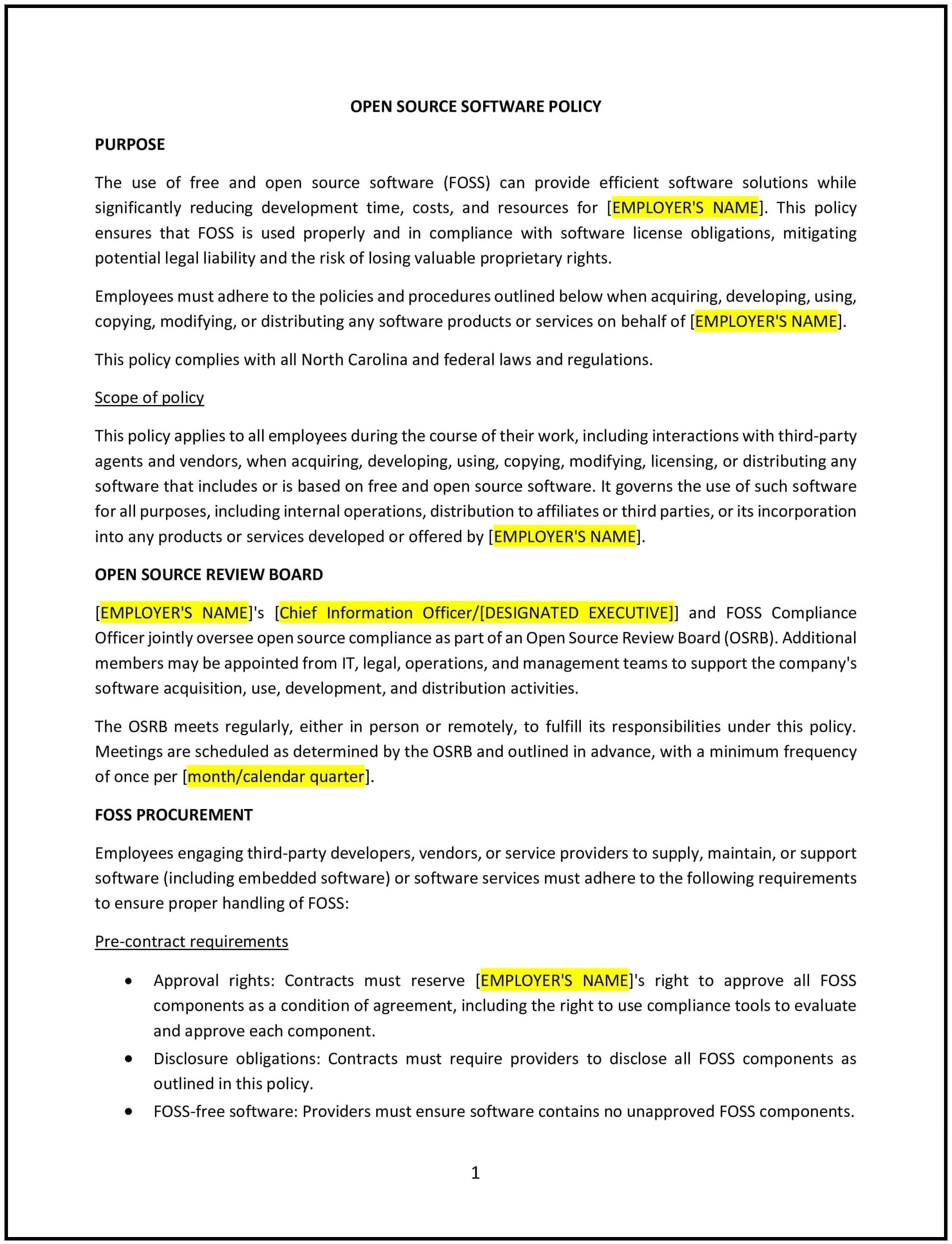
Open source software policy (North Carolina): Free template
Governs the use and contribution to open-source software in company projects.
- Policies
- North Carolina
Open source software policy (North Carolina)
An open source software policy helps North Carolina businesses manage the use and contribution of open source software in the workplace. This policy outlines the guidelines for using open source software, including downloading, distributing, and contributing to open source projects. It ensures that employees comply with licensing agreements and that the company’s intellectual property remains protected.
By adopting this policy, businesses can leverage open source software while mitigating legal risks and ensuring compliance with software licenses.
How to use this open source software policy (North Carolina)
- Define open source software: Clearly define what constitutes open source software and the types of licenses that govern its use.
- Set usage guidelines: Specify how employees can use open source software within the company, including whether modifications can be made and how the software should be distributed.
- Address contribution rules: Outline the process for employees who wish to contribute to open source projects, including whether contributions require approval and how intellectual property is managed.
- Ensure compliance with licenses: Clarify the responsibility of employees to comply with the terms and conditions of open source software licenses, including attribution and redistribution clauses.
- Reflect North Carolina-specific considerations: Ensure the policy complies with North Carolina intellectual property laws, and that it aligns with the company’s overall software licensing strategy.
Benefits of using this open source software policy (North Carolina)
This policy provides several benefits for North Carolina businesses:
- Reduces legal risk: By providing clear guidelines for using and contributing to open source software, businesses reduce the risk of non-compliance with software licenses and intellectual property issues.
- Promotes innovation: Encourages employees to leverage open source software, allowing them to use and contribute to innovative technologies without the financial burden of proprietary software.
- Protects intellectual property: Ensures that contributions to open source projects are carefully managed to avoid unintentional sharing of proprietary company code.
- Streamlines software use: Provides clear, consistent rules for using open source software, which helps employees navigate the often-complex landscape of software licensing.
- Fosters a collaborative culture: Encourages collaboration within the company and with the broader open source community, supporting the company’s commitment to open innovation.
Tips for using this open source software policy (North Carolina)
- Communicate the policy clearly: Ensure that all employees who use or contribute to open source software understand the company’s guidelines and responsibilities.
- Provide training: Offer training on the use of open source software and the importance of complying with software licenses.
- Monitor usage and contributions: Regularly review the use and contributions to open source projects to ensure they align with company policies and legal requirements.
- Review the policy regularly: The policy should be reviewed annually to ensure it remains up-to-date with changes in open source software licensing and North Carolina intellectual property law.
Frequently asked questions (FAQs)
Similar templates
Where deals go from offer to paid
