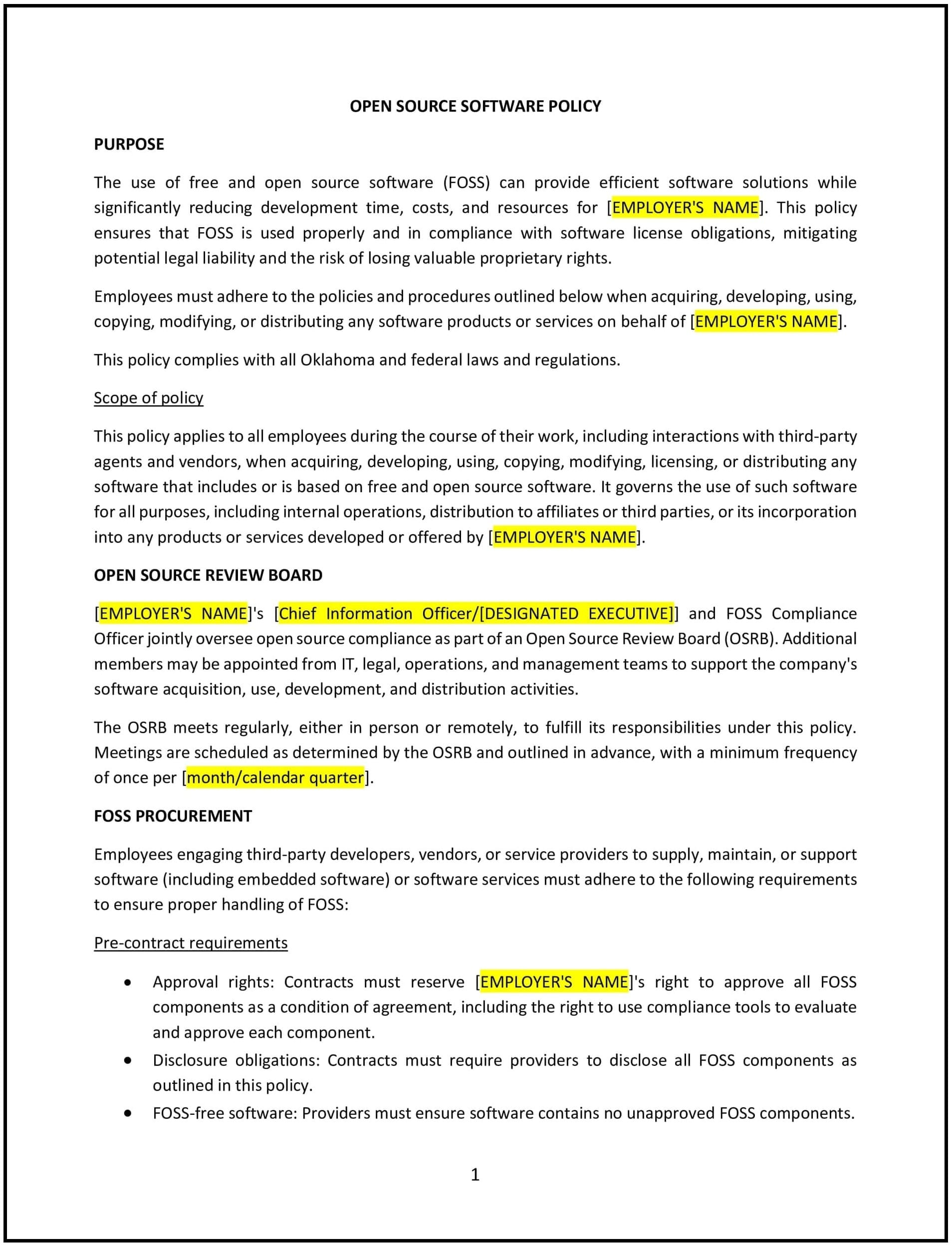
Open source software policy (Oklahoma): Free template
Regulates the use and contribution to open-source code to ensure legal and secure integration.
- Policies
- Oklahoma
Open source software policy (Oklahoma)
This open source software policy is designed to help Oklahoma businesses establish guidelines for using, contributing to, and managing open source software (OSS). It outlines procedures for evaluating OSS, ensuring compliance with licenses, and protecting intellectual property.
By adopting this policy, businesses can leverage the benefits of OSS while minimizing legal and security risks.
How to use this open source software policy (Oklahoma)
- Define open source software: Clearly explain what OSS is and how it differs from proprietary software.
- Establish evaluation procedures: Provide steps for evaluating OSS before use, including reviewing licenses, security, and compatibility.
- Address contribution guidelines: Describe how employees can contribute to OSS projects, including approval processes and intellectual property considerations.
- Outline compliance requirements: Specify how the business will ensure compliance with OSS licenses, such as attributing authors or sharing modifications.
- Train employees: Educate staff on the policy and their responsibilities regarding OSS use and contributions.
- Review and update: Assess the policy annually to ensure it aligns with evolving technology and legal standards.
Benefits of using this open source software policy (Oklahoma)
This policy offers several advantages for Oklahoma businesses:
- Enhances innovation: Allows businesses to leverage OSS for cost-effective and innovative solutions.
- Reduces costs: Minimizes software licensing expenses by using OSS where appropriate.
- Promotes compliance: Ensures adherence to OSS licenses, reducing the risk of legal disputes.
- Protects intellectual property: Safeguards the business’s proprietary information when using or contributing to OSS.
- Builds trust: Demonstrates a commitment to ethical and responsible use of OSS.
Tips for using this open source software policy (Oklahoma)
- Communicate clearly: Ensure all employees understand the policy and their responsibilities regarding OSS.
- Provide training: Educate employees on OSS licenses, compliance requirements, and contribution guidelines.
- Monitor usage: Track OSS usage to ensure compliance and identify potential risks.
- Encourage collaboration: Foster a culture where employees feel comfortable contributing to OSS projects responsibly.
- Update regularly: Review the policy annually to ensure it remains effective and aligned with current technology and legal standards.
Frequently asked questions (FAQs)
Similar templates
Where deals go from offer to paid
