Open source software policy (Vermont): Free template
Governs employee use and contributions to open source projects, protecting company interests under Vermont rules.
- Policies
- Vermont
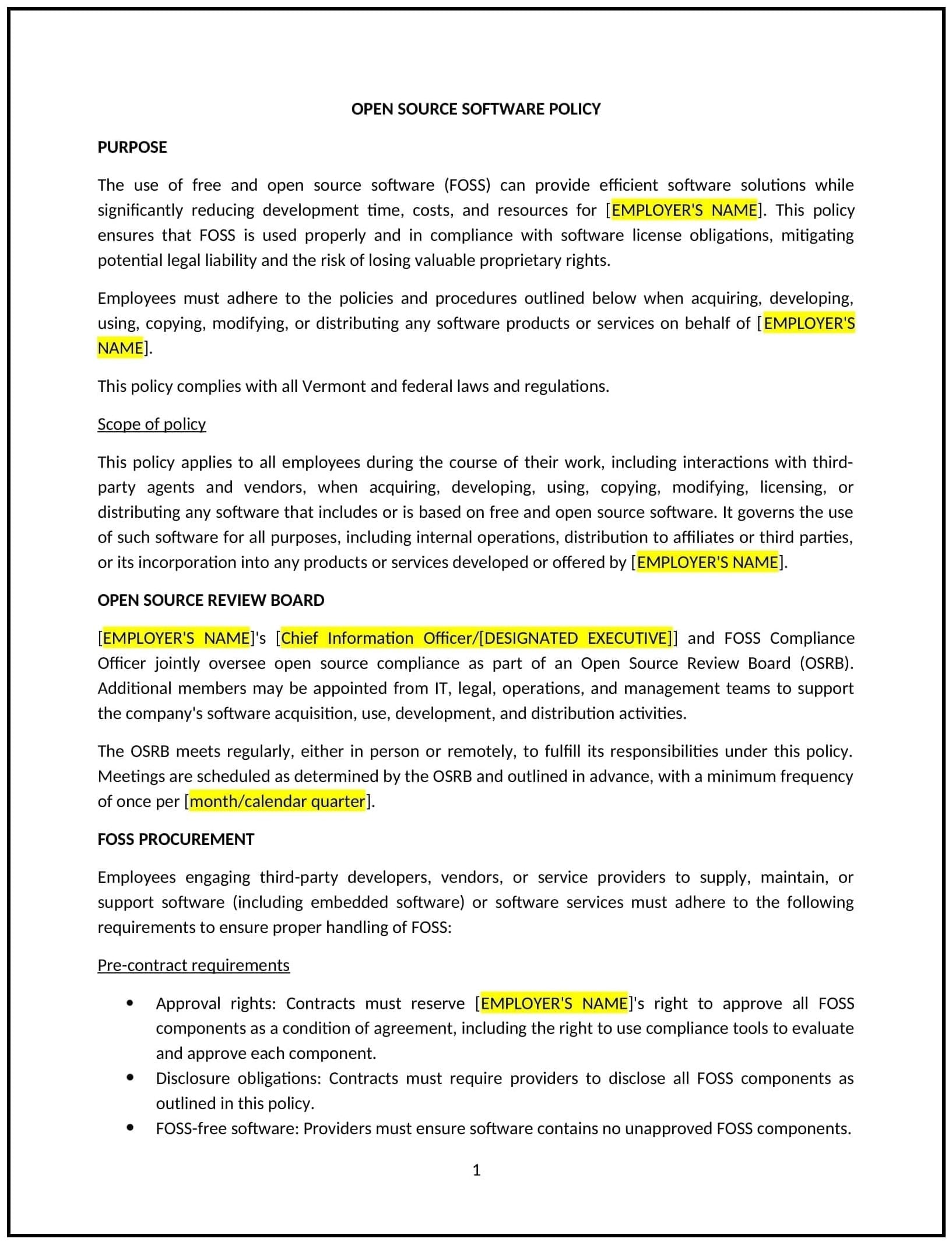
Open source software policy (Vermont)
This open source software policy is designed to help Vermont businesses manage the use, contribution, and development of open source software (OSS) in a responsible and compliant manner. It provides guidelines for incorporating OSS into business operations while addressing licensing obligations and protecting intellectual property.
By adopting this policy, businesses can leverage the benefits of open source software while mitigating risks and promoting compliance with Vermont laws and industry standards.
How to use this open source software policy (Vermont)
- Define permitted uses: Specify the conditions under which employees can use open source software in company projects, such as compatibility with licensing terms.
- Address contribution guidelines: Outline the process for contributing to open source projects, including approvals and protection of company intellectual property.
- Include license compliance requirements: Provide steps for reviewing and adhering to the terms of OSS licenses used in company projects.
- Establish review procedures: Require employees to seek approval from IT or legal teams before integrating OSS into critical business systems.
- Emphasize documentation: Mandate proper documentation of OSS usage, including licenses, version numbers, and integration details.
- Monitor security: Require security assessments of OSS to identify potential vulnerabilities before implementation.
- Monitor compliance: Regularly review OSS practices to ensure alignment with Vermont laws, licensing obligations, and company standards.
Benefits of using this open source software policy (Vermont)
This policy provides several benefits for Vermont businesses:
- Promotes compliance: Ensures adherence to OSS licensing requirements, reducing legal risks.
- Protects intellectual property: Safeguards proprietary software and company data from unintended disclosure.
- Enhances security: Encourages thorough review of OSS for potential vulnerabilities before deployment.
- Fosters innovation: Supports responsible use of OSS to accelerate development and reduce costs.
- Maintains transparency: Provides clear guidelines for OSS usage, contributions, and licensing obligations.
Tips for using this open source software policy (Vermont)
- Communicate the policy: Share the policy with employees involved in software development and include it in internal resources.
- Provide training: Offer regular training on OSS licensing, security, and company contribution guidelines.
- Use tracking tools: Implement tools to manage and track OSS usage and compliance across company projects.
- Encourage reporting: Create a process for employees to report concerns or seek guidance regarding OSS usage.
- Update regularly: Revise the policy to reflect changes in Vermont laws, licensing standards, or company practices.
Frequently asked questions (FAQs)
Similar templates
Where deals go from offer to paid
