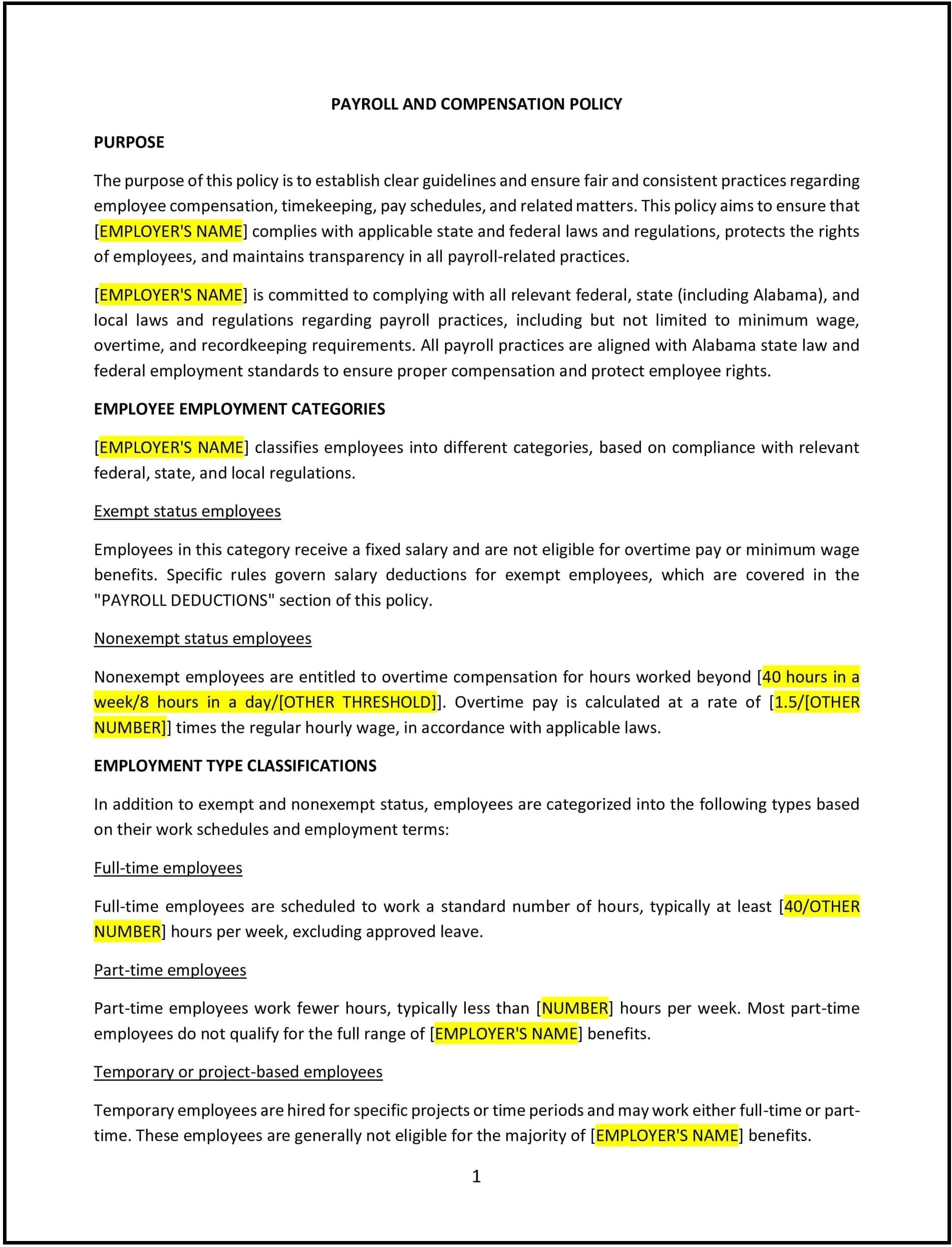
Payroll and compensation policy (Alabama): Free template
Explains how employee pay is calculated, issued, and adjusted in compliance with Alabama labor requirements.
- Policies
- Alabama
Payroll and compensation policy (Alabama)
A payroll and compensation policy provides employees with clear guidelines on payment schedules, wage calculations, and adjustments, ensuring transparency and compliance with federal and Alabama-specific labor laws. For SMBs in Alabama, this policy helps streamline payroll operations, fosters trust, and minimizes potential misunderstandings regarding compensation.
This policy outlines payment procedures, deductions, overtime calculations, and dispute resolution processes, creating a reliable framework for managing employee compensation.
How to use this payroll and compensation policy (Alabama)
- Define pay periods: Specify the frequency of payments, such as weekly, biweekly, or monthly, and the corresponding paydays.
- Clarify wage types: Differentiate between hourly wages, salaries, commission-based pay, and any other applicable compensation structures.
- Address overtime pay: Outline how overtime is calculated and paid in compliance with Alabama and federal regulations, such as the Fair Labor Standards Act (FLSA).
- Include deductions: Provide a list of permissible deductions, such as taxes, benefits contributions, or garnishments, and explain how they are reflected in pay statements.
- Establish dispute resolution: Include steps for employees to report and resolve payroll discrepancies or concerns promptly.
Benefits of using a payroll and compensation policy (Alabama)
A well-defined payroll and compensation policy benefits employees and employers by fostering clarity and trust. Here’s how it helps:
- Ensures compliance: Aligns payroll practices with state and federal labor laws, minimizing legal risks.
- Promotes transparency: Clearly communicates payment schedules and calculations, reducing misunderstandings.
- Enhances employee satisfaction: Provides employees with confidence in the accuracy and fairness of their compensation.
- Improves payroll efficiency: Streamlines processes for calculating and distributing wages, reducing errors and administrative burdens.
- Protects the business: Establishes consistent procedures for handling disputes and adjustments, minimizing conflicts.
Tips for implementing a payroll and compensation policy (Alabama)
- Train payroll staff: Ensure HR and payroll personnel are well-versed in Alabama labor laws and FLSA requirements.
- Use payroll software: Invest in reliable payroll management tools to automate calculations, tax withholdings, and reporting.
- Communicate changes: Notify employees of any updates to payment schedules, wage structures, or deductions promptly and clearly.
- Conduct audits: Regularly review payroll records to identify and correct discrepancies or non-compliance issues.
- Maintain records: Keep detailed records of payroll transactions, timesheets, and tax filings to ensure accountability and compliance.
Frequently asked questions (FAQs)
Similar templates
Where deals go from offer to paid
